
About Panait Cerna
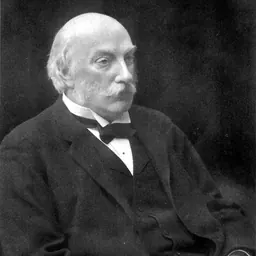
Lived 1881 – 1913 (aged 31). Panait Cerna was a Romanian linguist, journalist, philosopher, literary critic, translator and poet.
Panait Cerna (; Bulgarian: Панайот Черна, Panayot Cherna, born Panayot Stanchov or Panait Staciov; August 26 or September 25, 1881 – March 26, 1913) was a Romanian poet, philosopher, literary critic and translator. A native speaker of Bulgarian, Cerna nonetheless wrote in Romanian, and developed a traditionalist style which was connected with classicism and neoclassicism. Praised by the conservative literary society Junimea, he was promoted by its leader Titu Maiorescu, as well as by Maiorescu's disciples Mihail Dragomirescu and Simion Mehedinți. Cerna became the group's main representative during its decline, contributing to both major Junimist magazines, Convorbiri Literare and Convorbiri Critice. He also contributed pieces to the traditionalist magazine Sămănătorul, and was briefly affiliated with other literary journals.
A graduate of the University of Bucharest, Cerna completed his studies in the German Empire. There, he attended the University of Berlin and Leipzig University, befriending the self-exiled Romanian dramatist Ion Luca Caragiale and the literary critic Paul Zarifopol. Cerna died in Leipzig at the age of thirty-one, after a long battle with tuberculosis.
Along with various love poems, Panait Cerna's writings also evince his intellectual pursuits. This intellectual characteristic earned him a dedicated following, but was criticized by many of his peers, who found it artificial and outdated.
Biography
Early life
Cerna's early name, rendered in Bulgarian as Панайот Станчов, was commonly transliterated into Romanian as Panait Stanciov, Stancov, Stanciof or Stancioff. The poet's preferred name alluded to Cerna, his birthplace in Tulcea County, Northern Dobruja.
Panait Cerna's father was an ethnic Bulgarian schoolteacher, also named Panayot Stachov (Panait Stanciov). or of Bulgarian origin. Shortly before Maria gave birth to their son, Romanian administration began taking over in previously Ottoman-ruled Northern Dobruja. Stanchov, who was a Bulgarian nationalist, refused to accept this change and left for the Principality of Bulgaria, leaving his family behind. Consequently, Cerna never met his father.
After completing primary school in his native village, he graduated from a high school in the Danube port of Brăila, then enrolled at the Faculty of Letters and Philosophy in Bucharest. His first original poem, Orientale ("Orientals"), saw print two years later in the magazine Carmen. After 1903, Cerna contributed to Sămănătorul, and his poems also appeared sporadically in other publications, including Floare Albastră and Revista Modernă. Cerna spent much of this period traveling through the Old Kingdom, and several times visited regions of the Southern Carpathians, in particular the area of Rucăr, the Bucegi Mountains, and the Jiu Valley. The group of Convorbiri Critice writers also included D. Nanu, Corneliu Moldovanu, Emil Gârleanu, I. Dragoslav, and George Vâlsan. In 1908, he decided to continue his studies in the German Empire. The decision was influenced and encouraged by Junimea and its leader Titu Maiorescu, who, as Minister of Education granted him a scholarship. This, he argues, was one of the few areas in which Junimea still differed from Sămănătorul, which was more open to less elitist environments.
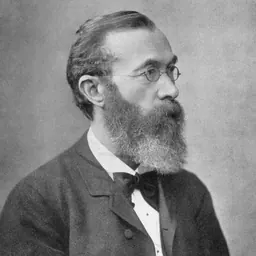
Studies abroad and death From late 1910 to early 1912, Cerna was at Leipzig University, where he attended courses held by the philosophers and psychologists Wilhelm Wundt, Eduard Spranger, and . Panait Cerna's first volume of collected poetry was published at home in 1910, and, two years later, resulted in the author being made a co-recipient of the Romanian Academy's Vasile Adamachi Award.
Panait Cerna died in Leipzig, shortly after receiving his diploma. In this account, Cerna is one in a group of "conceptual" poets, all of whom were connected with Dragomirescu. For part of his life, Cerna was also formally committed to Symbolism and the local Symbolist movement, whose aesthetic ideals he merged with his lyrical style, and sought to recover part of the Romantic legacy.
Literary historian Tudor Vianu notes the influence exercised on Cerna and other traditionalists by Mihai Eminescu, Romania's major mid-19th-century classicist and Junimist poet. Modernist theorist Eugen Lovinescu also believes that the "matter in which [Cerna] worked" was largely "dominated by Eminescu." According to Zarifopol, the poet considered himself an "improved follower" of Eminescu. Cerna was also a late admirer of Lord Byron, a main figure of English Romanticism, and translated from his Childe Harold. One of Cerna's poems was an epic piece inspired by the Book of Genesis, where Adam confronts God. Titled Plânsetul lui Adam, it builds on themes which recalled Byron's 1821 play Cain, and constituted an interrogation of divine laws. This assessment was itself contested by Călinescu, who argued that the lyrics in questions are "actually the acceptable ones", and that the awkward wordings "are entirely lost in lyrical fluency." Among the writings forming the subject of this disagreement was Cerna's Din depărtare ("From Far Away"), which Lovinescu believed was marked by the use of repetitive and banal poetic images: Verse translation| Literary historian Z. Ornea argues that this evidenced not just a decline in standards, but also Mehedinți's "tastelessness". Zarifopol deplores Cerna's submission to traditionalist and classicist goals, arguing that it eventually ruined Cerna as a poet and made him unhappy. later known as an official poet of Communist Romania, and Sămănătoruls Ion Sân-Giorgiu, whose career later took him through an Expressionist stage and eventually to fascist politics. Demostene Botez, another author to have been influenced by Cerna's style, dedicated his mentor a poem which read: Verse translation| He writes: "the girls ... were thus in full agreement with the philosophical tradition which, since the old days, has set as a supreme ideal a mosaic of perfections that is naive and unlikely."
The poet's house in Cerna is presently a museum, dedicated in part to his memory, and also housing a permanent exhibit dedicated to the traditional arts and crafts of Tulcea County. It also features a bust of the poet. as are a high school in Brăila and streets in Bucharest, Brăila, Bistrița, Hunedoara, Lugoj, and Petroșani. The local authorities in Tulcea County organize an annual Panait Cerna National Poetry and Essay Contest.
Don’t just read it —
keep it.
Full-length biographies made to live with: read them, listen on the way to work, watch them tonight.
- E-book
- Audio
- Video
Instant download · yours to keep · every purchase keeps this site free
Important facts
People in Panait Cerna's life
Named in this biography and alive at the same time




Related people
Same field, nearest in time

Contemporaries
People whose lives overlapped Panait Cerna's




Frequently asked questions
Who was Panait Cerna?
Romanian writer and academic (1881-1913)
When was Panait Cerna born?
Panait Cerna was born on 26 August 1881 in Cerna.
When did Panait Cerna die?
Panait Cerna died on 26 March 1913 in Leipzig.
What was Panait Cerna's occupation?
Panait Cerna was a linguist, journalist, philosopher, literary critic, translator and poet.
What nationality was Panait Cerna?
Panait Cerna was Romanian.
Sources & further reading
Cite this page
APA: Biography.guide. (2026). Panait Cerna. https://biography.guide/panait-cerna/
MLA: "Panait Cerna." Biography.guide, https://biography.guide/panait-cerna/.
Chicago: "Panait Cerna." Biography.guide. https://biography.guide/panait-cerna/.
Data last updated: 2026-09-20 · Spot an error? Report a correction.
Page generated 2026-09-27 05:23 UTC