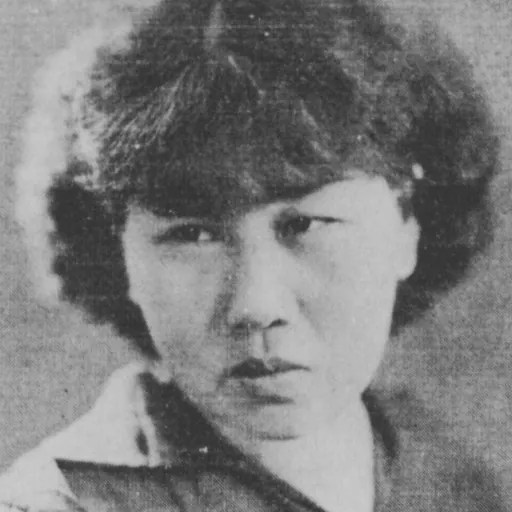
About Pan Yuliang
Lived 1895 – 1977 (aged 82). Pan Yuliang was a French and Chinese painter, graphic artist and artist.
Pan Yuliang (; 14 June 1895 – 22 July 1977), born Chen Xiuqing, was a Chinese painter, sculptor and educator , known for being the first woman in China to paint in the Western style. She studied in Shanghai, Lyon, Paris and Rome, and taught at the École des Beaux Arts. She is one of the earliest Chinese women to receive formal instruction in Oil Painting and Life Drawing. After that, she developed a distinctive hybrid style, which made the combination between European modernist techniques and Chinese traditional pictorial sensibilities. Recent scholarship recognized Pan as one of the most important modern Chinese woman artists, who discussed the East and West culture tensions, and the gender expectations during that time.
Life Early life Pan was born Chen Xiuqing on 14 June 1895 in Yangzhou. She ran away, and during this time she attempted suicide multiple times, tried to disfigure her face, and was beaten on multiple occasions, before finally becoming a singing girl.
When Pan was 18 years old her freedom was bought by Pan Zanhua (; 1885–1959), a customs official and member of the Tongmenghui.
Education Pan moved to Shanghai with her husband In 1916, where she learnt to read and write. In 1920, Pan passed the exams to enter the Shanghai Art School, where she studied painting with Wang Jiyuan. Within the Shanghai Art School, Pan struggled to fit in with her peers. Due to her "lowly" background, she was often ostracized and did not fit into the model of the "modern Shanghai lady" — a young woman whose arts education added to their femininity and beauty. Pan was frequently described by her peers as "warm-hearted and forthright", albeit "blunt" at times. Pan Yuliang was one of the first women to graduate from the Shanghai Art School.
Pan studied at the Shanghai Art School, where she was placed among the earliest cohort of Chinese women. This experience led Pan to receive formal training in Western painting and drawing. This experience can be viewed as a development that reflects new opportunities for women in early twentieth-century China. In 1925, she won the prestigious Rome Scholarship to study at the Accademia di Belle Arti in Rome in Italy.
Pan's experience in France and Italy exposed her to contemporary Modern European movements and the academic practice of live models. These experiences deeply shaped Pan's work in the female nude. After Pan's studies in Europe and Pan's return to China, Pan became a pioneer who worked on synthesizing Chinese and Western artistic traditions. In China, women artists were generally constricted to depictions of nature and, occasionally, portraiture, but nudes were considered improper.
In 1937, Pan left Shanghai for France and settled in Paris. She joined the faculty of the École des Beaux Arts, and was elected as chairman of the Chinese Art Association. Her works were exhibited internationally, especially in the United Kingdom, United States, Germany, Japan, Italy, Switzerland, Belgium, and Greece. It was following her move to France that her work drew widespread acclaim, though she kept her Chinese nationality despite living in France for almost fifty years. Despite the recognition, Pan experienced poverty and difficulty selling her art. She refused to be bound by contractual obligations with art dealers in Europe. and was buried in the Montparnasse Cemetery of Paris. In 1985, many of her works were returned to China and are now held by the National Art Museum of China in Beijing and the Anhui Provincial Museum in Hefei.
Artistic style and themes Pan's art is characterized by a hybrid visual language, which combines Western academic training and traditional Chinese pictorial. Pan's exposure to traditional European art, especially her academia in Lyon, Paris, and Rome, increased her ability in oil painting, anatomical accuracy, and the academic nude. The Chinese ink painting affects her emphasis on line, contour, and brushwork. This blending of Pan's art has been considered "a dialogue between traditions". Her unique art language emphasized how Pan crossed cultural boundaries through European academia and traditional Chinese linearity. This unique hybrid visual language may be considered a transcultural negotiation. Pan built a bridge between two different art systems instead of only accepting one art system.
The female nude painting is one of the most significant aspects of Pan's oeuvre and has also attracted extensive scholarly attention. "Maternal ambivalence" has been a recurring theme in her significant art, which explores the emotional and psychological relationships among mothers, children, and female figures. Her art also refuses to describe sentimental motherhood, but rather draws Pan's psychological images, which reflect her personal experiences and the shifting gender norms in Republican China.
The art painting techniques, which combine Western and traditional Chinese elements, are a defining feature of her art style. 1959, she won the Paris Gold Prize and the Belgium Silver Prize.
In popular culture In 1989, an eight-part television series was broadcast based on Pan's life.
Her life story was also re-enacted in the 2004 TVB drama Painting Soul where her role was played by Michelle Reis. The Huangmei opera The Female Painter from the Brothel (風塵女畫家), starring Ma Lan, is also based on her life.
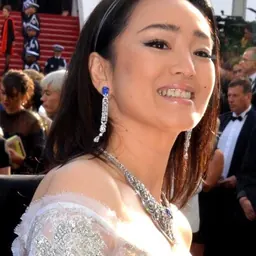
Her story is loosely told in the novel Hua Hun (A Soul Haunted by Painting) (1984) by Shih Nan. Later, It was adapted as a Chinese film directed by Huang Shuqin, A Soul Haunted by Painting which was released in 1994, starring the actress Gong Li as the artist.
Jennifer Cody Epstein's internationally bestselling novel The Painter from Shanghai (2008) is also based on Pan Yuliang's life, and has been translated into sixteen languages. Epstein, who worked as a journalist in Hong Kong and China, spent ten years writing and researching the book. Marie Laure de Shazer, who specialized in Chinese language, also wrote a book about Pan Yuliang, Pan Yu Liang, La Manet de Shanghai, based on her life in China and France.
Don’t just read it —
keep it.
Full-length biographies made to live with: read them, listen on the way to work, watch them tonight.
- E-book
- Audio
- Video
Instant download · yours to keep · every purchase keeps this site free
Important facts
People in Pan Yuliang's life
Named in this biography and alive at the same time





Related people
Same field, nearest in time


Contemporaries
People whose lives overlapped Pan Yuliang's
Frequently asked questions
Who was Pan Yuliang?
Chinese painter (1895-1977)
When was Pan Yuliang born?
Pan Yuliang was born on 14 June 1895 in Jiangdu District, Anhui.
When did Pan Yuliang die?
Pan Yuliang died on 22 July 1977 in 14th arrondissement of Paris.
What was Pan Yuliang's occupation?
Pan Yuliang was a painter, graphic artist and artist.
What nationality was Pan Yuliang?
Pan Yuliang was French and Chinese.
Sources & further reading
Cite this page
APA: Biography.guide. (2026). Pan Yuliang. https://biography.guide/pan-yuliang/
MLA: "Pan Yuliang." Biography.guide, https://biography.guide/pan-yuliang/.
Chicago: "Pan Yuliang." Biography.guide. https://biography.guide/pan-yuliang/.
Data last updated: 2026-09-22 · Spot an error? Report a correction.
Portrait: Wikimedia Commons · author & licence
Page generated 2026-09-27 05:00 UTC