
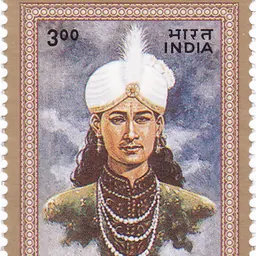
Pamheiba
Emperor in Manipur
About Pamheiba
Lived 1690 – 1751 (aged 60–61).
Early life Pamheiba (, , ) was born on 23 December 1690 in Manipur to Pitambar Charairongba and was crowned Meidingu ("king") on 28 August 1709 (the 23rd of Thawan, 1631 Saka Era). Pamheiba has a fascinating and somewhat mysterious background that intertwines with Naga society and Manipuri royal customs. Raised by a Naga Chief amidst the Naga community, Gharib Niwaz's affinity for Naga customs and attire persisted even after his coronation, where he donned a Naga robe, endearing him to the Nagas who finally found a king of their own. However, historical accounts diverge on his parentage, with British writers suggesting he was the son of a Naga, while local anecdotes hint at royal lineage. Legends speak of a clandestine birth to Queen Nungshel Chaibi, who, fearing the royal custom of only allowing heirs born to the chief queen to survive, sent Gharib Niwaz to be raised by a Naga Chief. Another version suggests he was hidden from a prophecy of patricide, his true identity revealed years later. Eventually, Gharib Niwaz returned to the royal palace, where his true parentage was disclosed, leading to his recognition as the heir to the throne. After converting to Hinduism Pamheiba took the Persianate name Gharib Nawaz.
Migration and new settlement In 1716, the Tekhaos (Ahoms) were made to settle in Thongju. In the same year, Pamheiba gave a royal audience for the Tekhaos.
In 1745, the Purum chief and his villagers were made to shift to TaraoKhunman. Kapeng Khongbantaba, and people from Koutruk and Phayeng were moved to settle at Khampat.
Instead of a princess, the King of Burma was met by cavalry, led by Pamheiba that massacred the Burmese army, and brought many prisoners of war to Imphal. The Burmese sent an expedition in revenge, but it was ambushed in the swamps near Heirok, southwest of Thoubal, and losing heavily retreated in haste. In 1735, Pamheiba invaded Myedu in Shwebo district and carried off loot, cattle and a thousand people. In 1737, Pamheiba again invaded Burma, killed two-thirds of a royal levy, including commander, who came to oppose the invading Manipuris, and swept down to Tabayin in Shwebo district, burning everything they met. Again in 1738, Manipuris went and camped in Thalunbyu west of Sagaing, burnt every house and monastery up to the walls of Ava, stormed the stockade built to protect the Kaunghmudaw Pagoda, slaughtering the Burmese troops like cattle in a pen and killing the commandant, a minister of the Hluttaw Council; the old door-leaves of the pagoda's eastern gateway show a gash made by the sword of Maharaj Pamheiba when he was forcing an entrance.
Tripura In April 1723, King Dharma Manikya of Tripura dispatched Commander Satrajit Narayan to invade Manipur. Satrajit Narayan's invasion saw initial success, capturing seven posts and defeating the Manipuri army led by Pamon Hanchpa and Naharup Sanglen Rakpa. King Gharib Niwaz responded by sending reinforcements under Akong Haopamcha, eventually repelling the Tripuris and forcing them out of Manipur by June 1723. King Dharma Manikya of Tripura formed an alliance with the Burmese. Two forces, totaling 30,000 men, attacked Manipur from different directions. The Manipuris faced challenges but ultimately triumphed, winning battles against both the Burmese and Tripuris in a series of engagements. King Gharib Niwaz launched a retaliatory invasion against Tripura, led by his son Khamlang Pamsapa and Guru Santa Das Gosai. While peace was initially achieved through diplomacy, Gharib Niwaz later overran Tripura in 1734 CE, assuming the title of 'Takhen Ngampa' or Victor of Tripura. In Pamheiba's Tripura campaign, 1100 prisoners were captured, who were absorbed into the Meitei community.
Shan States With the help of Burmese, the chieftain of Hsawnghsup declared independence from Manipur. It took 7 years to crush them along with Chanta, Mwang and tongmon Nammon. In 1717–18, the Manipur king led his forces against the Samjok Shans, known as Panga, who were descendants of the Awa ruler of the Pagan Dynasty. He devastated Chanta, a village supplying food to Samjok, and pursued and killed its fleeing inhabitants. Afterward, he attacked Samjok, cutting off its supply lines. Starved and desperate, the Samjok people surrendered to the Manipur king, who agreed to feed them but took their chief and son as captives.
On account of rise of Burmese Kingdom, the Shan Kingdom of Pong was in danger. In March 1739, the Shans requested Manipur to help them. The envoys from Pong returned to their country after about 19 days. Pamheiba started for Burma to invade Sagaing. After the Battle of Sagaing, Pamheiba made the elder brother of the king of Pong king.
Mon According to Ningthourol lambuba, the king of Ava, named Mangdra, sent an emissary to King Pamheiba's court, expressing a sincere desire for a matrimonial alliance. Mangdra specifically requested Princess Satyamala's hand in marriage and invited Pamheiba to visit Ava. Pamheiba, considering the sincerity of the request, agreed and crossed the Irawaddy river. Upon reaching Ava, he learned that Mangdra sought Manipur's friendship to strengthen his forces against the Mons. In response, Pamheiba crossed Irawaddy river and assaulted the Mons where he captured two prominent chiefs of Mons, destroyed the revolting Mons of Koi, he also presented several chopped heads of Mon rebels to his son-in-law king Mangdra. He is also believed to be murdered by Ajit Shai at Brahmaputra because Gharib Niwaz also murdered his father Charairongba when the tribes of the hilly areas launched an attack on the Meiteis and Charairongba could not do anything but pray to God. When he was stabbed, he cursed Gharib Niwaz that he will also be murdered by one of his children when he is about to place his eldest son to the throne. Before Charairongba died, he ordered Gharib Niwaz to get revenge on the Burmese for insulting his younger sister.
Religious policy During the early 18th century, Hindu priests from Sylhet arrived in Manipur to spread Gaudiya Vaishnavism. They were led by Shantidas Adhikari and his associate Guru Gopal Das who succeeded in converting the King from the old Meitei religion to Vaishnavism in 1710. Later during his reign, Pamheiba made Hinduism the official religion, and converted nearly all the Meitei people to Hinduism.
Family
Pamheiba had eight wives, and a large number of sons and daughters. His eldest son, Samjai Khurai-Lakpa, was assassinated by his younger son Chitsai, who came to power after Pamheiba's grandson Gaurisiam. The reign was then followed by Ching-Thang Khomba.
Don’t just read it —
keep it.
Full-length biographies made to live with: read them, listen on the way to work, watch them tonight.
- E-book
- Audio
- Video
Instant download · yours to keep · every purchase keeps this site free
Important facts
People in Pamheiba's life
Named in this biography and alive at the same time
Contemporaries
People whose lives overlapped Pamheiba's




Frequently asked questions
Who was Pamheiba?
emperor in Manipur
When was Pamheiba born?
Pamheiba was born in 1690.
When did Pamheiba die?
Pamheiba died in 1751.
What nationality was Pamheiba?
Pamheiba's recorded nationality: Manipur.
Sources & further reading
· DBpedia: Gharib Niwaz (Manipur)
Cite this page
APA: Biography.guide. (2026). Pamheiba. https://biography.guide/pamheiba/
MLA: "Pamheiba." Biography.guide, https://biography.guide/pamheiba/.
Chicago: "Pamheiba." Biography.guide. https://biography.guide/pamheiba/.
Data last updated: 2026-09-20 · Spot an error? Report a correction.
Page generated 2026-09-27 05:12 UTC