
About P. Y. Saeki
Lived 1871 – 1965 (aged 93). P. Y. Saeki was a Japanese politician, philologist and religion.
Yoshiro Saeki (; September 15, 1871 – June 26, 1965) was a Japanese scholar of religion, law, and the English language. Peter Saeki is his Christian name. He is known for his theories about the Church of the East (at the time referred to as "Nestorianism") and Jewish culture in Japan and for his involvement in the planning of the new Hiroshima after the atomic bombing.
Career Saeki was a Japanese Anglican who became an expert on the influence of the Church of the East, which at one time existed in China. He entered Tōkyō Senmon Gakkō (later Waseda University) in 1890. That year, he was also baptized into the Anglican-Episcopal Church of Japan at St Paul's Church in Tsukiji, Tokyo, by Rev. Kumanzo Mikami. He was a close friend of Uchimura Kanzō, a Methodist evangelist, but their relationship turned sour later. He graduated in 1893, travelled to the United States, and then moved to Canada to study languages at the University of Toronto, graduating in 1895. He returned to Tōkyō to teach English at Tōkyō Sermon Gakkō and the Tokyo French School. He later taught at the Tokyo Higher Normal School, , the Fifth Higher School (Kumamoto), the Tokyo Institute of Technology, and from 1922, at Meiji University. He conducted research in China from 1930 to 1931, and from 1931 to 1940 he was a research associate at Tokyo Imperial University, and he received his doctoral degree from that institution in 1941.
Scholarship
In 1904, he turned his research towards Chinese history. 1908 he published a book in which he theorised the Hata clan, which arrived from Korea and settled in Japan in the third century, was a Jewish-"Nestorian" tribe. Ben Ami-Shillony states, "Saiki's writings spread the theory about 'the common ancestry of the Japanese and the Jews' (Nichiyu Dōsoron) in Japan, a theory endorsed by some Christian groups." Versions of this Japanese-Jewish common ancestry theory were taken up by other writers at the time.
In 1916, Saeki published The Nestorian Monument in China, an analysis of the Xi'an Stele, a monument describing the Church of the East in China in 781. The book summarised the competing theories about the stele. He also published several other books and articles on Church of the East relics. His theories of religion were influenced by those of Max Müller.
Hiroshima After World War II, he was appointed mayor of Hatsukaichi in Hiroshima Prefecture. During that time, he consulted on the rebuilding of the city after the atomic bombing of August 6, 1945. He advised rebuilding the city as a relatively small and well-planned space.
In 1962 he received an honorary doctorate from Waseda University.
Don’t just read it —
keep it.
Full-length biographies made to live with: read them, listen on the way to work, watch them tonight.
- E-book
- Audio
- Video
Instant download · yours to keep · every purchase keeps this site free
Important facts
People in P. Y. Saeki's life
Named in this biography and alive at the same time
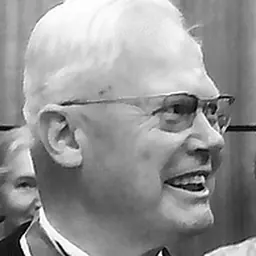
Related people
Same field, nearest in time


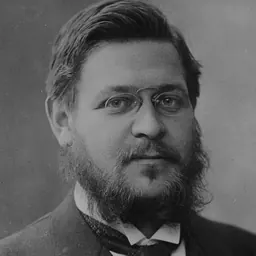
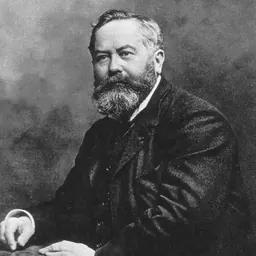

Contemporaries
People whose lives overlapped P. Y. Saeki's
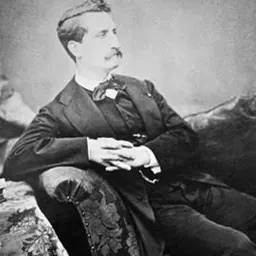



Frequently asked questions
Who was P. Y. Saeki?
Japanese sinologist (1871–1965)
When was P. Y. Saeki born?
P. Y. Saeki was born on 5 September 1871 in Hiroshima Prefecture.
When did P. Y. Saeki die?
P. Y. Saeki died on 26 June 1965.
What was P. Y. Saeki's occupation?
P. Y. Saeki was a politician, philologist and religion.
What nationality was P. Y. Saeki?
P. Y. Saeki was Japanese.
Sources & further reading
Cite this page
APA: Biography.guide. (2026). P. Y. Saeki. https://biography.guide/p-y-saeki/
MLA: "P. Y. Saeki." Biography.guide, https://biography.guide/p-y-saeki/.
Chicago: "P. Y. Saeki." Biography.guide. https://biography.guide/p-y-saeki/.
Data last updated: 2026-09-22 · Spot an error? Report a correction.
Page generated 2026-09-27 05:28 UTC