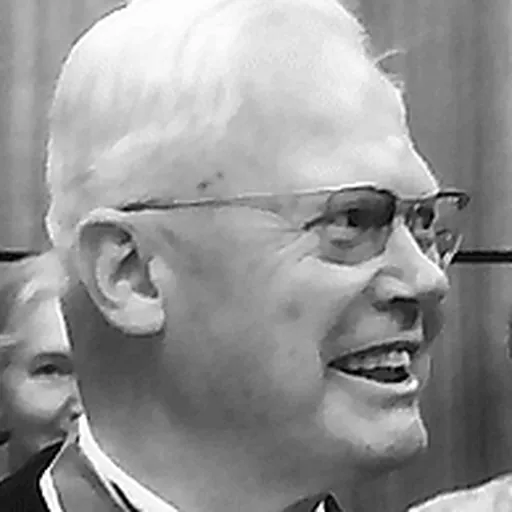
Max Müller
German philosopher and Catholic intellectual
About Max Müller
Lived 1906 – 1994 (aged 88). Max Müller was a German philosopher, university teacher and writer.
Max Müller (6 September 1906 – 18 October 1994) was a German philosopher and influential post–World War II Catholic intellectual. Müller was Professor at the University of Freiburg and LMU Munich.
Life Max Müller was the son of a jurist and completed his Gymnasium-Abitur in Freiburg at the Friedrich-Gymnasium Freiburg. He graduated in 1930 along with the philosopher Martin Honecker. He established his academic reputation in 1937 with a work on Thomas Aquinas ("Reality and Rationality"'). At that time he was active in the Catholic Youth Movement who were influenced by their study with Martin Heidegger, generating their own thinking in engagement with his philosophy. During the Third Reich they were opponents of Nazism. Falling foul of Nazi educational policies, Müller was dismissed by Heidegger from research positions.
He became a member of Sturmabteilung in 1934 and applied for membership in NSDAP in 1937, but he was not accepted until 1940.
He became active as a lecturer at the Catholic . After the war he succeeded Martin Honecker at the University of Freiburg.
In addition to his activity at the university Müller was active in addressing social problems in Freiburg. In 1960, he moved to LMU Munich. After his retirement he returned to Freiburg to research philosophy and theology.
Müller's main influences were Honecker, Edmund Husserl and Heidegger. He was also influenced by the historian Friedrich Meinecke and the theologian Romano Guardini.
Müller's philosophy Müller linked classical metaphysics with phenomenology of Husserl and the existentialism of Heidegger. He developed from it a theory of “metahistory” as a philosophy of historical liberty. For Müller, the sense of history is distinctive in each epoch. The "transcendental experience" of humans is created in personal engagement through communal achievement in the world as work. Politics, religion, art and science, along with the personal relationships between people, carry material and symbolic means to attempt answers and achieve effective representations.
Don’t just read it —
keep it.
Full-length biographies made to live with: read them, listen on the way to work, watch them tonight.
- E-book
- Audio
- Video
Instant download · yours to keep · every purchase keeps this site free
Important facts
People in Max Müller's life
Named in this biography and alive at the same time



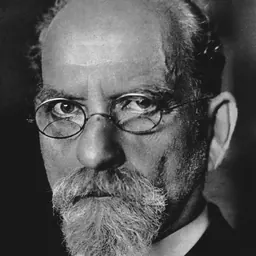
Related people
Same field, nearest in time
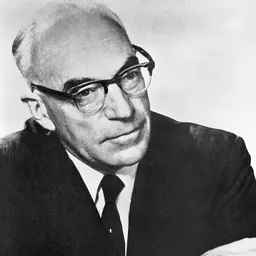


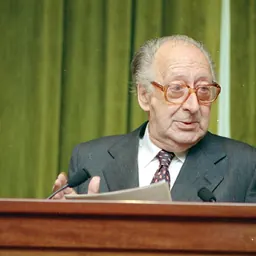
Contemporaries
People whose lives overlapped Max Müller's


Frequently asked questions
Who was Max Müller?
German philosopher and Catholic intellectual (1906–1994)
When was Max Müller born?
Max Müller was born on 6 September 1906 in Offenburg.
When did Max Müller die?
Max Müller died on 18 October 1994 in Freiburg im Breisgau.
What was Max Müller's occupation?
Max Müller was a philosopher, university teacher and writer.
What nationality was Max Müller?
Max Müller was German.
Sources & further reading
· DBpedia: Max Müller (philosopher)
Cite this page
APA: Biography.guide. (2026). Max Müller. https://biography.guide/max-muller/
MLA: "Max Müller." Biography.guide, https://biography.guide/max-muller/.
Chicago: "Max Müller." Biography.guide. https://biography.guide/max-muller/.
Data last updated: 2026-09-22 · Spot an error? Report a correction.
Portrait: Wikimedia Commons · author & licence
Page generated 2026-09-27 05:01 UTC