
About Romano Guardini
Lived 1885 – 1968 (aged 83). Romano Guardini was a German catholic priest, writer, theologian, university teacher, philosopher and philosopher of religion.
Romano Guardini (17 February 1885, Verona, Italy – 1 October 1968, Munich, Germany) was an Italian, naturalized German Catholic priest, philosopher and theologian.
Life Romano Michele Antonio Maria Guardini was born in Verona in 1885 and was baptized in the Church of San Nicolò all'Arena. His father, Romano Tullo (1857–1919), was a poultry wholesaler. Guardini had three younger brothers. The family moved to Mainz when he was one year old and he lived in Germany for the rest of his life. He attended the Rabanus-Maurus-Gymnasium. Guardini wrote that as a young man he was “always anxious and very scrupulous.”
Fluent in Italian and German, he also studied Latin, Greek, French, and English. After studying chemistry at the University of Tübingen for two semesters, and economics at the Ludwig-Maximilians-Universität München and the Friedrich Wilhelm University of Berlin for three semesters, he decided to become a priest. He studied theology at the University of Freiburg and the University of Tübingen. Impressed by the monastic spirituality of the monks of Beuron Archabbey, he became a Benedictine oblate, taking the name Odilio. He briefly worked in a pastoral position at St. Christoph's Church in Mainz before returning to Freiburg to work on his doctorate in Theology under Engelbert Krebs. He received his doctorate in 1915 for a dissertation on Bonaventure. He completed his "Habilitation" in Dogmatic Theology at the University of Bonn in 1922, again with a dissertation on Bonaventure. Throughout this period he also worked as a parish priest at St. Ignatius, St. Emmeran's, and St. Peter's and served as chaplain to the Catholic youth movement. During World War I he served as a hospital orderly. an annual prize awarded by the board of the Praemium Erasmianum Foundation to individuals or institutions that have made exceptional contributions to culture, society, or social science in Europe.
Pope Paul VI offered to make Guardini a cardinal in 1965, but he declined.
Guardini died in Munich on 1 October 1968. He was buried in the priests’ cemetery of the Oratory of St. Philip Neri in the city. His estate was left to the Catholic Academy in Bavaria that he had co-founded.
Veneration In December 2017, the Archdiocese of Munich and Freising opened the beatification process for Guardini, thus designating him a Servant of God. He is generally regarded as the father of the liturgical movement in Germany, and in his "Open Letter" of April 1964 to Mgr. Johannes Wagner, the organizer of the Third German Liturgical Congress in Mainz, he "raises important questions regarding the nature of the liturgical act in the wake of individualism, asking whether it is possible for twentieth-century Christians really to engage in worship. Is it possible to 'relearn a forgotten way of doing things and recapture lost attitudes', so as to enter into the liturgical experience?." It was his glad hope that after the call by the Second Vatican Council for liturgical reform, the Catholic Church might shift its focus from the merely ceremonial, important though that was, to a broader idea of true liturgical action—action that "embraced not only a spiritual inwardness, but the whole man, body as well as spirit." He himself gave an example of his meaning: A parish priest of the late 19th century once said (according to Guardini's illustration), "We must organize the procession better; we must see to it that the praying and singing is done better." For Guardini, the parish priest had missed the point of what true liturgical action is. He should instead have asked, "How can the act of walking become a religious act, a retinue for the Lord progressing through his land, so that an 'epiphany' may take place." Hannah Arendt and Iring Fetscher were favourably impressed by Guardini's work. He had a strong influence in Central Europe; in Slovenia, for example, an influential group of Christian socialists, among whom Edvard Kocbek, Pino Mlakar, Vekoslav Grmič and Boris Pahor, incorporated Guardini's views in their agenda. Slovak philosopher and theologian Ladislav Hanus was strongly influenced in his works by Guardini, whom he met personally, and promoted his ideas in Slovakia, writing a short monograph. In 1952, Guardini won the Peace Prize of the German Book Trade.
The 1990s saw something of a revival of interest in his works and person. Several of his books were reissued in the original German and in English translation. In 1997, his remains were moved to the Ludwigskirche, the University church in Munich, where he had often preached.
Don’t just read it —
keep it.
Full-length biographies made to live with: read them, listen on the way to work, watch them tonight.
- E-book
- Audio
- Video
Instant download · yours to keep · every purchase keeps this site free
Important facts
People in Romano Guardini's life
Named in this biography and alive at the same time
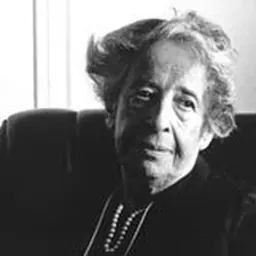





Related people
Same field, nearest in time
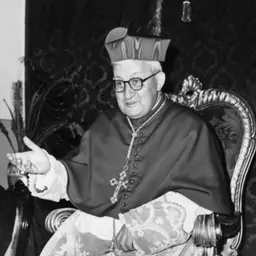
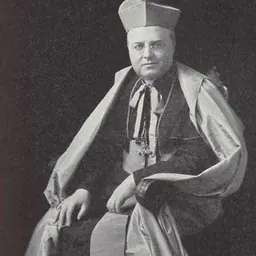


Contemporaries
People whose lives overlapped Romano Guardini's




Frequently asked questions
Who was Romano Guardini?
German Catholic philosopher (1885–1968)
When was Romano Guardini born?
Romano Guardini was born on 17 February 1885 in Verona.
When did Romano Guardini die?
Romano Guardini died on 1 October 1968 in Munich.
What was Romano Guardini's occupation?
Romano Guardini was a catholic priest, writer, theologian, university teacher, philosopher and philosopher of religion.
What nationality was Romano Guardini?
Romano Guardini was German.
Sources & further reading
Cite this page
APA: Biography.guide. (2026). Romano Guardini. https://biography.guide/romano-guardini/
MLA: "Romano Guardini." Biography.guide, https://biography.guide/romano-guardini/.
Chicago: "Romano Guardini." Biography.guide. https://biography.guide/romano-guardini/.
Data last updated: 2026-09-20 · Spot an error? Report a correction.
Page generated 2026-09-27 05:17 UTC