
About P. Jeevanandham
Lived 1907 – 1963 (aged 55). P. Jeevanandham was an Indian politician, author and social reformer.
P. Jeevanandham (21 August 1907 – 18 January 1963), also called Jeeva, was a social reformer, political leader, litterateur, journalist, critic and one of the pioneers of the Communist and socialist movements in the state of Tamil Nadu, India.
Early life P. Jeevanandham was born in the town of Boothapandi, near Nagercoil, in the then princely state of Travancore (presently in Kanyakumari District of Tamil Nadu) into an orthodox middle-class family on 21 August 1907. His original name was Sorimuthu. In this they were assisted by leaders such as M. R. Venkatraman and B. Srinivasa Rao. They had already organized workers and formed unions in industrial towns such as Madurai and Coimbatore when they were functioning as socialists. Jeevanandham was in the forefront of efforts to build a strong labor movement based on Marxism. His oratory and writings helped him fulfill the task. But these leaders suffered police repression and were imprisoned several times. Jeevanandham visited sensitive areas and kept the workers’ fighting spirit alive. Alongside industrial workers, agricultural laborers and small farmers were also organized in Thanjavur and other districts. Jeevanandham and Ramamurthi inspired thousands of people through powerful speeches.
Under the colonial rule, Marxist literature and propaganda were banned, and Marxist workers were frequently arrested on one pretext or the other. Jeevanandham was no exception. He even had an externment order against him and had to stay away from the then Madras province for a brief period.
Political life (after Indian independence) After Indian Independence, the ban on the CPI was lifted, and all its leaders were released.
In the first general elections in post independent India, Jeevanandham won a seat for the Legislative Assembly from the Wasermanpet constituency in Madras. P. Ramamurthi, his close associate, who was in jail then, was also elected from the Madurai constituency. After being elected to the Legislative Assembly, he put pressure on the government to initiate action on issues relating to development schemes and reform measures. He also led many struggles, one of which was against the proposal to form Dakshina Pradesh comprising the four southern states. Despite his loss in the subsequent elections, he continued his party work.
Tamil nationalism and literary works He played a key role in making his native Tamil language an official language in the state and the judiciary, and a medium of instruction in educational institutions.
Jeevanandham was the founder of Thamara, a Tamil literary magazine. The Communist Tamil newspaper Jana Sakthi was also begun with his commitment.
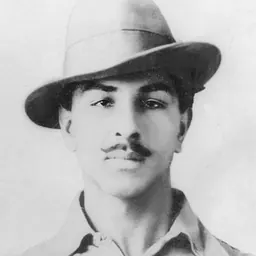
Periyar encouraged Jeeva to translate Bhagat Singh’s classic essay "Why I am an Atheist" in 1933. He translated it into Tamil, which was probably its first-ever translation. It was published by Periyar's publication.
Later years Jeeva led a busy and hectic life: teaching classes on Marxism for party workers, advising students to equip themselves to meet the nascent republic's development needs, addressing literary fora on topics such as the greatness of the poet Bharati, explaining the flaws in the government's language policy at meetings of intellectuals, and addressing factory gate meetings in support of workers on strike. In between, he wrote editorials for the party daily or discussed strategies for resolving industrial disputes.
In 1962, his health suffered a setback. Later in the year he visited the Soviet Union. He took treatment there and returned by the end of the year. However, his health worsened weeks later. On 18 January 1963, he died at his modest home at Tambaram, near Chennai. About two lakh (200,000) people attended his funeral and paid their last respects to one who had toiled all his life for the common man, who symbolised the simplicity of Gandhism and who had a Periyar-like zest for social equality and the Marxist spirit to fight exploitation.
Legacy
The Tamil Nadu State Transport Corporation(TNSTC), Erode Division is named the Jeeva Transport Corporation in modern days. The railway station at Vyasarpadi in Chennai is named Vyasarpadi Jeeva, as he lived in the area for a period. A commemorative stamp on him was issued on 21-August-2010. Jeevanandam Government Higher Secondary School, Puducherry, is named after him. Jeevanandam Government Girls High School, Bhoothapandy, Kanyakumari district, is named after him
Reputation Even his political adversaries respected him. He led a justified and honest life. No one could criticize his personal life.
DMK leader C. N. Annadurai saw Jeeva walking down a road, and offered him a ride in his car. Jeeva thanked Annadurai but humbly refused his help.
When Communists were proscribed and subject to arrest, Jeeva took refuge in the home of N.S. Krishnan, a notable stage and cinema actor. Kalaignar Karunanidhi came to the house, and saw a sannyasi (Hindu renunciate) with a shaved head. He was suspicious of the sannyasi, trying to remember the well known face. N.S.Krishnan entered the room and asked Karunanidhi whether he could recognize the sannyasi. Later Karunanidhi recognized the sannyasi as Jeeva.
He and Rajaji were always political rivals but still respected each other.
He and K. Kamaraj were good allies. On his deathbed, Jeeva told his attendants "Telegram Padma Vathi [his wife]. Call Kamaraj." This shows how close these two leaders were.
Don’t just read it —
keep it.
Full-length biographies made to live with: read them, listen on the way to work, watch them tonight.
- E-book
- Audio
- Video
Instant download · yours to keep · every purchase keeps this site free
Important facts
People in P. Jeevanandham's life
Named in this biography and alive at the same time
Related people
Same field, nearest in time






Contemporaries
People whose lives overlapped P. Jeevanandham's



Frequently asked questions
Who was P. Jeevanandham?
Indian politician (1907–1963)
When was P. Jeevanandham born?
P. Jeevanandham was born on 21 August 1907 in Nagercoil.
When did P. Jeevanandham die?
P. Jeevanandham died on 18 January 1963 in Chennai.
What was P. Jeevanandham's occupation?
P. Jeevanandham was a politician, author and social reformer.
What nationality was P. Jeevanandham?
P. Jeevanandham was Indian.
Sources & further reading
Cite this page
APA: Biography.guide. (2026). P. Jeevanandham. https://biography.guide/p-jeevanandham/
MLA: "P. Jeevanandham." Biography.guide, https://biography.guide/p-jeevanandham/.
Chicago: "P. Jeevanandham." Biography.guide. https://biography.guide/p-jeevanandham/.
Data last updated: 2026-09-22 · Spot an error? Report a correction.
Page generated 2026-09-27 05:27 UTC