
About Owen Lovejoy
Lived 1811 – 1864 (aged 53). Owen Lovejoy was an American politician, abolitionist and minister (Christianity).
Owen Lovejoy (January 6, 1811 – March 25, 1864) was an American lawyer, Congregational minister, abolitionist, and Republican congressman from Illinois. He was also a "conductor" on the Underground Railroad. After his brother Elijah Lovejoy was murdered in November 1837 by pro-slavery forces, Owen, a friend of Abraham Lincoln, became a leader of abolitionists in Illinois, condemning slavery and assisting runaway slaves in escaping to freedom.
Early life and education Born in Albion, Maine, in 1811, Lovejoy was one of five brothers born to Elizabeth (Patee) and Daniel Lovejoy, a Congregational minister and farmer. He worked with his family on the farm until he was 18, and his parents encouraged his education. His father was a Congregational minister and his mother was very devout. Lovejoy attended Bowdoin College from 1830 to 1833. He studied law but never practiced.
Career
Lovejoy migrated to Alton, Illinois, where his older brother Elijah Parish Lovejoy had moved in 1836 from St. Louis, because of hostility to his anti-slavery activities. The older Lovejoy was by then an anti-slavery Presbyterian minister who edited the Alton Observer, an abolitionist newspaper. The younger brother studied theology there. Owen and his brother Joseph C. Lovejoy wrote Memoir of Elijah P. Lovejoy (1838), which was distributed widely by the American Anti-Slavery Society, increasing Elijah's fame after his death and adding to the abolition cause.
Lovejoy served as pastor of the Congregational Church in Princeton, Illinois from 1838 to 1856. During these years, he also organized a number of the 115 anti-slavery Congregational churches in Illinois begun by the American Missionary Association, founded in 1846.
Lovejoy was a platform speaker in support of Abraham Lincoln in the famous debates with Stephen A. Douglas. While in Congress, he "introduced the final bill to end slavery in the District of Columbia," long a goal of the American Anti-Slavery Society. He also helped gain passage of legislation prohibiting slavery in the territories. He was one of the few steadfast Congressional supporters of Lincoln during the American Civil War. Lincoln wrote, "To the day of his death, it would scarcely wrong any other to say, he was my most generous friend."
As Lovejoy gave his speech condemning slavery, several Democrats in the audience, such as Roger Atkinson Pryor, became irate and incensed. Profoundly objecting to Lovejoy's anti-slavery remarks, the Democrats, brandishing pistols and canes, threatened him with physical harm, to which the Republicans present pledged to defend Lovejoy if the Democrats attempted to attack him. In response to the Democrats' threats, Lovejoy stood firm and responded, "I will stand where I please" and "Nobody can intimidate me." The day after the speech, it was re-printed in 55 newspapers across the country. Regarding the incident, Lovejoy stated in a letter to his wife Eunice that "I poured on a rainstorm of fire and brimstone as hot as I could, and you know something of what that is. I believe that I never said anything more Savage in the pulpit or on the stump."
Later life and death Lovejoy died in Brooklyn, New York, in 1864. His body was returned to Illinois for burial at Oakland Cemetery in Princeton. When he died Lincoln stated: "I've lost the best friend I had in the house [of representatives]"
Personal life Lovejoy was the cousin of Maine Senator Nathan A. Farwell.
Legacy The city of Princeton maintains and preserves his home, the Owen Lovejoy House, as a house museum. Designated a National Historic Landmark in 1997 by the National Park Service as part of the Underground Railroad, the house has a secret compartment for hiding fugitives liberated from prior enslavement. It is open to the public to view. After his death, an obelisk was erected in Princeton in his honor, and a letter from U.S. President Lincoln said: "Let him have his marble monument along with the well assured and more enduring one in the hearts of all those who love Liberty unselfishly and for all."
Don’t just read it —
keep it.
Full-length biographies made to live with: read them, listen on the way to work, watch them tonight.
- E-book
- Audio
- Video
Instant download · yours to keep · every purchase keeps this site free
Important facts
People in Owen Lovejoy's life
Named in this biography and alive at the same time
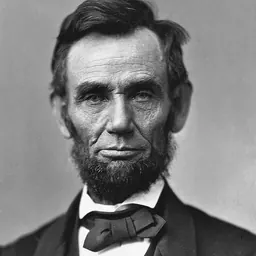

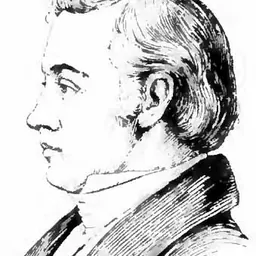

Related people
Same field, nearest in time


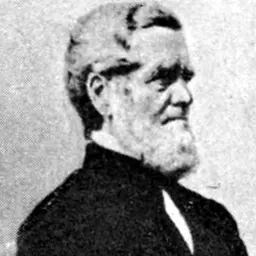

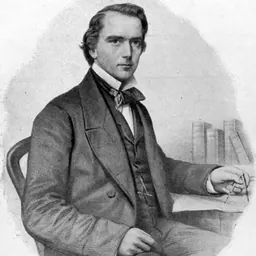
Contemporaries
People whose lives overlapped Owen Lovejoy's




Frequently asked questions
Who was Owen Lovejoy?
American politician (1811-1864)
When was Owen Lovejoy born?
Owen Lovejoy was born on 6 January 1811 in Albion.
When did Owen Lovejoy die?
Owen Lovejoy died on 25 March 1864 in Brooklyn.
What was Owen Lovejoy's occupation?
Owen Lovejoy was a politician, abolitionist and minister (Christianity).
What nationality was Owen Lovejoy?
Owen Lovejoy was American.
Sources & further reading
Cite this page
APA: Biography.guide. (2026). Owen Lovejoy. https://biography.guide/owen-lovejoy-politician/
MLA: "Owen Lovejoy." Biography.guide, https://biography.guide/owen-lovejoy-politician/.
Chicago: "Owen Lovejoy." Biography.guide. https://biography.guide/owen-lovejoy-politician/.
Data last updated: 2026-09-25 · Spot an error? Report a correction.
Page generated 2026-09-27 05:09 UTC