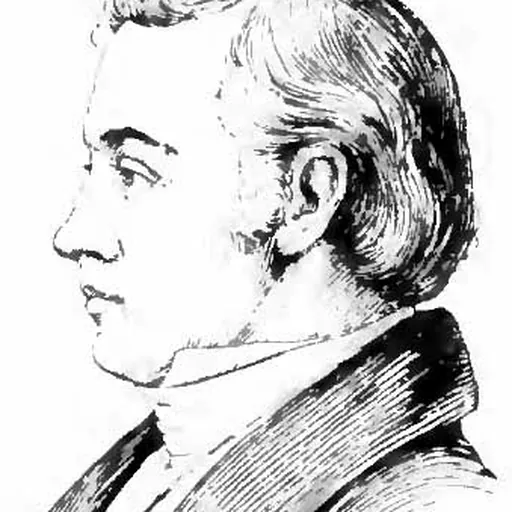
About Elijah Parish Lovejoy
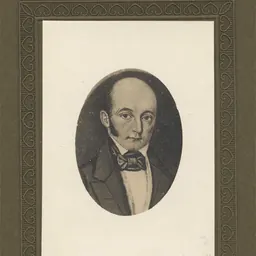
Lived 1802 – 1837 (aged 34). Elijah Parish Lovejoy was an American journalist and editor.
Elijah Parish Lovejoy (November 9, 1802 – November 7, 1837) was an American Presbyterian minister, journalist, newspaper editor, and abolitionist. After his murder by a mob, he became a martyr to the abolitionist cause opposing slavery in the United States.
Lovejoy was born in New England and graduated from what is today Colby College. Unsatisfied with a teaching career, he was drawn to journalism and decided to 'go west'. In 1827, he reached St. Louis, Missouri. Under the Missouri Compromise of 1820, Missouri entered the United States as a slave state. Lovejoy edited a newspaper but returned east for a time to study for the ministry at Princeton Theological Seminary. On his return to St. Louis, he founded the St. Louis Observer, in which he became increasingly critical of slavery and the powerful interests protecting slavery. Facing threats and violent attacks, Lovejoy decided to move across the river to Alton in Illinois, a free state. However, Alton was also tied to the Mississippi River economy, easily reachable by anti-Lovejoy Missourians, and badly split over abolitionism.
In Alton, Lovejoy was fatally shot during an attack by a pro-slavery mob. The mob was seeking to destroy a warehouse owned by Winthrop Sargent Gilman and Benjamin Godfrey, which held Lovejoy's printing press and abolitionist materials. According to John Quincy Adams, the murder "[gave] a shock as of an earthquake throughout this country." The Boston Recorder wrote that "these events called forth from every part of the land 'a burst of indignation which has not had its parallel in this country since the Battle of Lexington. When informed about the murder, John Brown said publicly: "Here, before God, in the presence of these witnesses, from this time, I consecrate my life to the destruction of slavery." Lovejoy is often seen as a martyr to the abolitionist cause and to a free press. The Lovejoy Monument was erected in Alton in 1897.
Early life and education Elijah Parish Lovejoy was born at his paternal grandparents' frontier farmhouse near Albion, Maine (then part of Massachusetts), the eldest of nine children of Elizabeth (née Pattee) Lovejoy and Daniel Lovejoy. Lovejoy's father was a Congregational preacher and farmer, and his mother was a homemaker and a devout Christian. Daniel Lovejoy named his son in honor of his close friend and mentor, Elijah Parish, a minister who was also involved in politics. Due to his own lack of education, the father encouraged his sons – Elijah, Daniel, Joseph Cammett, Owen, and John – to become educated. Elijah was taught by his mother to read the Bible and other religious texts at an early age.
Career in Missouri In 1827, Lovejoy arrived in St. Louis, Missouri, a major port in a slave state that shared its longest border with the free state of Illinois. Although it had a large slave market, St. Louis identified itself less with the plantation South and more as the "gateway to the West" and the American "frontier." Among Lovejoy's new acquaintances were prominent St. Louis attorneys and slaveholders such as Edward Bates (later U.S. Attorney General under President Abraham Lincoln); Hamilton R. Gamble, later Chief Justice of the Missouri Supreme Court; and his brother Archibald Gamble.
A year later, Lovejoy found the call to God he had been yearning for. In 1832, influenced by Christian revivalist meetings led by abolitionist David Nelson, he joined the First Presbyterian Church and decided to become a preacher. Although Lovejoy had opposed abolitionism during the debate, after returning to St. Louis he would write to Bradford repeatedly asking him to write articles for his newspaper.
Threats of violence Lovejoy's views on slavery began to incite complaints and threats. The couple were married on March 4, 1835. Their son Edward P. Lovejoy was born in 1836.
On July 21, 1836, Lovejoy published a scathing editorial in St. Louis criticizing the way that the Missouri court's Judge Luke Lawless had handled the murder trial of Francis McIntosh. He also announced that his next issue would be printed in Alton. Lovejoy's views on slavery became more extreme, and he called for a convention to discuss forming an Illinois state chapter of the American Anti-Slavery Society, established in Philadelphia in 1833.
Many residents of Alton began to question whether they should continue to allow Lovejoy to print in their town. After an economic crisis in March 1837, Alton citizens wondered if Lovejoy's views were contributing to hard times. They felt Southern states, or even the city of St. Louis, might not want to do business with their town if they continued to harbor such an outspoken abolitionist.
Lovejoy's third press was delivered and destroyed sometime after the planning of this meeting, but before its announcement and call (late September - early October 1837).
On November 2, 1837, Lovejoy responded to threats in a speech, saying: As long as I am an American citizen, and as long as American blood runs in these veins, I shall hold myself at liberty to speak, to write and to publish whatever I please, being amenable to the laws of my country for the same. The conflict continued. According to the Alton Observer, the mob fired shots into the warehouse. When Lovejoy and his men returned fire, they hit several people in the crowd, killing a man named Bishop.
Jon Meacham in his book And There Was Light: Abraham Lincoln and the American Struggle notes that Lovejoy was murdered on November 7, 1837, after he helped William Lloyd Garrison found an Illinois chapter of Garrison's Anti-Slavery Society.
Elijah Lovejoy was buried in Alton Cemetery; his grave was unmarked to prevent vandalism. The ceremony was kept small. In 1864, journalist and lecturer Thomas Dimmock "reclaimed from oblivion" Lovejoy's grave. Dimmock had "succeeded in establishing the location of the grave... in a roadway where vehicles were passing over it... Mr. Dimmock had the bones disinterred and... laid in a new grave where they would be free from trespass." He also arranged for a gravestone and helped found a committee to create a monument to the editor. Dimmock was principal orator at the dedication of a later monument erected in 1897 to commemorate Lovejoy.
The Chicago Tribune said of the grave marking and association to fund a monument:
Alton riot trial
Francis B. Murdoch, the district attorney of Alton, prosecuted charges of riot related to both assailants and defenders of the warehouse in January 1838, on Wednesday and Friday of the same week. He called the Illinois Attorney General, Usher F. Linder, to assist him. The court agreed on the condition that the other eleven defendants would be tried together. Although the proceedings lasted until 10 p.m. that night, in the case of Gilman, the jury returned after ten minutes to declare him "Not Guilty." The next morning the "City Attorney entered a 'Nolle Prosequi' as to the other eleven defendants", effectively dismissing the charges against them.
A new jury was called to hear the case against the assailants of the warehouse. The attackers allegedly responsible for destruction of the warehouse and Lovejoy's death were tried beginning January 19, 1838. Concluding it was not possible to assign responsibility among the several suspects and others not indicted, the jury gave a verdict of "not guilty".
Lovejoy was considered a martyr by the abolition movement. In his name, his brother Owen Lovejoy became the leader of the Illinois abolitionists. Owen and his brother Joseph wrote a memoir about Elijah, which was published in 1838 by the Anti-Slavery Society in New York and distributed widely among abolitionists in the nation. With his killing symbolic of the rising tensions within the country, Lovejoy is called the "first casualty of the Civil War."
John Brown was inspired by Lovejoy's death. At a church meeting the Sunday after Lovejoy's murder, he vowed to commit his life to abolition. Two neighbors recalled that he announced: "I pledge myself, with God's help, that I devote my life to increasing hostility to slavery." A later recollection by his half-brother Edward Brown had a different formulation: "Here, before God, in the presence of these witnesses, from this time, I consecrate my life to the destruction of slavery."
John Glanville Gill completed his Ph.D. at Harvard in 1946 on The Issues Involved in the Death of the Rev. Elijah P. Lovejoy, Alton, 1837. This thesis was adapted and published in 1958 as the first biography of Lovejoy, entitled Tide Without Turning: Elijah P. Lovejoy and Freedom of the Press.
Honors and awards Lovejoy was a 2013 Inductee into the National Abolition Hall of Fame in Peterboro, New York. The Elijah Parish Lovejoy Award was established by Colby College in his honor. It is awarded annually to a member of the press who "has contributed to the nation's journalistic achievement." A major classroom building at Colby is also named for Lovejoy. An inscribed memorial rock from his birthplace was installed in a grassy square at Colby. In 2003, Reed College established the Elijah Parish and Owen Lovejoy Scholarship, which it awards annually. Memorials and plaques In 1897, the 110-foot tall Elijah P. Lovejoy Monument was erected at Alton's City Cemetery; $25,000 had been appropriated by the state legislature, and $5,000 raised by residents of Alton and other supporters. Elijah Lovejoy is recognized by a star on the St. Louis Walk of Fame. Numerous places and institutions were named after him: The majority African-American village of Brooklyn, Illinois, located just north of East St. Louis, is popularly known as 'Lovejoy' in his honor. The Presbytery of Giddings-Lovejoy, Presbyterian Church (USA), formed on January 3, 1985, from the merger of Elijah Parish Lovejoy Presbytery and the Presbytery of Southeast Missouri. Lovejoy Elementary School in Alton, Illinois. LoveJoy United Presbyterian Church, Wood River, Illinois Lovejoy Library at Southern Illinois University Edwardsville
Don’t just read it —
keep it.
Full-length biographies made to live with: read them, listen on the way to work, watch them tonight.
- E-book
- Audio
- Video
Instant download · yours to keep · every purchase keeps this site free
Important facts
People in Elijah Parish Lovejoy's life
Named in this biography and alive at the same time

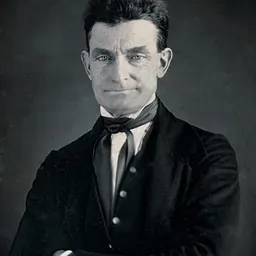
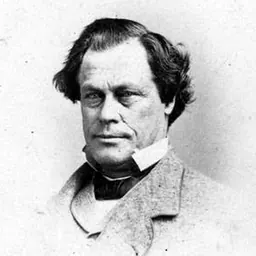
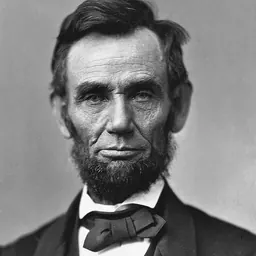


Related people
Same field, nearest in time


Contemporaries
People whose lives overlapped Elijah Parish Lovejoy's





Frequently asked questions
Who was Elijah Parish Lovejoy?
American minister, journalist, and abolitionist (1802–1837)
When was Elijah Parish Lovejoy born?
Elijah Parish Lovejoy was born on 9 November 1802 in Albion.
When did Elijah Parish Lovejoy die?
Elijah Parish Lovejoy died on 7 November 1837 in Alton.
What was Elijah Parish Lovejoy's occupation?
Elijah Parish Lovejoy was a journalist and editor.
What nationality was Elijah Parish Lovejoy?
Elijah Parish Lovejoy was American.
Sources & further reading
· Wikipedia: Elijah Parish Lovejoy
· DBpedia: Elijah Parish Lovejoy
Cite this page
APA: Biography.guide. (2026). Elijah Parish Lovejoy. https://biography.guide/elijah-parish-lovejoy/
MLA: "Elijah Parish Lovejoy." Biography.guide, https://biography.guide/elijah-parish-lovejoy/.
Chicago: "Elijah Parish Lovejoy." Biography.guide. https://biography.guide/elijah-parish-lovejoy/.
Data last updated: 2026-09-22 · Spot an error? Report a correction.
Portrait: Wikimedia Commons · author & licence
Page generated 2026-09-27 05:04 UTC