
About Owen Browne Carter
Lived 1806 – 1859 (aged 52–53). Owen Browne Carter was a British architect.
Owen Browne Carter (1806 – 30 March 1859) was an English architect, based in Winchester. His works include The Corn Exchange in Winchester, now the Library, Nork House in Banstead, Surrey, and several churches. He also restored the Great Hall of Winchester Palace and the Poultry Cross at Salisbury.
Life Carter was born in London in 1806. He spent 10 years employed in the office of the architect William Garbett (1770–1834) in Winchester, where he was to spend most of his life.
In about 1829–30 he went to Egypt in the company of Robert Hay, stopping on the way in Malta. He spent some time in Cairo, where he made a large number of architectural and topographical drawings, Carter's drawings and plans of the house are held by Metropolitan Museum in New York. The house was demolished shortly after the Second World War.
St Matthew's Church, Otterbourne, designed in collaboration with William Yonge. Afterwards, he drew up designs for the new church of St Peter, Southampton - a Norman Revival building with an unusual "Rhenish helm" spire - and for the rebuilding of St Matthew, Otterbourne (in collaboration with the squire, William Yonge, St Mary, Nutley, and St. Michael and All Angels, Knights Enham, although the last of these was not carried out.
His buildings in Winchester included the New Corn Exchange (now a public library), In 1845 he restored the Great Hall of the Royal Palace at Winchester, renewing the stonework of the parapet and gables, and the plate tracery in the windows, removing the late 18th-century wooden window frames, and replacing the Georgian brick porch with one of a Gothic design.
The Great Hall at Winchester, which Carter restored, replacing the Georgian porch.
He exhibited architectural drawings at the Royal Academy between 1847 and 1851, showing designs for the rebuilding of Holyrood Church, Southampton, and for restorations of the Poultry Cross at Salisbury (carried out in 1852-4) and the screen at Winchester Cathedral. His address is given in the catalogues as 22 Southgate Street, Winchester. He published some works on local subjects such as Picturesque Memorials of Winchester (1830), and contributed articles to John Weale's Quarterly Papers on Architecture on the stained-glass windows of Winchester Cathedral, on Beaulieu Abbey, and on the churches of Penton Mewsey, Headbourne Worthy, and Bishopstone. All these articles were illustrated with his own drawings.
Carter died at Salisbury on 30 March 1859, aged 53.
Don’t just read it —
keep it.
Full-length biographies made to live with: read them, listen on the way to work, watch them tonight.
- E-book
- Audio
- Video
Instant download · yours to keep · every purchase keeps this site free
Important facts
People in Owen Browne Carter's life
Named in this biography and alive at the same time

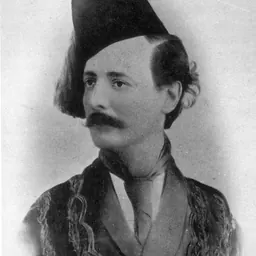

Related people
Same field, nearest in time




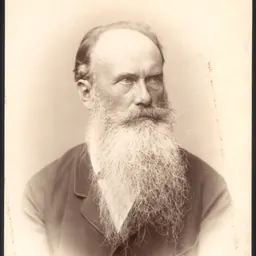
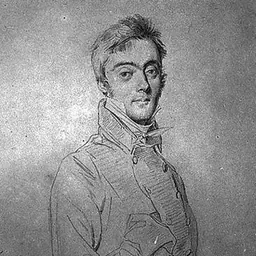
Contemporaries
People whose lives overlapped Owen Browne Carter's





Frequently asked questions
Who was Owen Browne Carter?
English architect
When was Owen Browne Carter born?
Owen Browne Carter was born in 1806.
When did Owen Browne Carter die?
Owen Browne Carter died on 30 March 1859.
What was Owen Browne Carter's occupation?
Owen Browne Carter was an architect.
What nationality was Owen Browne Carter?
Owen Browne Carter was British.
Sources & further reading
· Wikipedia: Owen Browne Carter
Cite this page
APA: Biography.guide. (2026). Owen Browne Carter. https://biography.guide/owen-browne-carter/
MLA: "Owen Browne Carter." Biography.guide, https://biography.guide/owen-browne-carter/.
Chicago: "Owen Browne Carter." Biography.guide. https://biography.guide/owen-browne-carter/.
Data last updated: 2026-09-20 · Spot an error? Report a correction.
Page generated 2026-09-27 05:07 UTC