
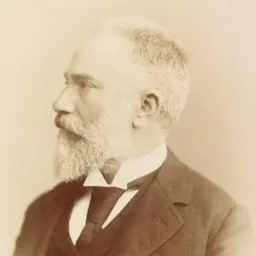
Otto Weddigen
German World War I U-boat commander
About Otto Weddigen
Lived 1882 – 1915 (aged 32). Otto Weddigen was a German submariner.
Legacy Weddigen was celebrated as a war hero in Germany as a result of his military successes, which were perceived as sensational; Herford made him an honorary citizen at the age of 32. Adoration and the creation of legends quickly spread, propagandistically led by the tabloid press loyal to the Kaiser. Beer mugs, medals, wall plates and portrait busts of him were circulated in large numbers. It was soon said that almost every German household had a memento of Weddigen. The cult surrounding the submarine commander during the First World War was later surpassed only by the fighter pilot Manfred von Richthofen, who was shot down on 21 April 1918.
In 1927, Heinz Paul made the feature film U 9 Weddigen with Carl de Vogt in the leading role. Under the National Socialist regime, the memory of the former "war hero" was once again promoted, and several biographies were published.
Even in the Weimar Republic and the National Socialist era, the memory of the naval officer remained alive. Under the National Socialist regime, the memory of the former "war hero" was once again promoted, and several biographies were published. At the University of Kiel, the local Association of German Students Kiel, together with the Academic-Musical Association Albingia and the Academic Gymnastics Association Ditmarsia, formed a comradeship Otto Weddigen of the NSD Student Union after the coordination of the student associations in 1938.
When the German submarine force was rebuilt, the first newly founded flotilla was named after Weddigen in 1935. Karl Dönitz was the first commander. The boat , like Weddigen's U-9, bore the Iron Cross as a turret badge. Department 6/160 of the Reich Labor Service in Herford was also named after Weddigen. In 1937, the newly built youth hostel in Wilhelmshaven - Rüstringen was given the name Weddigen Youth Hostel. During this time, Leitz built both an underwater camera and a pair of prism binoculars called Weddigen under the brand name Leica. In Herford in 1937, a monument to Weddigen by Ernst Paul Hinkeldey was erected.
After World War II, Weddigen - unlike Richthofen - was largely forgotten outside of naval circles. At the beginning of the 1950s, published several paperback novels about U-9 and Weddigen, including 1953's Mit Weddigen auf große Kriegsfahrt (With Weddigen on a Great War Voyage ). Books about Weddigen as well as devotional items from the hero worship in the German Reich can now only be found in second-hand bookshops and at flea market dealers specializing in militaria. However, with a renewed interest in the events of the First World War, researchers and the arts pages are beginning to take a renewed interest in Weddigen as a person.
In Herford, a memorial plaque is attached to the , Weddigen's birthplace on the corner of Petersilienstrasse and Frühherrenstrasse. The Weddigenufer on the Werre was named after him. An outdoor swimming pool built there in 1935 was used as a military facility for a long time (after the war also by the British Army) bore his name. In the last years before its demolition, the people of Herford called the outdoor pool "Otto" for short. In 1997, a leisure pool was built on the site with the name , a synonym for Herford's 2nd Otto. The Otto Weddigen Marine Association, based in the town, also commemorates him.
The modern German Navy submarine also bore the Iron Cross as its coat of arms.
A floating pier in the Kiel naval base is called Weddigenbrücke.
In Berlin, several streets were named after the submarine commander; Weddigenweg in the Steglitz-Zehlendorf district still exists today. In Oberhausen - , Thalstraße was also renamed after him in 1936 and has been called Otto-Weddigen-Straße ever since.
Streets in Augsburg, Aurich, Bielefeld, Freiburg im Breisgau, Gerlingen, Hanover, Landsberg am Lech, Lünen, Munich, Münster, Nordhorn, Nuremberg, Oldenburg, Wuppertal as well as Danzig-Stolzenberg (until 1945), Hamburg (until 1947) and Kiel (also until 1947) are or were named after him. In the small town of Neukirchen-Vluyn on the Lower Rhine, three streets in a mining settlement built in 1919 bear his name (Weddigenplatz, Weddigenallee, Weddigenstraße).
In Düsseldorf-Niederkassel, a rifle company has borne the name Otto Weddigen Company since 1935 – the twentieth anniversary of the U-boat commander's death .
In the private, publicly accessible U-Boat Archive Museum in Cuxhaven, the Otto Weddigen Room is named after him.
Don’t just read it —
keep it.
Full-length biographies made to live with: read them, listen on the way to work, watch them tonight.
- E-book
- Audio
- Video
Instant download · yours to keep · every purchase keeps this site free
Important facts
People in Otto Weddigen's life
Named in this biography and alive at the same time




Related people
Same field, nearest in time


Contemporaries
People whose lives overlapped Otto Weddigen's



Frequently asked questions
Who was Otto Weddigen?
German World War I U-boat commander
When was Otto Weddigen born?
Otto Weddigen was born on 15 September 1882 in Herford.
When did Otto Weddigen die?
Otto Weddigen died on 18 March 1915 in Pentland Firth.
What was Otto Weddigen's occupation?
Otto Weddigen was a submariner.
What nationality was Otto Weddigen?
Otto Weddigen was German.
Sources & further reading
Cite this page
APA: Biography.guide. (2026). Otto Weddigen. https://biography.guide/otto-weddigen/
MLA: "Otto Weddigen." Biography.guide, https://biography.guide/otto-weddigen/.
Chicago: "Otto Weddigen." Biography.guide. https://biography.guide/otto-weddigen/.
Data last updated: 2026-09-20 · Spot an error? Report a correction.
Page generated 2026-09-27 05:26 UTC