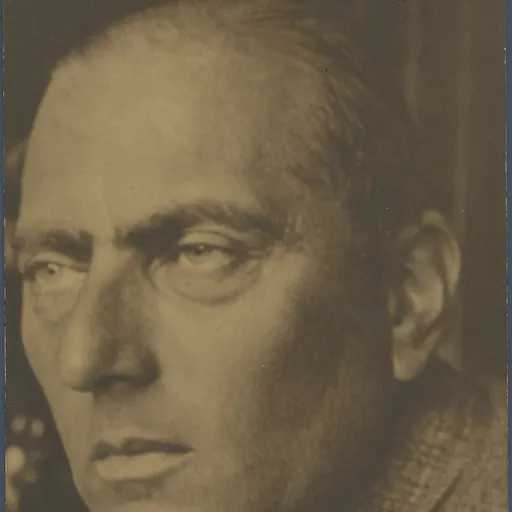
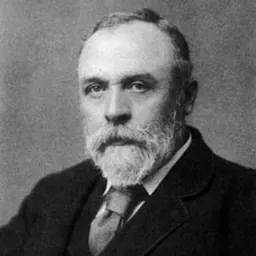
Otto Toeplitz
German mathematician
About Otto Toeplitz
Lived 1881 – 1940 (aged 58). Otto Toeplitz was a mathematician, historian of mathematics and university teacher, known for Hellinger–Toeplitz theorem, Silverman–Toeplitz theorem and Toeplitz matrix.
Otto Toeplitz (1 August 1881 – 15 February 1940) was a German mathematician working in functional analysis. In addition to his mathematical research, Toeplitz is well known for the popular mathematics book The Enjoyment of Mathematics, co-authored with Hans Rademacher.
Life and work
Toeplitz was born to a Jewish family of mathematicians. Both his father and grandfather were gymnasium mathematics teachers and published papers in mathematics. Toeplitz grew up in Breslau and graduated from the gymnasium there. He then studied mathematics at the University of Breslau and was awarded a doctorate in algebraic geometry in 1905. In 1906 Toeplitz arrived at Göttingen University, which was then the world's leading mathematical center, and he remained there for seven years. The mathematics faculty included David Hilbert, Felix Klein, and Hermann Minkowski. Toeplitz joined a group of young people working with Hilbert: Max Born, Richard Courant and Ernst Hellinger, with whom he collaborated for many years afterward. At that time Toeplitz began to rework the theory of linear functionals and quadratic forms on n-dimensional spaces for infinite dimensional spaces. He wrote five papers directly related to spectral theory of operators which Hilbert was developing. During this period he also published a paper on summation processes and discovered the basic ideas of what are now called the Toeplitz operators. In 1913 Toeplitz became an extraordinary professor at the University of Kiel. He was promoted to a professor in 1920.
In 1911, Toeplitz proposed the inscribed square problem:
Does every Jordan curve contain an inscribed square?
This has been established for convex curves and smooth curves, but the question remains open in general (2007).
In 1927, Toeplitz and Hellinger completed an article on integral equations for Felix Klein's Encyclopedia of Mathematical Sciences.
Together with Hans Rademacher, he wrote a classic of popular mathematics Von Zahlen und Figuren, which was first published in 1930 and later translated into English as Enjoyment of Mathematics.
Toeplitz was deeply interested in the history of mathematics. In 1929, he cofounded "Quellen und Studien zur Geschichte der Mathematik" with Otto Neugebauer and Julius Stenzel. Beginning in the 1920s, Toeplitz advocated a "genetic method" in teaching of mathematics, which he applied in writing the book Entwicklung der Infinitesimalrechnung ("The Calculus: A Genetic Approach"). The book introduces the subject by giving an idealized historical narrative to motivate the concepts, showing how they developed from classical problems of Greek mathematics. It was left unfinished, edited by Gottfried Köthe and posthumously published in German in 1946 (English translation: 1963).
In 1928 Toeplitz succeeded Eduard Study at Bonn University. In 1933, the Civil Service Law came into effect and professors of Jewish origin were removed from teaching. Initially, Toeplitz was able to retain his position due to an exception for those who had been appointed before 1914, but he was nonetheless dismissed in 1935. In 1939 he emigrated to Mandatory Palestine, where he was scientific advisor to the rector of the Hebrew University of Jerusalem. He died in Jerusalem from tuberculosis a year later.
In his own words: ...Mathematics and mathematical thinking are not only part of a special science, but are also closely connected with our general culture and its historic development of mathematical thinking, a bridge to the so called Arts and Sciences and the seemingly so non-historic exact sciences can be found...Our main purpose is to help build such a bridge. Not for the sake of history but for the genesis of problems, facts and proofs, for the sake of the decisive turning points of that genesis...By going back to the roots of these conceptions, back through the dust of times past, the scars of long use would disappear and they would be reborn to us as creatures full of life. — Toeplitz, 1926 Otto Toeplitz, The calculus: a genetic approach, The University of Chicago Press, 2007 ; (1st edition, 1963)
Don’t just read it —
keep it.
Full-length biographies made to live with: read them, listen on the way to work, watch them tonight.
- E-book
- Audio
- Video
Instant download · yours to keep · every purchase keeps this site free
Important facts
People in Otto Toeplitz's life
Named in this biography and alive at the same time

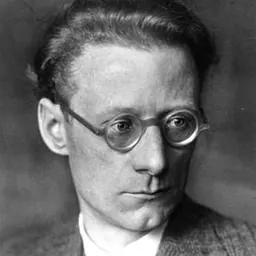
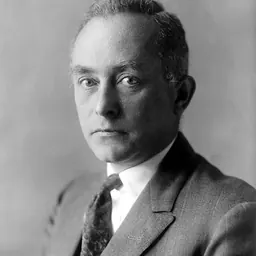


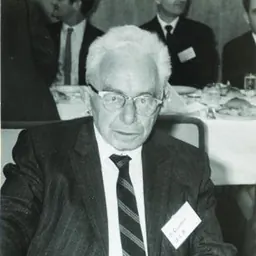
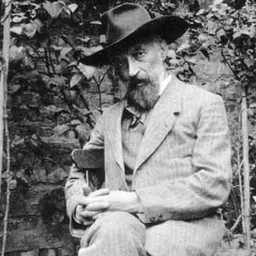

Related people
Same field, nearest in time


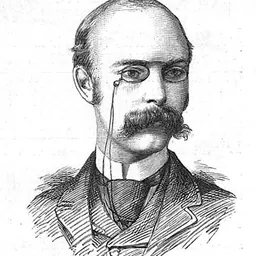


Contemporaries
People whose lives overlapped Otto Toeplitz's

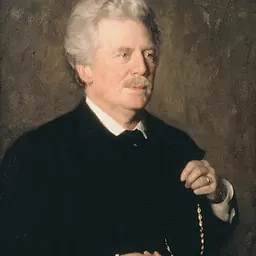
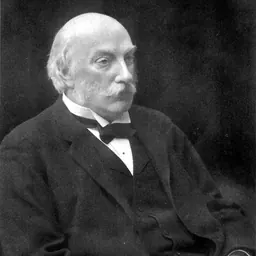


Frequently asked questions
Who was Otto Toeplitz?
German mathematician (1881–1940)
When was Otto Toeplitz born?
Otto Toeplitz was born on 1 August 1881 in Wrocław.
When did Otto Toeplitz die?
Otto Toeplitz died on 15 February 1940 in Jerusalem.
What was Otto Toeplitz's occupation?
Otto Toeplitz was a mathematician, historian of mathematics and university teacher.
What was Otto Toeplitz known for?
Otto Toeplitz was known for Hellinger–Toeplitz theorem, Silverman–Toeplitz theorem and Toeplitz matrix.
What nationality was Otto Toeplitz?
Otto Toeplitz's recorded nationality: German Reich.
Sources & further reading
Cite this page
APA: Biography.guide. (2026). Otto Toeplitz. https://biography.guide/otto-toeplitz/
MLA: "Otto Toeplitz." Biography.guide, https://biography.guide/otto-toeplitz/.
Chicago: "Otto Toeplitz." Biography.guide. https://biography.guide/otto-toeplitz/.
Data last updated: 2026-09-23 · Spot an error? Report a correction.
Portrait: Wikimedia Commons · author & licence
Page generated 2026-09-27 05:05 UTC