
About Otto Loewi
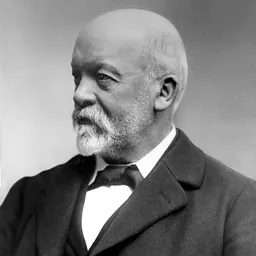
Lived 1873 – 1961 (aged 88). Otto Loewi was a German, American and Austrian pharmacist, neuroscientist, pharmacologist, university teacher, physiologist and physician.
Otto Loewi (; 3 June 1873 – 25 December 1961) Loewi met Dale in 1902 when spending some months in Ernest Starling's laboratory at University College, London.
Biography Loewi was born in Frankfurt, Germany on June 3, 1873, in a Jewish family. He went to study medicine at the University of Strasbourg, Germany (now part of France), in 1891, where he attended courses by famous professors Gustav Schwalbe, Oswald Schmiedeberg, and Bernhard Naunyn among others. He received his medical doctoral degree in 1896. He also was a member of the fraternity Burschenschaft Germania Strassburg. From 1897 to 1898, he served as an assistant to Carl von Noorden, clinician at the City Hospital in Frankfurt. Soon, however, after seeing the high mortality in countless cases of far-advanced tuberculosis and pneumonia, left without any treatment because of lack of therapy, he decided to drop his intention to become a clinician and instead to carry out research in basic medical science, in particular pharmacology. In 1898, he became an assistant of Professor Hans Horst Meyer, the renowned pharmacologist at the University of Marburg. During his first years in Marburg, Loewi's studies were in the field of metabolism. As a result of his work on the action of phlorhizin, a glucoside provoking glycosuria, and another one on nuclein metabolism in man, he was appointed «Privatdozent» (lecturer) in 1900. Two years later he published his paper «Über Eiweisssynthese im Tierkörper» (on protein synthesis in the animal body), proving that animals are able to rebuild their proteins from their degradation products, the amino acids – an essential discovery with regard to nutrition.
He married Guida Goldschmiedt (1889–1958) in 1908. They had three sons and a daughter. He was the last Jew hired by the University between 1903 and the end of the war.
In 1921, Loewi investigated how vital organs respond to chemical and electrical stimulation. He also established their relative dependence on epinephrine for proper function. Consequently, he learnt how nerve impulses are transmitted by chemical messengers. The first chemical neurotransmitter that he identified was acetylcholine.
After being arrested, along with two of his sons, on the night of the German invasion of Austria, March 11, 1938, Loewi was released after three months on condition that he "voluntarily" relinquish all his possessions, including his research, to the Nazis. He arrived to Britain in September 1938 and shortly afterwards he was offered a visiting professorship at the Université libre de Bruxelles via the Francqui Foundation.
After teaching one semester in the first half of 1939 and going on vacation in England Loewi did not return to Brussels in September due to the outbreak of World War II. Loewi worked at the Nuffield Institute for Medical Research affiliated with Oxford before accepting an offer of a tenured research professor position at the New York University College of Medicine. He arrived to the US in June 1940 and was joined by his wife only in early 1941 (she was not allowed to leave earlier).
In 1946, Loewi became a naturalized citizen of the United States. In 1954, he became a Foreign Member of the Royal Society.
Research In his most famous experiment, Loewi took fluid from one frog heart and applied it to another, slowing the second heart and showing that synaptic signaling used chemical messengers.
Before Loewi's experiments, it was unclear whether signaling across the synapse was bioelectrical or chemical. While pharmacology experiments had established that physiological responses such as muscle contraction could be induced by chemical application, there was no evidence that cells released chemical substances to cause these responses. From that point on, the consensus was that the Nobel was not a matter of "if" but of "when."
Thirteen years later, Loewi was awarded the Nobel Prize in Physiology or Medicine, which he shared with Sir Henry Hallett Dale.
Loewi's mydriatic test Loewi observed that by removing the pancreas from dogs, it gave them an experimental form of diabetes, which led to a change of the response of the eye to adrenaline. This compound in normal dogs has no effect, but in the dogs without a pancreas the pupil dilated. This test involves instilling repeated doses of 1:1000 adrenaline solution into the eye and looking for pupillary dilation. Surgeons used this as a diagnostic test for acute pancreatitis, which was based on Loewi's observation of such a phenomenon in dogs that had had their pancreas removed. The usefulness of this test was reported in a case series of two patients; it was, as expected, negative in a case involving carcinoma of the bile duct, but positive in a case of pancreatitis. The effectiveness of this test was subsequently investigated. The mechanism of action of this phenomenon is unclear, but has been attributed to "a functional toxic disturbance of the sympathetic post-ganglionic neuron innervating the iris".
Awards and honours 1936: Nobel Prize for Medicine (with Henry Hallett Dale) Honorary doctorates from New York University, Yale University, University of Graz and the University of Frankfurt Physiology Prize of the Royal Academy of Sciences of Bologna Lieben Prize of the Academy of Vienna 1944: Cameron Prize for Therapeutics of the University of Edinburgh Honorary member of The Physiological Society in London, Harvey Society in New York and the Società Italiana di Biologia Sperimentale Corresponding member of the Medical Association in Vienna, Biological Society of Vienna, and the Society for the Advancement of Science in Marburg. Member of the German Academy of Sciences Leopoldina in Halle. Elected a Foreign Member of the Royal Society (ForMemRS) in 1954 1957: Schmiedeberg badge of the German Pharmacological Society 1959: Austrian Medal for Science and Art 1959: Honorary Ring of the city of Graz A street, "Otto Loewi Gasse" was named after him in the parish of St. Peter, Graz, Austria.
Don’t just read it —
keep it.
Full-length biographies made to live with: read them, listen on the way to work, watch them tonight.
- E-book
- Audio
- Video
Instant download · yours to keep · every purchase keeps this site free
Important facts
People in Otto Loewi's life
Named in this biography and alive at the same time

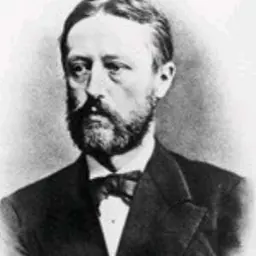
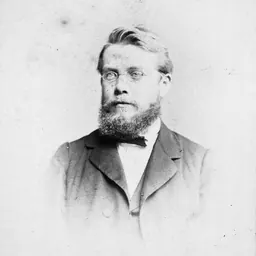

Related people
Same field, nearest in time

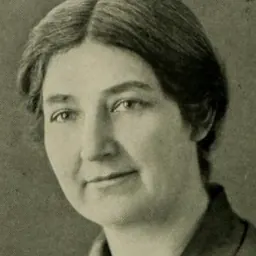
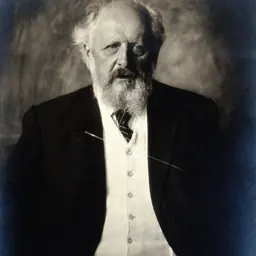


Contemporaries
People whose lives overlapped Otto Loewi's

Frequently asked questions
Who was Otto Loewi?
Jewish-German pharmacologist
When was Otto Loewi born?
Otto Loewi was born on 3 June 1873 in Frankfurt.
When did Otto Loewi die?
Otto Loewi died on 25 December 1961 in New York City.
What was Otto Loewi's occupation?
Otto Loewi was a pharmacist, neuroscientist, pharmacologist, university teacher, physiologist and physician.
What nationality was Otto Loewi?
Otto Loewi was German, American and Austrian.
Sources & further reading
Cite this page
APA: Biography.guide. (2026). Otto Loewi. https://biography.guide/otto-loewi/
MLA: "Otto Loewi." Biography.guide, https://biography.guide/otto-loewi/.
Chicago: "Otto Loewi." Biography.guide. https://biography.guide/otto-loewi/.
Data last updated: 2026-09-20 · Spot an error? Report a correction.
Page generated 2026-09-27 05:17 UTC