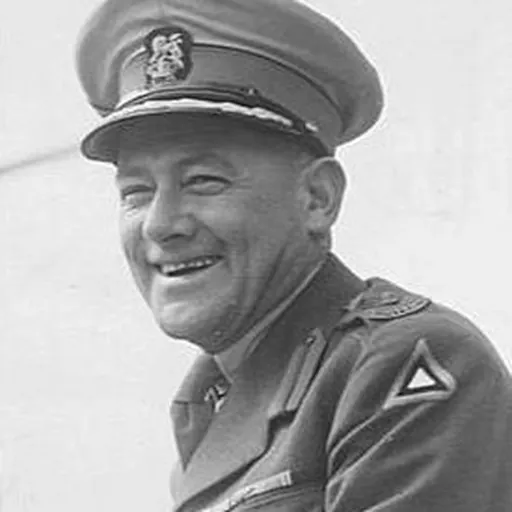
About Colin Hall Simpson
Lived 1894 – 1964 (aged 70). Colin Hall Simpson was an Australian pharmacist.
Major General Colin Hall Simpson, (13 April 1894 – 23 August 1964) was an Australian Army officer who rose to the rank of major general as Signal Officer in Chief during the Second World War. He was one of the founders of Amcal, the largest retail pharmacy chain in Australia.
Simpson joined the Australian Imperial Force in 1916 and served on the Western Front in the Battle of Messines and Battle of Passchendaele. He was twice wounded and was mentioned in despatches and awarded the Military Cross. After the war he worked as a pharmacist and rose to the rank of colonel in the Militia. He transferred to the Australian Corps of Signals on its formation in 1925.
During the Second World War he participated in the campaigns in Greece and Syria as Chief Signals Officer of the I Corps. He returned to Australia in 1942 to become the Australian Army's Signal Officer in Chief. He also became the first Australian Corps of Signals officer to reach the rank of major general.
Early life Colin Hall Simpson was born in St Kilda, Victoria, on 13 April 1894, the son of Colin Simpson, a plumber, and his wife Elizabeth Fulton Simpson, née Jordan. He was educated at St Kilda Primary School, and, from 1911, at Caulfield Grammar School. While at Caulfield Grammar, Simpson joined the Australian Army Cadets, rising to the rank of sergeant. After leaving school he became an apprentice pharmacist.
alt=A crowd of diggers in slouch hats pose in front of a ship docked at the wharf. The 3rd Division carried out its first offensive at the Battle of Messines in June 1917. For his part in the battle, Simpson was awarded the Military Cross. His citation read:
Simpson participated in the Battle of Passchendale where he was gassed and wounded. He was evacuated to England on 22 October 1917. While in hospital he applied for nine months' leave to return to Australia and complete his pharmaceutical studies. He had passed the Intermediate Examination before leaving Australia but not the Final Examination. This was granted, and he embarked for home on the transport HMAT Persic on 21 December 1917. He passed the Final Examination and was registered as a pharmacist on 10 July 1918. He never returned to the front, and his AIF appointment was terminated on 9 August 1918.
Second World War Middle East Simpson joined the Second Australian Imperial Force on 15 October 1939 with the rank of lieutenant colonel. He was allocated the AIF service number VX79, and assumed command of the Australian Corps Signals. When the I Corps was formed in April 1940, Lieutenant General Sir Thomas Blamey was appointed its commander, and Simpson its Chief Signals Officer, with a promotion to the rank of colonel.
Simpson embarked on the transport Nieuw Holland on 15 September 1940, arriving in Kantara, Egypt, on 12 October. He met with his British counterparts and discussed arrangements for the creation of an AIF Signals School in the Middle East. Some negotiation was required before this proposal was finally accepted. He was disappointed at the standard of training that had been achieved by the I Corps and 6th Division signals units in the Middle East, and just as disappointed with the reinforcements arriving from Australia. Both the standard of training of the units and the establishment of the schools intended to remedy the situation were hampered by a serious shortage of equipment. The 6th Division's list of critical shortfalls—by no means restricted to signals equipment—included 120 telephones and of electrical cable. Not until January 1941—after the 6th Division had been committed to battle in Libya—did the cable become available in Australia. Some units equipped themselves with captured enemy materiel.
Simpson arrived in Greece on 7 March 1941 as part of the I Corps advance party. The Battle of Greece presented a major challenge for Simpson's signal units, as rugged terrain, enemy action and frequent troop movements conspired to frustrate their efforts to maintain reliable communications. The news that Yugoslavia had offered to surrender reached Blamey from a BBC broadcast on 15 April picked up on a receiver built into a kerosene case that Simpson had insisted that he take. Many pieces of signal equipment was lost during the fighting, and some had to be destroyed following the order to evacuate Greece. Simpson embarked for Crete on on 25 April. From there he took a flying boat to Alexandria. His first priority on arrival was arranging for the lost equipment to be replaced.
The shortage of signal equipment was an important factor in the delay in committing the I Corps to the Syria–Lebanon campaign until it became clear that General Sir Henry Maitland Wilson could not adequately control operations from his headquarters at the King David Hotel in Jerusalem. Once again, the signallers had to battle with inhospitable terrain. The hills and atmospheric conditions made reception difficult for the radio operations, and those same hills, along with shortages of cable, made the linesmen's task no less difficult. He was mentioned in despatches, and appointed a Commander of the Order of the British Empire for "maintenance of communications under difficult conditions in the Grecian campaign".
Simpson was promoted to the rank of brigadier on 11 September 1941, becoming the first officer of the Australian Corps of Signals to reach that rank.
To man his signals units, Simpson sought to obtain some 4,000 Australian Women's Army Service (AWAS) personnel. Two special signal training battalions were activated to cater for them, and Simpson inspected the 2nd Signal Training Battalion (AWAS) at Ivanhoe Grammar School with Lieutenant Colonel Sybil Irving on 6 July 1942. By 1945, the Australian Corps of Signals numbered some 25,000 men and women. In 1946 he was appointed director of the Columbia Graphophone Company (Australia).
Simpson was a keen supporter of the Essendon Football Club, serving as its vice president from 1947 to 1964. He was awarded a life membership in 1957. He was elected Victorian State President of the Australian Legion of Ex-Servicemen and Women in 1948. He resigned in October after a dispute with the State Council over its suspension of two members for being communists, which Simpson opposed. Yet Simpson was no communist sympathiser; far from it. He organised The Association, a clandestine right wing paramilitary organisation headed by Blamey which was established to counter a possible communist coup. The Association disbanded in 1950.
Death and legacy Simpson died of cancer in Heidelberg Repatriation Hospital on 23 August 1964. He was survived by his wife and daughter.
Don’t just read it —
keep it.
Full-length biographies made to live with: read them, listen on the way to work, watch them tonight.
- E-book
- Audio
- Video
Instant download · yours to keep · every purchase keeps this site free
Important facts
People in Colin Hall Simpson's life
Named in this biography and alive at the same time



Related people
Same field, nearest in time

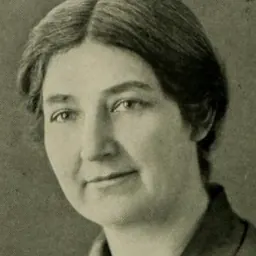



Contemporaries
People whose lives overlapped Colin Hall Simpson's
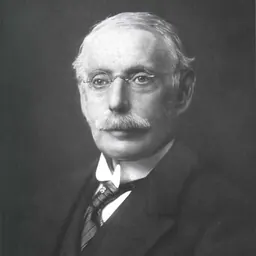

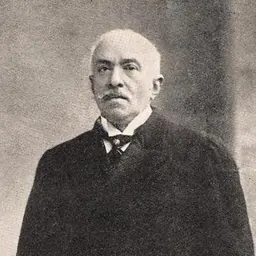

Frequently asked questions
Who was Colin Hall Simpson?
Australian general (1894-1964)
When was Colin Hall Simpson born?
Colin Hall Simpson was born on 13 April 1894 in St Kilda.
When did Colin Hall Simpson die?
Colin Hall Simpson died on 23 August 1964 in Heidelberg.
What was Colin Hall Simpson's occupation?
Colin Hall Simpson was a pharmacist.
What nationality was Colin Hall Simpson?
Colin Hall Simpson was Australian.
Sources & further reading
· Wikipedia: Colin Hall Simpson
Cite this page
APA: Biography.guide. (2026). Colin Hall Simpson. https://biography.guide/colin-hall-simpson/
MLA: "Colin Hall Simpson." Biography.guide, https://biography.guide/colin-hall-simpson/.
Chicago: "Colin Hall Simpson." Biography.guide. https://biography.guide/colin-hall-simpson/.
Data last updated: 2026-09-20 · Spot an error? Report a correction.
Page generated 2026-09-27 05:10 UTC