
About Otto Kuntze
Lived 1843 – 1907 (aged 63–64). Otto Kuntze was a botanist, biologist, geologist, traveler, botanical collector and scientific collector.
Carl Ernst Otto Kuntze (23 June 1843 – 27 January 1907) was a German businessman and botanist. He went on a round-the-world plant collecting trip from 1874 to 1876 making extensive collections from South America and Asia. His major contribution was a three volume revision of plant genera Revisio Generum Plantarum. This revision troubled many botanists because of the changes he suggested to nearly 30000 taxa, many which were contrary to the rules established by the botanical congress of 1867. This however forced botanists to make reforms to the botanical code.
Life and work
Otto Kuntze was born in Leipzig and was educated in a Realschule followed by commercial training. He also attended courses for pharmacists. As a young boy he had already become interested in plants and had made collections in Leipzig. This allowed him to publish a Taschen-Flora von Leipzig (1867, "Pocket flora of Leipzig"). Between 1863 and 1866, he worked as clerk in a Berlin business and traveled through central Europe and Italy. He collaborated with Berlin botanists Alexander Braun (1805-1877) and Paul Ascherson (1834-1913) and produced a revision of the Rubus species in Germany. From 1868 to 1873, he started his own factory in Leipzig for essential oils and attained a comfortable standard of living within five years. In Leipzig, he took an interest in building codes and demographics of the city. Between 1874 and 1876, he traveled around the world: the Caribbean, United States, Japan, China, Southeast Asia, Arabian peninsula and Egypt. Apart from nearly 7700 plant specimens, he also made ethnological collections which he contributed to the Völkermuseum in Leipzig. The journal of these travels was published as Um die Erde ["Around the World"] (1881). Kuntze was largely self taught in botany. From 1876 to 1878, he formally studied Natural Science in Berlin and Leipzig under J. A. Schenk, P. F. A. Ascherso, P. W. Magnus, H. Credner and C. Luerssen. He gained his doctorate in Freiburg with a monograph on the genus Cinchona ("Monographie der Gattung Cinchona L."). In 1879 he wrote about his ideas on systematics and gave a theoretical framework for dealing with the genus Rubus in Methodik der Speciesbeschreibung und Rubus.
In 1886, Kuntze visited the Russian Near East and spent the 1887–88 period on the Canary Islands. The results of both journeys became part of his main work, the Revisio. He also published Plantae orientali-rossicae (Kuntze, 1887). At the beginning of the 1890s, he left for South America, of which he managed to see nearly all countries. In 1894, he visited the Southern African countries as well as the German colonies. Not all his types have been found.
Botanical systematics and impact Although Kuntze stated that he was merely diligently applying standard practice, his revolutionary ideas about botanic nomenclature created a schism between competing sets of Rules of Botanical Nomenclature, the precursors of the modern International Code of Nomenclature for algae, fungi, and plants. Among his ideas was to consider 1737 as a starting date for determining priority. The conflict came to a head at the 2nd International Botanical Congress in 1905, two years before Kuntze's death. His uncompromising responses to differing views meant that the doors of much of the academic world, particularly in Europe, were closed to him. Potential sources for the schism between Kuntze and the academic world can be seen in examples such as his proposition that Michel Adanson's pre-Linnaean system genus Fungus should be resurrected for numerous Agaricus and Stropharia species. In many cases, the species to be moved had already been reclassified numerous times with several proposed names but Kuntze appears to have disregarded these classifications and simply reclassified the basionym. As a result of this work, the taxonomic records are full of vast defunct genera in which not a single species name is currently accepted. Kuntze's major attempts at reclassification appear to have been influenced by the issues he saw with Linnaean taxonomy and perhaps even Linnaeus himself:
Whilst widely rejected, Kuntze's work cast a strong light on the inadequacy of previous approaches to botanical nomenclature. A group of American botanists developed an alternative set of rules, the Rochester Code, which they proposed in 1892 as an alternative to the International Rules. This schism was not resolved until 1930.
Biographical articles
.
Don’t just read it —
keep it.
Full-length biographies made to live with: read them, listen on the way to work, watch them tonight.
- E-book
- Audio
- Video
Instant download · yours to keep · every purchase keeps this site free
Important facts
People in Otto Kuntze's life
Named in this biography and alive at the same time
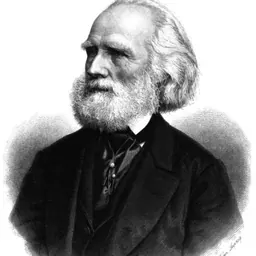
Related people
Same field, nearest in time



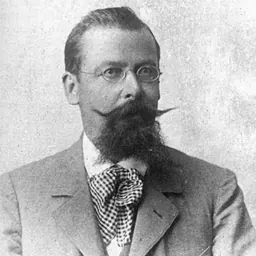
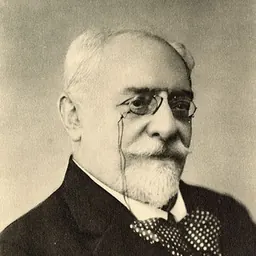

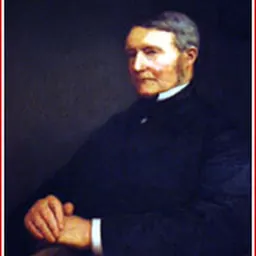
Contemporaries
People whose lives overlapped Otto Kuntze's


Frequently asked questions
Who was Otto Kuntze?
German botanist (1843–1907)
When was Otto Kuntze born?
Otto Kuntze was born on 23 June 1843 in Leipzig.
When did Otto Kuntze die?
Otto Kuntze died in 1907 in Sanremo.
What was Otto Kuntze's occupation?
Otto Kuntze was a botanist, biologist, geologist, traveler, botanical collector and scientific collector.
What nationality was Otto Kuntze?
Otto Kuntze's recorded nationality: Kingdom of Saxony.
Sources & further reading
Cite this page
APA: Biography.guide. (2026). Otto Kuntze. https://biography.guide/otto-kuntze/
MLA: "Otto Kuntze." Biography.guide, https://biography.guide/otto-kuntze/.
Chicago: "Otto Kuntze." Biography.guide. https://biography.guide/otto-kuntze/.
Data last updated: 2026-09-26 · Spot an error? Report a correction.
Page generated 2026-09-27 05:14 UTC