
About Otto Goldschmidt
Lived 1829 – 1907 (aged 77). Otto Goldschmidt was a composer, conductor, pianist and university teacher.
Otto Moritz David Goldschmidt (21 August 1829 – 24 February 1907) was a pianist, composer, conductor and educator, whose works included a piano concerto and other piano pieces, and an oratorio, Ruth, on a biblical theme, written for the Three Choirs Festival. From a prosperous mercantile family in Hamburg, he studied under Felix Mendelssohn at the Leipzig Conservatoire and quickly established himself as a pianist. Among the singers whom he accompanied was the soprano Jenny Lind, known as "the Swedish Nightingale". They toured together in 1851 and married in 1852, after which she insisted on being billed as "Madame Lind-Goldschmidt".
Although Goldschmidt's compositions were regarded as conventional, his work as a teacher and member of the boards of music institutions made him an important figure in British musical life in the latter part of the 19th century. He took British citizenship in 1861. He outlived his wife by twenty years, dying in London aged 77.
Life
Early years Goldschmidt was born on 21 August 1829 in Hamburg (now part of Germany, but then an independent city-state). His parents were Moritz David Goldschmidt and his wife Johanna, née Schwabe. Moritz was a prosperous merchant whose firm operated internationally, with branches in Britain as well as Germany; Johanna was an author and prominent social reformer. The couple had eight children, of whom Otto was the eldest. His mother was highly musical, and give him his first piano lessons.
While still in Hamburg, Goldschmidt studied the piano and harmony with Friedrich Wilhelm Grund and Jacob Schmitt, and in 1843 he became one of the first students at the new Leipzig Conservatoire. For three years he studied there under Felix Mendelssohn, Hans von Bülow, Louis Plaidy and Moritz Hauptmann. As he was financially able, he purchased a ticket, despite the high prices for the concert, and was greatly impressed by the singer's voice and artistry.
From 1846 to 1848 Goldschmidt taught and performed in Hamburg. In 1848 he was sent to Paris to study with Frédéric Chopin. He arrived in time to hear the composer's last Paris performance, given at the Salle Pleyel in February, but had not begun the intended studies with him when the French Revolution of 1848 broke out within days of the concert. Chopin departed for London, and Goldschmidt followed suit. At the time many leading musicians from the Continent were working in London, including Berlioz, Kalkbrenner, Liszt, Moscheles, Thalberg and Pauline Viardot and, importantly for Goldschmidt's career, Jenny Lind. had recruited fellow stars including Luigi Lablache and Giovanni Belletti for a fund-raising recital in July 1848 at the concert room of Her Majesty's Theatre. To accompany this prestigious line-up she engaged as pianist the nineteen-year-old Goldschmidt, to whom she is thought to have been introduced by Chopin.
Lind In March 1849 Goldschmidt and Lind both appeared at two concerts in Sheffield and Nottingham, but did not perform together: Goldschmidt appeared as a soloist and as a duettist with Julius Benedict. He appeared in London again the same month in a concert for the Musical Union. The reviewer in Bell's Weekly Messenger wrote of him:
Goldschmidt performed in Hamburg and Leipzig, and in January 1850 he met Jenny Lind again at Lübeck. (In 1848 in London, the year after the composer's death, Lind organised and sang in a performance of Mendelssohn's Elijah at Exeter Hall, which had been composed with her in mind, to raise funds for a new musical prize, the Mendelssohn Scholarship, to be established in the composer's honour.) Goldschmidt had been baptised into that faith shortly beforehand. He took British nationality in 1861. The concert led to the formation of the Bach Choir, which Goldschmidt conducted until 1885. Goldschmidt's other compositions include a piano concerto, songs, a trio for piano and strings, two pieces for clarinet and piano, numerous pieces and studies for piano solo, and a cantata called Music, for women's voices.
The Times commented in its obituary that although Goldschmidt's compositions made comparatively little mark, "his influence on the art of his time was not inconsiderable". He was elected an honorary member of the Philharmonic Society in 1861, and served on its board of directors; he was a member of the council of the Royal College of Music from its foundation, and he was vice-president of the Royal College of Organists and of the Musical Association.
Later years Lind died in 1887, and her widower, The Times noted, threw himself into his musical and administrative duties "with redoubled zeal". In 1891 he published a collection of the cadenzas and ornaments composed by Lind. He was awarded many honours. He was a Knight of the Swedish Order of Vasa (1876), and was given the Swedish gold medal Litteris et Artibus (1893). He owned the original autograph of Beethoven's 1802 letter to his brothers, the Heiligenstadt Testament, and presented it in 1888 to the Hamburg Stadtbibliothek.
Goldschmidt died on 24 February 1907 at his London house in The Boltons, South Kensington, aged 77. He was buried beside his wife in Great Malvern cemetery, not far from the country house they had shared on the Malvern Hills.
Notes, references and sources
Don’t just read it —
keep it.
Full-length biographies made to live with: read them, listen on the way to work, watch them tonight.
- E-book
- Audio
- Video
Instant download · yours to keep · every purchase keeps this site free
Important facts
People in Otto Goldschmidt's life
Named in this biography and alive at the same time


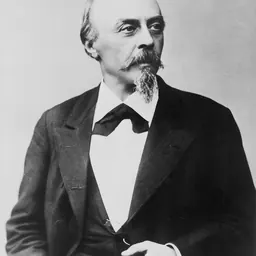

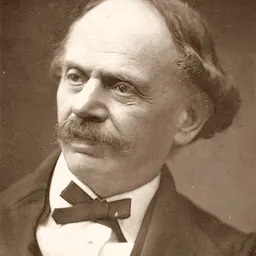

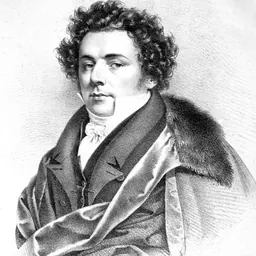
Related people
Same field, nearest in time
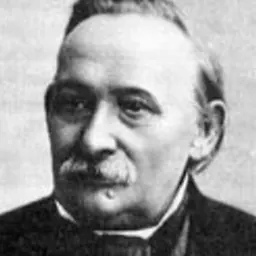

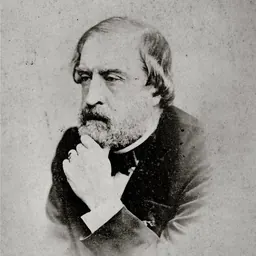
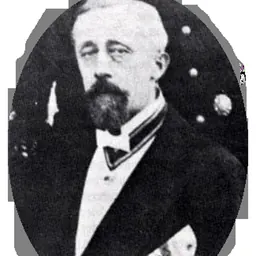
Contemporaries
People whose lives overlapped Otto Goldschmidt's



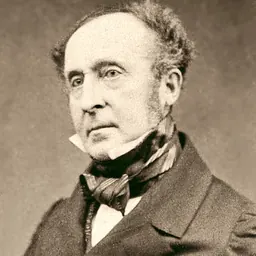
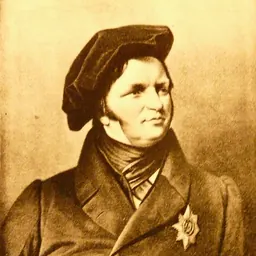
Frequently asked questions
Who was Otto Goldschmidt?
German pianist, composer and conductor (1829–1907)
When was Otto Goldschmidt born?
Otto Goldschmidt was born on 21 August 1829 in Hamburg.
When did Otto Goldschmidt die?
Otto Goldschmidt died on 24 February 1907 in London.
What was Otto Goldschmidt's occupation?
Otto Goldschmidt was a composer, conductor, pianist and university teacher.
What nationality was Otto Goldschmidt?
Otto Goldschmidt's recorded nationality: Hamburg.
Sources & further reading
Cite this page
APA: Biography.guide. (2026). Otto Goldschmidt. https://biography.guide/otto-goldschmidt/
MLA: "Otto Goldschmidt." Biography.guide, https://biography.guide/otto-goldschmidt/.
Chicago: "Otto Goldschmidt." Biography.guide. https://biography.guide/otto-goldschmidt/.
Data last updated: 2026-09-20 · Spot an error? Report a correction.
Page generated 2026-09-27 05:32 UTC