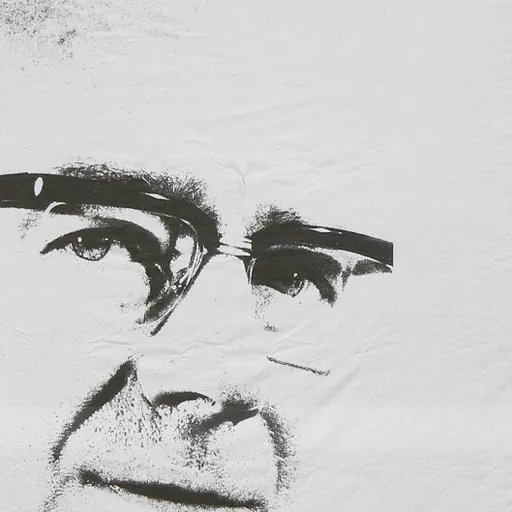
About Otto Brenner
Lived 1907 – 1972 (aged 64). Otto Brenner was a German politician, trade unionist, functionary, union member, german resistance to Nazism and iG Metall.
Otto Brenner (8 November 1907 – 15 April 1972) was a German trades unionist and politician. Between 1956 and 1972 he was the leader of the powerful IG Metall (Industrial Union of Metalworkers).
The Otto-Brenner Foundation for the promotion of scientific research and knowledge is named after him, as is the annually awarded .
Life Provenance and early years Otto Brenner was born and grew up in Hanover, the third of his parents' four children. His mother was a "washerwoman". Here he was engaged in physically heavy work as a rivet-warmer and rivet-presser. He worked next to an extremely hot industrial furnace which produced high levels of carbon monoxide. By the time he reached the age of fifteen he had contracted a severe lung disease which would leave him vulnerable to lung disorders for the rest of his life.
Politics and trades unionism He joined the Young Socialists in 1920 and the Metal Workers' Union in 1922. Driven by a conviction that alcohol and tobacco were contributing to the catastrophic material condition and what he perceived as the political lethargy of working people, he campaigned energetically against their misuse, and in 1926 founded a local branch of the German Workers' Abstinence League ("Deutscher Arbeiter-Abstinenten-Bund" / DAAB), taking on the chairmanship himself. He would remain a life-long non-smoker and vegetarian. He consumed alcohol only very sparingly. He called for a "united proletarian front" of the KPD, SPD and SAPD. His urgent arguments, and those of fellow SAPD activists, failed to find significant resonance within the SPD and the KPD, however. He visited a number of cities in order to create and build contacts with local SAPD parties across the country.
An important personal development was Brenner's marriage to his long-time friend Martha Werner on 3 August 1933.
A couple of years after the war started, on 1 October 1941, Heike Brenner, the Brenners' only child, was born. Having lived through the German disaster between 1933 and 1945, Otto Brenner drew one conclusion in particular to which he would remain true for the rest of his life: "Another 1933 must never be allowed to happen." Otto Brenner and his family had survived. Filled with the hope that it might at last be possible to build a new life Brenner committed himself unreservedly to rebuilding the city. The structure of the General Trades Union reflected a compromise for the creation of a single unified trades union, free from political and religious, but also free of professional/vocational distinctions. Brenner however, like most trades unionists, advocated a structure involving individual industry-sector based trades unions organised under the aegis of a single trades union confederation: that is the structure that was subsequently adopted and which operates to this day. Brenner was the most prominent of the strike leaders, and his name appeared in news reports far beyond the Hanover city limits. The dispute, taking place when Germany was still under the "dictatorship of military occupation", was in support of "the socialisation of production and economic democracy". Brenner demanded "full co-decision rights for factory and office employees in the enterprise and in the economy". This also corresponded with the "Economic Policy Ground-rules" – generally referred to subsequently as the "Munich Ground-rules Programme" ("Münchener Grundsatzprogramm") – adopted by the German Trades Union Confederation ("Deutscher Gewerkschaftsbund" / DGB) at its (re)founding congress in Munich in October 1949. A particular case in point is the programme's demand for "the transfer of key industries to common ownership, especially the mining, iron and steel industries, as well as the major chemicals firms, the energy sector, major transport providers and credit institutes". Expecting that Otto Brenner might call a general strike against a government in which his own party was a coalition partner would have involved expecting a long-standing champion of social-democracy to become a revolutionary. Brenner was no revolutionary and never wished to become one. Werner Thönnessen, his former presschief, contributed an obituary to Der Spiegel: "achieving Civil democracy 'by democratising the economy became Brenner's greatest objective. He found his failure to achieve it a painful thing. Acutely aware of the inherent contradiction in which trades unions become enmeshed if they try to enforce improvements to the economic order from the bottom up, which nevertheless become necessary both to improve the condition of the workers and to extend the life expectancy of capitalism".
Celebration (selection) The "Otto Brenner Bridge" ("Otto-Brenner-Brücke") which forms part of the :de:Bundesstraße 4 RNuremberg Ring Autobahn was named in his honour. The "Joseph Street" ("Josephstraße") was renamed Otto Brenner Street ("Otto-Brenner-Straße") in 1972 The Otto-Brenner (journalism) prize has been awarded in his memory since 2005.
Don’t just read it —
keep it.
Full-length biographies made to live with: read them, listen on the way to work, watch them tonight.
- E-book
- Audio
- Video
Instant download · yours to keep · every purchase keeps this site free
Important facts
Related people
Same field, nearest in time






Contemporaries
People whose lives overlapped Otto Brenner's



Frequently asked questions
Who was Otto Brenner?
German trade unionist and politician (1907–1972)
When was Otto Brenner born?
Otto Brenner was born on 8 November 1907 in Hanover.
When did Otto Brenner die?
Otto Brenner died on 15 April 1972 in Frankfurt.
What was Otto Brenner's occupation?
Otto Brenner was a politician, trade unionist, functionary, union member, german resistance to Nazism and iG Metall.
What nationality was Otto Brenner?
Otto Brenner was German.
Sources & further reading
Cite this page
APA: Biography.guide. (2026). Otto Brenner. https://biography.guide/otto-brenner/
MLA: "Otto Brenner." Biography.guide, https://biography.guide/otto-brenner/.
Chicago: "Otto Brenner." Biography.guide. https://biography.guide/otto-brenner/.
Data last updated: 2026-09-22 · Spot an error? Report a correction.
Portrait: Wikimedia Commons · author & licence
Page generated 2026-09-27 05:01 UTC