
Ossie Davis
American actor, director, poet, playwright, writer, and social activist
About Ossie Davis
Lived 1917 – 2005 (aged 87). Ossie Davis was an American actor, film director, screenwriter, stage actor, television actor and writer.
Ossie Davis (born Raiford Chatman Davis; December 18, 1917 – February 4, 2005) was an American actor, director, writer, and activist. He was married to Ruby Dee, with whom he frequently performed, from 1948 until his death. He received numerous accolades including an Emmy, a Grammy and a Writers Guild of America Award as well as nominations for four additional Emmy Awards, a Golden Globe Award, and Tony Award. Davis was inducted into the American Theater Hall of Fame in 1994 and received the National Medal of Arts in 1995, then Kennedy Center Honors in 2004.
Davis started his career in theatre acting with the Rose McClendon Players in the 1940s. He made his Broadway debut acting in the post-World War II play Jeb (1946). He earned a Tony Award for Best Featured Actor in a Musical nomination for his role in Jamaica (1958). He wrote and starred as the title character in the satirical farce Purlie Victorious (1961) which was adapted into a 1963 film and 1970 musical.
Davis's credits as a film director include Cotton Comes to Harlem (1970), Black Girl (1972), and Gordon's War (1973). He was nominated for a Golden Globe Award for Best Supporting Actor for The Scalphunters (1968). Davis also acted in The Hill (1965), A Man Called Adam (1966), Let's Do It Again (1975), School Daze (1988), Do the Right Thing (1989), Grumpy Old Men (1993), The Client (1994), and Dr. Dolittle (1998).
For his portrayal of Martin Luther King Sr. in the miniseries King (1978) he was nominated for the Primetime Emmy Award for Outstanding Supporting Actor in a Drama Series. He was also Emmy-nominated for his roles in Teacher, Teacher (1969), Miss Evers' Boys (1997), and The L Word (2005). He won the Grammy Award for Best Spoken Word Album with his wife Ruby Dee for Ossie and Ruby (2005).
Early life Raiford Chatman Davis was born in Cogdell, Georgia, the son of Kince Charles Davis, a railway construction engineer, and his wife Laura (née Cooper; July 9, 1898 – June 6, 2004). He inadvertently became known as "Ossie" when his birth certificate was being filed and his mother's pronunciation of his name as "R. C. Davis" was misheard by the Clinch County courthouse clerk. Davis experienced racism from an early age when the KKK threatened to shoot his father, whose job they felt was too advanced for a black man to have. His siblings included scientist William Conan Davis, social worker Essie Davis Morgan, pharmacist Kenneth Curtis Davis, and biology teacher James Davis.
Following the wishes of his parents, he attended Howard University but dropped out in 1939 to fulfill his desire for an acting career in New York after a recommendation by Alain Locke; he later attended Columbia University School of General Studies. His acting career began in 1939 with the Rose McClendon Players in Harlem. During World War II, Davis served in the United States Army in the Medical Corps. He made his film debut in 1950 in the Sidney Poitier film No Way Out.
Career 1939–1963: Acting debut and Broadway work
When Davis wanted to pursue a career in acting, he ran into the usual roadblocks that black people suffered at that time as they generally could only portray stereotypical characters such as Stepin Fetchit. Instead, he tried to follow the example of Sidney Poitier and play more distinguished characters. When he found it necessary to play a Pullman porter or a butler, he played those characters realistically, not as a caricature.
Davis performed in the musical Jamaica, which earned him a Tony Award for Best Featured Actor in a Musical nomination in 1958. In 1961, he wrote and starred in the Broadway play Purlie Victorious, a farce satirizing the confederate south. Davis portrayed the title character Purlie Victorious Judson, acting opposite Ruby Dee and Alan Alda. The play was adapted into a film titled Gone Are the Days!, released in 1963. The Broadway cast reprised their roles for the film. Howard Taubman for The New York Times wrote of the play: "It is marvelously exhilarating to hear the Negro speak for himself, especially when he does so in the fullness of his native gusto and the enveloping heartiness of his overflowing laughter."
1964–1989: Directorial work and commercial success Early television appearances for Davis included The Defenders, Car 54, Where Are You?, The Fugitive, and Bonanza. In addition to acting, Davis, along with Melvin Van Peebles and Gordon Parks, was one of the notable black directors of his generation: he directed movies such as Cotton Comes to Harlem (1970), Black Girl (1972), and Gordon's War (1973). Along with Bill Cosby and Poitier, Davis was one of a handful of black actors able to find commercial success while avoiding stereotypical roles prior to 1970, which also included a significant role in the Otto Preminger directed drama The Cardinal (1963) and the Sidney Lumet prison drama The Hill (1965). He acted in the musical drama A Man Called Adam (1966), performing alongside Sammy Davis Jr., Louis Armstrong, and Cicely Tyson. He played Joseph Lee in the Sydney Pollack-directed western drama The Scalphunters, acting alongside Burt Lancaster and Shelley Winters. For his performance, Davis received a nomination for the Golden Globe Award for Best Supporting Actor – Motion Picture. Critic Roger Ebert of The Chicago Sun-Times praised Davis's performance in the film writing: "Davis, as an educated slave, is gradually initiated into the brutal realities of frontier life. [He] emerges as a genuine comic talent in a very demanding role (actually the lead, although Lancaster gets top billing). His character changes from an Uncle Tom to a rough-and-ready cowboy before your very eyes."
During this time, he acted in the western comedy Sam Whiskey (1969) with Burt Reynolds and Angie Dickinson, the drama Slaves (1969), starring Dionne Warwick, and the action comedy Hot Stuff (1979) with Dom DeLuise and Suzanne Pleshette. Davis starred with Cosby and Poitier in the 1975 film Let's Do It Again. As a playwright, Davis wrote Paul Robeson: All-American, which is frequently performed in theatre programs for young audiences.
In 1976, Davis appeared on Muhammad Ali's novelty album for children, The Adventures of Ali and His Gang vs. Mr. Tooth Decay. He starred as Martin Luther King Sr. in the NBC miniseries King (1978) for which he received a nomination for the Primetime Emmy Award for Outstanding Supporting Actor in a Drama Series, and played Dad Jones in the miniseries Roots: The Next Generations (1979). Davis found recognition late in his life by working in several of director Spike Lee's films, including School Daze (1988), Do the Right Thing (1989), Jungle Fever (1991), Malcolm X (1992), Get on the Bus (1996), and She Hate Me (2004). For the final moments of Malcolm X, Davis, in voiceover, recited the actual eulogy that he wrote and delivered at Malcolm's funeral 27 years earlier.
1990–2005: Later work and final roles
Davis found work as a commercial voice-over artist and served as the narrator of the early-1990s CBS sitcom Evening Shade, starring Burt Reynolds, where he also played one of the residents of a small southern town. Davis and Reynolds had also worked together on Reynolds' previous TV series, B.L. Stryker (1989–1990), aired as part of the ABC Mystery Movie series. He also appeared in several popular 1990s films, including the studio comedies Grumpy Old Men (1993) starring Jack Lemmon and Walter Matthau, and Cop and a Half (1993) with Burt Reynolds, as well as the John Grisham drama film The Client (1994) starring Susan Sarandon and Tommy Lee Jones. He reunited with Spike Lee acting in the film Get on the Bus (1996) and appeared his HBO documentary 4 Little Girls (1997) which was nominated for the Academy Award for Best Documentary Feature. In 1998 he acted in the Eddie Murphy led comedy film Dr. Dolittle. In 1999, he appeared as a theater caretaker in the Trans-Siberian Orchestra film The Ghosts of Christmas Eve, which was released on DVD two years later. For many years, he hosted the annual National Memorial Day Concert from Washington, D.C.
In 1994, Davis played Judge Richard Farris in the Stephen King miniseries The Stand. From 1995 to 1996, he played Judge Harry Roosevelt in the CBS legal drama The Client (reprising his role from the 1994 film). Davis played Erasmus Jones in Promised Land from 1996 to 1998. The series was a spinoff from Touched by an Angel where he played multiple characters from 1996 to 2000. He played Mr. Evers in the HBO film Miss Evers' Boys (1997) starring Laurence Fishburne and Alfre Woodard. The film won the Primetime Emmy Award for Outstanding Television Movie. That same year he acted in the Showtime television film 12 Angry Men (1997) playing Juror #2. He acted in an ensemble cast acting alongside Courtney B. Vance, George C. Scott, James Gandolfini, Jack Lemmon, and Hume Cronyn. He voiced Anansi the spider on the PBS children's television series Sesame Street in its animation segments. He also narrated the HBO Storybook Musicals adaptation of The Red Shoes aired on February 7, 1990. In 1997 he was the narrator in Ken Burns' two-part documentary on Thomas Jefferson. In 2000, he voiced the role of Yar in Disney's live-action animated film Dinosaur.
From 1999 to 2000, he played Mr. Parker in the NBC crime drama Third Watch. He also took roles in the TV film Deacons for Defense (2003), and episodes of Cosby and JAG. Davis's last role was a several episode Emmy-nominated guest role on the Showtime drama series The L Word, as a father struggling with the acceptance of his daughter Bette (Jennifer Beals) parenting a child with her lesbian partner. In his final episodes, his character took ill and died. His wife Ruby Dee was present during the filming of his own death scene. That episode, which aired shortly after Davis's own death, aired with a dedication to the actor. After Davis's death, actor Dennis Haysbert portrayed him in the 2015 film Experimenter.
Personal life Marriage
In 1948, Davis married actress Ruby Dee, whom he had met on the set of Robert Ardrey's 1946 play Jeb. In their joint autobiography With Ossie and Ruby, they described their decision to have an open marriage, later changing their minds. In the mid-1960s they moved from their long-time home in Mt. Vernon, NY to the New York suburb of New Rochelle, where they remained ever after. Their son Guy Davis is a blues musician and former actor, who appeared in the film Beat Street (1984) and the daytime soap opera One Life to Live. Their daughters are Nora Davis Day and Hasna Muhammad.
Political activism
Davis and Dee were well known as civil rights activists during the Civil Rights Movement and were close friends of Malcolm X, Jesse Jackson, Martin Luther King Jr. and other icons of the era. They were involved in organizing the 1963 civil rights March on Washington for Jobs and Freedom, and served as its emcees. Davis, alongside Ahmed Osman, delivered the eulogy at the funeral of Malcolm X. He re-read part of this eulogy at the end of Spike Lee's film Malcolm X. He also delivered a stirring tribute to Dr. Martin Luther King Jr, at a memorial in New York's Central Park the day after King was assassinated in Memphis, Tennessee.
Death Davis was found dead in a Miami Beach hotel room on February 4, 2005. He was 87 years old. An official cause of death was not released, but he was known to have had heart problems.
Davis's funeral was held in New York City on February 12, 2005. The line to enter The Riverside Church, located on the edge of Harlem, stretched for several blocks, with a thousand or more members of the public unable to attend as the church filled to its 2,100 capacity. Speakers included Davis's children and grandchildren, as well as Alan Alda, Burt Reynolds, Amiri Baraka, Avery Brooks, Angela Bassett, Spike Lee, Attallah Shabazz, Tavis Smiley, Maya Angelou, Sonia Sanchez, Harry Belafonte, and former president Bill Clinton, among many others. Wynton Marsalis performed a musical tribute. Burt Reynolds, who early in his career had worked with Davis, said "Ossie Davis took the bad parts of the South out of me.... I know what a man is because of Ossie Davis." Ms. Shabazz, oldest daughter of Malcolm X and Betty Shabazz, spoke lovingly of the man she and her five sisters called Uncle Ossie, saying he had provided exceptional support to her and her sisters after her father's assassination. Bill Clinton arrived midway through the service, and said from the pulpit "I asked to be seated in the back. I would proudly ride on the back of Ossie Davis's bus any day," adding that Davis "would have made a great president."
Delivering the eulogy, Harry Belafonte said: Ossie Davis "embraced the greatest forces of our times. Paul Robeson, Dr. W.E.B. DuBois, Eleanor Roosevelt, A. Philip Randolph, Fannie Lou Hamer, Ella Baker, Thurgood Marshall, Dr. Martin Luther King Jr., Nelson Mandela, and so many, many more. At the time of one of our most anxious and conflicted moments, when 'Our America' was torn apart by seething issues of race, Ossie paused, at the tomb of one of our noblest warriors, and in the eulogy he delivered, insured that history would clearly understand the voice of Black people, and what Malcolm X meant to us in the African-American struggle for freedom.... It is hard to fathom that we will no longer be able to call on his wisdom, his humor, his loyalty and his moral strength to guide us in the choices that are yet to be made and the battles that are yet to be fought. But how fortunate we were to have him as long as we did." He was cremated at Ferncliff Cemetery. His urn was given to his widow, Ruby, afterwards. Nine years later, Ruby was cremated after her passing. Her ashes were placed into the same urn as Ossie.
Filmography Film Year Title Role Notes 1950 No Way Out John Brooks Uncredited 1951 Fourteen Hours Cab Driver Uncredited1953 The Joe Louis Story Bob Uncredited1963 Gone Are the Days! Rev. Purlie Victorious Judson aka Purlie VictoriousThe Cardinal Father Gillis 1964 Shock Treatment Capshaw 1965 The Hill Jacko King 1966 A Man Called Adam Nelson Davis 1967 Silent Revolution 1968 The Scalphunters Joseph Lee 1969 Sam Whiskey Jed Hooker Slaves Luke 1970 Cotton Comes to Harlem Director 1972 Black Girl Director 1973 Gordon's War Director 1973 Kongi's Harvest Director 1973 Wattstax Himself uncredited1975 Let's Do It Again Elder Johnson Black Shadows on a Silver Screen Documentary 1976 Countdown at Kusini Ernest Motapo Also director 1979 Hot Stuff Captain John Geiberger Benjamin Banneker: The Man Who Loved the Stars 1984 Harry & Son Raymond The House of God Dr. Sanders 1985 Avenging Angel Captain Harry Moradian 1986 From Dreams To Reality: A Tribute to Minority Inventors Himself Documentary 1987 Crown Dick Director; Television movie 1988 School Daze Coach Odom 1989 Do the Right Thing Da Mayor 1990 Joe Versus the Volcano Marshall 1991 Preminger: Anatomy of a Filmmaker Himself Documentary Jungle Fever The Good Reverend Doctor Purify 1992 Gladiator Noah Malcolm X Eulogy Performer Voice1993 Cop and a Half Detective in Squad Room Uncredited Grumpy Old Men Chuck 1994 The Client Harry Roosevelt 1996 Get on the Bus Jeremiah I'm Not Rappaport Midge Carter 1997 4 Little Girls Himself Documentary 1998 Dr. Dolittle Archer Dolittle Alyson's Closet Postman Extraordinaire Short film1999 The Unfinished Journey Narration Voice; Documentary short 2000 The Gospel According to Mr. Allen Narrator Documentary Dinosaur Yar Voice Here's to Life! Duncan Cox 2001 Voice of the Voiceless Himself Documentary2002 Why Can't We Be a Family Again? Narrator Voice; Documentary short Bubba Ho-Tep Jack2003 Unchained Memories Reader #6 Documentary Nat Turner: A Troublesome Property Himself Documentary Beah: A Black Woman Speaks Himself Documentary Baadasssss! Granddad 2004 She Hate Me Judge Buchanan Proud Lorenzo DuFau 2005 A Trumpet at the Walls of Jericho Himself Documentary
Television
Theatre
Discography Autobiography of Frederick Douglass, Vol. 1: (Folkways Records, 1966) Autobiography of Frederick Douglass, Vol. 2: (Folkways, 1966) Frederick Douglass' The Meaning of July 4 for the Negro: (Folkways, 1975) Frederick Douglass' Speeches inc. The Dred Scott Decision: (Folkways, 1976)
Awards and honors In 1989, Ossie Davis and his wife, actress/activist Ruby Dee, were named to the NAACP Image Awards Hall of Fame. In 1995, they were awarded the National Medal of Arts, the nation's highest honor conferred to an individual artist on behalf of the country and presented in a White House ceremony by the President of the United States. In 2004, they were recipients of the prestigious Kennedy Center Honors. According to the Kennedy Center Honors: "The Honors recipients recognized for their lifetime contributions to American culture through the performing arts— whether in dance, music, theater, opera, motion pictures, or television — are selected by the Center's Board of Trustees. The primary criterion in the selection process is excellence. The Honors are not designated by art form or category of artistic achievement; the selection process, over the years, has produced balance among the various arts and artistic disciplines."
Year Association Category Project Result Ref. 1958 Tony Awards Best Featured Actor in a Musical Jamaica 1968 Golden Globe Awards Best Supporting Actor The Scalphunters 1969 Primetime Emmy Awards Outstanding Single Performance by an Actor in a Leading Role Hallmark Hall of Fame: "Teacher, Teacher" 1978 Outstanding Performance by a Supporting Actor in a Drama Series King 1979 Coretta Scott King Award Author Escape to Freedom 1984 Writers Guild of America Awards Adapted Drama Anthology For Us the Living: The Medgar Evers Story 1989 NAACP Image Awards Outstanding Supporting Actor in a Motion Picture Do the Right Thing 1997 Primetime Emmy Awards Outstanding Supporting Actor in a Miniseries or a Special Miss Evers' Boys 2001 Daytime Emmy Awards Outstanding Performer in a Children's Special Finding Buck McHenry Grammy Awards Best Spoken Word The Complete Shakespeare Sonnets 2005 Primetime Emmy Awards Outstanding Guest Actor in a Drama Series The L Word 2007 Grammy Awards Best Spoken Word With Ossie and Ruby: In This Life Together
Don’t just read it —
keep it.
Full-length biographies made to live with: read them, listen on the way to work, watch them tonight.
- E-book
- Audio
- Video
Instant download · yours to keep · every purchase keeps this site free
Important facts
Family & relationships
People in Ossie Davis's life
Named in this biography and alive at the same time





Related people
Same field, nearest in time
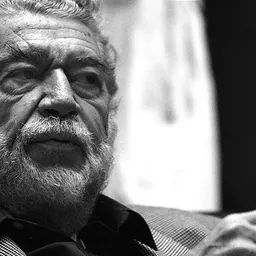


Contemporaries
People whose lives overlapped Ossie Davis's



Frequently asked questions
Who was Ossie Davis?
American actor, director, poet, playwright, writer, and social activist (1917-2005)
When was Ossie Davis born?
Ossie Davis was born on 18 December 1917 in Cogdell.
When did Ossie Davis die?
Ossie Davis died on 4 February 2005 in Miami.
What was Ossie Davis's occupation?
Ossie Davis was an actor, film director, screenwriter, stage actor, television actor and writer.
What nationality was Ossie Davis?
Ossie Davis was American.
Sources & further reading
Cite this page
APA: Biography.guide. (2026). Ossie Davis. https://biography.guide/ossie-davis/
MLA: "Ossie Davis." Biography.guide, https://biography.guide/ossie-davis/.
Chicago: "Ossie Davis." Biography.guide. https://biography.guide/ossie-davis/.
Data last updated: 2026-09-20 · Spot an error? Report a correction.
Page generated 2026-09-27 05:34 UTC