
About Osman Đikić
Lived 1879 – 1912 (aged 33). Osman Đikić was an Austrian politician, poet, journalist and writer.
Osman Đikić (; 7 January 1879 – 30 March 1912) was a Bosnian and Serbian poet, dramatist and writer from Bosnia. He was born in Mostar, in Bosnia and Herzegovina under Austro-Hungarian occupation. He was educated in Belgrade, Constantinople and Vienna, where he graduated from the Trade Academy. He is penned several sevdalinka songs, including Đaurko mila, Ašik ostah na te oči and Đela Fato đela zlato.
Biography Osman Đikić was born in Mostar on 7 January 1879, into a respected middle-class Serbian Muslim family of father Ahmed Đikić (1858–1918) and mother Hana (née Kurt; died 1908). He successfully completed primary school in Mostar, as well as five years of secondary schooling at Mostar Gymnasium before being expelled for publicly supporting Serbian nationalism. He relocated to Belgrade, Serbia to finish his education, only to relocate once more to Istanbul, where he completed secondary schooling.
Osman Đikić married Serbian actress Zora Topalović ) in Vienna in 1905. He was educated in Belgrade, Constantinople and Vienna, where he graduated from the Trade Academy.
Following graduation, Đikić served as a bank teller in Zagreb, Brčko and Mostar. He later served as the editor of the Mostar-based newspaper Musavat (Unity) in 1907, as well as published pieces in the Bosansko-hercegovački glasnik (Bosnian-Herzegovinian Herald).
Writing activity Osman Đikić is a renowned Bosnian and Herzegovinian poet and dramatist, who established himself as part of literary creation of Muslim writers in Bosnia and Herzegovina during the Austro-Hungarian rule. His poetry tended to be didactic, with elements of love, patriotism and religion serving as central themes. He first published his poems in Bosnian newspapers such as Behar ("Blossom"), Bosanska vila ("Bosnian fairy") and Zora ("Dawn"). One of his first compilation of poems was published in 1900 alongside poems from Omer-beg Sulejmanpašić Skopljak and Avdo Karabegović in Belgrade. This compilation was known as Pobratimstvo ("Alliance") and was a collection of patriotic poetry. This compilation was not well received by Bosnian author Osman Nuri Hadžić, who heavily criticised the work in Behar. Hadžić's critique barred Đikić from further publishing his literary works within Behar. MNO established a political paper wing of Gajret in 1907.
Death Đikić died due to tuberculosis on 30 March 1912 at the age of 33. His remains were interred at the Grand Harem cemetery in the Carina neighbourhood (mahala) of Mostar.
Legacy The Yugoslav government helped establish a cultural organization, Osman-Đikić-Gajret, independent from the Gajret, in 1923, and at the same time founded a student house with the same name for Bosnian Muslims in Belgrade.
Works
Poetry compilations Pobratimstvo, 1900 Muslimanskoj mladeži, 1902 Ašiklije, 1903
Dramas Zlatija, 1906 Stana, 1906 Muhadžir, 1909
Don’t just read it —
keep it.
Full-length biographies made to live with: read them, listen on the way to work, watch them tonight.
- E-book
- Audio
- Video
Instant download · yours to keep · every purchase keeps this site free
Important facts
People in Osman Đikić's life
Named in this biography and alive at the same time
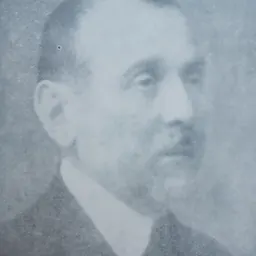

Related people
Same field, nearest in time





Contemporaries
People whose lives overlapped Osman Đikić's


Frequently asked questions
Who was Osman Đikić?
Bosnian writer (1879-1912)
When was Osman Đikić born?
Osman Đikić was born on 7 January 1879 in Mostar.
When did Osman Đikić die?
Osman Đikić died on 30 March 1912 in Mostar.
What was Osman Đikić's occupation?
Osman Đikić was a politician, poet, journalist and writer.
What nationality was Osman Đikić?
Osman Đikić was Austrian.
Sources & further reading
Cite this page
APA: Biography.guide. (2026). Osman Đikić. https://biography.guide/osman-dikic/
MLA: "Osman Đikić." Biography.guide, https://biography.guide/osman-dikic/.
Chicago: "Osman Đikić." Biography.guide. https://biography.guide/osman-dikic/.
Data last updated: 2026-09-20 · Spot an error? Report a correction.
Page generated 2026-09-27 05:22 UTC