
Oskar Wintersteiner
Austrian-American biochemist and chemist
About Oskar Wintersteiner
Lived 1898 – 1971 (aged 72). Oskar Wintersteiner was an Austrian and American biochemist, chemist and university teacher.
Oskar Paul Wintersteiner (November 15, 1898 – August 15, 1971) was an Austrian-born biochemist and organic chemist who spent most of his career in the United States, mainly at Columbia University and the Squibb Institute for Medical Research. His research focused on the chemistry and purification of hormones, antibiotics, and plant alkaloids.
With Willard M. Allen, Wintersteiner isolated crystalline progestin fractions from rabbit corpus luteum, including a compound later identified as progesterone. With J. D. Dutcher, he isolated crystalline d-tubocurarine from curare prepared from Chondrodendron tomentosum, establishing its botanical source in certain curare preparations. His work on penicillin during World War II led to the award of a Citation of Merit from President Harry S. Truman. Wintersteiner received the William H. Nichols Medal and was elected to the National Academy of Sciences in 1950.
Early life and education Wintersteiner was born November 15, 1898, in Bruck an der Mur, Austria. He received a doctorate in chemistry from the University of Graz in 1921, where he worked with Nobel Prize–winning chemist Fritz Pregl. He stayed at Graz as an instructor in medical chemistry and organic microanalysis until 1926.
Progesterone and steroid hormones
Together with Willard M. Allen, Wintersteiner fractionated extracts from rabbit corpus luteum (the endocrine structure in the ovaries) by fractional crystallization. They separated the biologically active hormone from the much larger quantity of inactive material; they designated two active crystalline fractions as compounds B and C and these showed progestational activity. Their compound B was subsequently identified as the substance now called progesterone.
Wintersteiner and Pfiffner were among the researchers who isolated Compound E, later known as cortisone. In animal tests, they found that the compound had little or no ability to prolong survival after removal of the adrenal glands, although later work showed that it strongly affected muscular performance, and thus Wintersteiner and Pfiffner missed the primary biological activity of the compound.
Penicillin and other antibiotics
At Squibb during World War II, Wintersteiner worked on projects related to national needs and the war effort. He purified penicillin and, through microanalysis, showed that it contained sulfur.
Curare alkaloids
In 1943, Wintersteiner and J. D. Dutcher, then working at the Squibb Institute for Medical Research, isolated d-tubocurarine from curare prepared from the identified species Chondrodendron tomentosum. Their method isolated crystalline d-tubocurarine with a good yield and they identified it with the compound previously isolated (in 1935) by Harold King. Their research was part of Squibb's investigation of curare preparations; Squibb had introduced Intocostrin, a purified and standardized curare extract whose activity was due principally to d-tubocurarine, in 1939.
Honors
Citation of Merit from President Harry S. Truman for wartime research on penicillin.
Wintersteiner was nominated for the Nobel Prize in Physiology or Medicine in 1950 by Erik Jorpes and in 1952 by Karl Sune Detlof Bergström. The 1950 nomination cited his work on adrenocortical hormones.
Later life and death
Wintersteiner lived in Princeton, New Jersey, until his retirement. He died after a long illness at his home in Graz, Austria, on August 15, 1971.
Don’t just read it —
keep it.
Full-length biographies made to live with: read them, listen on the way to work, watch them tonight.
- E-book
- Audio
- Video
Instant download · yours to keep · every purchase keeps this site free
Important facts
People in Oskar Wintersteiner's life
Named in this biography and alive at the same time
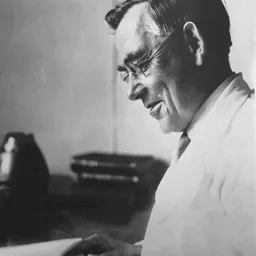


Related people
Same field, nearest in time

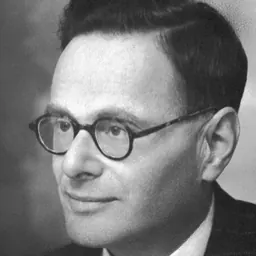

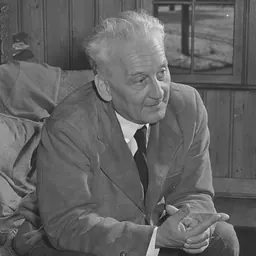

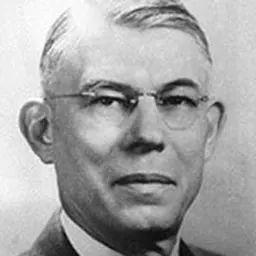
Contemporaries
People whose lives overlapped Oskar Wintersteiner's



Frequently asked questions
Who was Oskar Wintersteiner?
Austrian-American biochemist and chemist (1898-1971)
When was Oskar Wintersteiner born?
Oskar Wintersteiner was born on 15 November 1898 in Bruck an der Mur.
When did Oskar Wintersteiner die?
Oskar Wintersteiner died on 15 August 1971 in Graz.
What was Oskar Wintersteiner's occupation?
Oskar Wintersteiner was a biochemist, chemist and university teacher.
What nationality was Oskar Wintersteiner?
Oskar Wintersteiner was Austrian and American.
Sources & further reading
· Wikipedia: Oskar Wintersteiner
· DBpedia: Oskar Wintersteiner
Cite this page
APA: Biography.guide. (2026). Oskar Wintersteiner. https://biography.guide/oskar-wintersteiner/
MLA: "Oskar Wintersteiner." Biography.guide, https://biography.guide/oskar-wintersteiner/.
Chicago: "Oskar Wintersteiner." Biography.guide. https://biography.guide/oskar-wintersteiner/.
Data last updated: 2026-09-20 · Spot an error? Report a correction.
Page generated 2026-09-27 05:03 UTC