
About Osami Nagano
Lived 1880 – 1947 (aged 66). Osami Nagano was a Japanese military officer.
Rise to Imperial Navy Leadership
In February 1924, Nagano was chief of the Imperial Japanese Navy General Staff Third Section (Intelligence). From December 1924, he commanded the 3rd Battleship Division. From April 1925, he commanded the 1st China Expeditionary Fleet. In December 1927, he was promoted to vice admiral.
From 1928 to 1929, Nagano was commandant of the Imperial Japanese Naval Academy. Nagano introduced and influenced Progressive education method such as Dalton Plan to Japanese Naval Academy.
From 1930 to 1931, he was vice chief of the Navy General Staff, in which capacity he attended the Geneva Naval Conference. He attended the London Naval Conference 1930. From 1933 to 1934, he was commander in chief of the Yokosuka Naval District.
On 1 March 1934, he was promoted to admiral and appointed to the Supreme War Council. Nagano was the chief naval delegate to the London Naval Conference 1935. Japan withdrew in protest from the 1935 London Conference after it was denied naval parity with the United States and Great Britain.
In 1936, Nagano was appointed Navy Minister under Prime Minister Kōki Hirota. Later in 1937, he became commander-in-chief of the Combined Fleet. By April 1941, he had risen to the very top of the Japanese Navy leadership to become chief of the Imperial Japanese Naval General Staff.
World War II A staunch believer in Nanshin-ron, Admiral Nagano played a central role in Japan's decision to go to war with the United States. After Japanese forces occupied southern Indochina on 24 July 1941, the U.S. and its Western Allies froze Japanese assets within their borders thereby resulting in a halt on all oil shipments to Japan. At the end of the month, Nagano informed Emperor Hirohito that the nation's oil supply would run out in two years if the embargo was not lifted. Consequently, he advised that Japan should be ready for war within that timeframe if attempts at diplomacy failed.
At a liaison conference held on 3 September 1941, both Nagano and the Army's Chief of Staff, General Hajime Sugiyama, called for Japan to be committed to war if negotiations with the West were not successfully concluded by mid-October at the latest. Upon being endorsed by those at the conference, the aforementioned proposal (formalized in a document entitled Essentials for Carrying Out the Empire's Policies) was presented to Emperor Hirohito for his approval. Despite expressing concern over the document's blatant prioritization of war over diplomacy, the Emperor refrained from overruling the recommendations set forth in the Essentials, which were adopted as national policy at the ensuing Imperial Conference on 6 September 1941. On 25 September, Nagano and Sugiyama successfully pushed to have the deadline for negotiations set at 15 October.
In October 1941, Admiral Nagano ordered the Combined Fleet to make preparations for war. Viewing it as a needless diversion of Japan's carrier fleet, Nagano initially opposed Admiral Isoroku Yamamoto's planned attack on Pearl Harbor but reluctantly approved the operation after Yamamoto threatened to resign as the commander of the Combined Fleet. Later, on 1 November 1941, he ratified the decision to launch an attack on Pearl Harbor while diplomatic negotiations remained ongoing to ensure complete surprise. According to some Japanese sources, Nagano presented a peace proposal before a conference in November 1941 but this was struck down by General Hideki Tojo who held office as both War Minister and Prime Minister. By 1 December 1941, the Emperor gave his imperial sanction for war against the Western powers.
As Chief of the Navy General Staff, Admiral Nagano was responsible for transmitting orders from Imperial General Headquarters to front line naval commanders and their forces. Following its entry into World War II, the Empire of Japan conquered a broad swathe of territory in Southeast Asia and the western Pacific including Malaya, the Dutch East Indies, Burma, and the Philippines in a matter of months. However, by 1943, the tide of the conflict had turned against the Japanese after their military was decisively defeated at the battles of Midway and Guadalcanal. In the same year, Nagano was promoted to marshal admiral. After losing the Emperor's confidence by 1944 , Prime Minister Hideki Tōjō removed Nagano from his post and replaced him with Navy Minister Shigetarō Shimada. Nagano spent the remainder of the war as an advisor to the government.
Remark According to the opinion of the Japanese government, if Japan accepts the demand of the United States, Japan will perish. However, even if Japan fights against the United States, Japan may perish. That is, accepting the request of the United States will destroy Japan without fighting the United States. Even if we fight against the United States, if Japan can not avoid the danger of extinction, if Japan defeats without fighting with the United States, the Japanese people will truly disappear from the earth. However, if Japanese people can fight and show the spirit of defending Japan, even if Japan fights against America, our descendants will always rebuild Japan. We hope to solve problems in diplomatic negotiations. But unfortunately we will be fighting if we are to be commanded to wage war. (September 6, 1941, Osami Nagano)
War crimes trial After World War II in 1945, the American Occupation forces arrested Nagano. He was charged with Class A war criminal charges before the International Military Tribunal for the Far East in Tokyo. When US naval officers interrogated him, he was described as "thoroughly cooperative", "keenly alert", "intelligent", and "anxious to develop American friendship." He died of a heart attack due to complications arising from pneumonia in Sugamo Prison in Tokyo before the conclusion of his trial.
Naval career
Don’t just read it —
keep it.
Full-length biographies made to live with: read them, listen on the way to work, watch them tonight.
- E-book
- Audio
- Video
Instant download · yours to keep · every purchase keeps this site free
Important facts
People in Osami Nagano's life
Named in this biography and alive at the same time


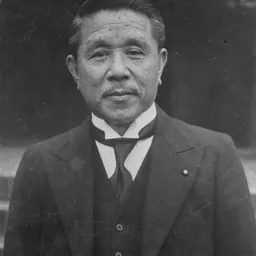

Related people
Same field, nearest in time



Contemporaries
People whose lives overlapped Osami Nagano's



Frequently asked questions
Who was Osami Nagano?
Fleet admiral in the Imperial Japanese Navy (1880-1947)
When was Osami Nagano born?
Osami Nagano was born on 15 June 1880 in Kōchi-shi.
When did Osami Nagano die?
Osami Nagano died on 5 January 1947 in St. Luke's International Hospital.
What was Osami Nagano's occupation?
Osami Nagano was a military officer.
What nationality was Osami Nagano?
Osami Nagano was Japanese.
Sources & further reading
Cite this page
APA: Biography.guide. (2026). Osami Nagano. https://biography.guide/osami-nagano/
MLA: "Osami Nagano." Biography.guide, https://biography.guide/osami-nagano/.
Chicago: "Osami Nagano." Biography.guide. https://biography.guide/osami-nagano/.
Data last updated: 2026-09-26 · Spot an error? Report a correction.
Page generated 2026-09-27 05:14 UTC