
Opessa Straight Tail
Pekowi Shawnee chief
About Opessa Straight Tail
Lived 1664 – 1750 (aged 85–86).
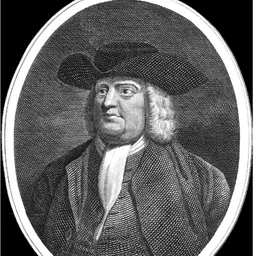
Opessa Straight Tail , also known as Wopatha or Wapatha, was a Pekowi Shawnee Chief. He was the son of Straight Tail Meaurroway Opessa. He is best known for signing, on 23 April 1701, the "Articles of friendship and agreement between William Penn and the Susquehannah, Shawonah, and North Patomack Indians," that designated lands and conditions of coexistence between those tribes and the English settlers.
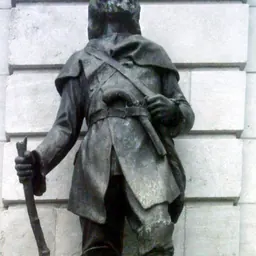
Birth and early life His exact place of birth is unknown, but was most likely in either what is today Indiana or Illinois. He was living with his father in what is today Illinois in 1674 when his village was visited by Louis Jolliet and later by René-Robert Cavelier, Sieur de La Salle, accompanied by Martin Chartier. In 1674 Chartier married Opessa's sister Sewatha Straight Tail (1660–1759). Chartier led a mutiny against La Salle in 1680 and became an outlaw, fleeing first to upstate New York, but later returning to live with Opessa's family at Starved Rock (later known as Fort St. Louis). Chartier returned to his home in Montreal, but in 1685 rejoined Opessa's family on the Cumberland River in Tennessee. The band spent a summer at the future site of Pittsburgh, Pennsylvania, then crossed the Alleghenies and traveled along the Susquehanna River. Opessa's niece Mary Seaworth (Sewatha) Chartier (1687–1732) was born in Frederick County, Virginia in 1687.
In 1689, the band moved to French Lick on the Cumberland River in northeastern Tennessee, near the present-day site of Nashville, Tennessee, where Opessa's nephew Peter Chartier was born in 1690. In the spring of 1692, the Shawnee and a group of Susquehannock (Conestoga) Indians migrated to Cecil County, Maryland on the Chesapeake Bay. The Shawnee were relocating after a series of violent conflicts with Illinois and Miami Indians. In 1697 Opessa succeeded Straight Tail as Pekowi Chief in Pequea Township, Pennsylvania.
In 1698 Opessa's band applied to the Conestoga people, and through them, to William Penn for permission to settle permanently on Pequea Creek in Lancaster County. A Shawnee community existed there for the next thirty years, By this treaty "it was settled that no Indians be suffered to settle on the Susquehanna or Patomack save those already noted [Shawnee, Mingoes and Gawanese]." Opessa and the other chiefs agreed by their "hands and seals," with each other, with William Penn and his successors, and with other inhabitants of the province, "to be as one head and one heart, and to live in true friendship and amity, as one people." More than 50 years afterward, the Shawnee, then in Ohio, still preserved a copy of this treaty. Opessa had submitted a complaint about the quantity of rum sold by Godin to the Indians. According to Egle, "Opessah had taken a journey to New Castle to remonstrate with the traders who had intercepted their hunters, gave them rum, made them drink, robbed them of their skins, and when they got to [their] wigwam, they were naked and hungry."
On 8 June 1710 Opessa attended a conference at Conestoga, Pennsylvania with Colonel John French and Henry Worley, together with Terrutawanaren and Teonnottein (Tuscarora chiefs), and Civility (a Conestoga chief) to propose a treaty guaranteeing the safety of the Shawnees, Tuscaroras, and Conestogas from "fear of death or slavery," as the kidnapping of Native Americans for sale into slavery was common throughout the colonies at this time. Le Tort was an indentured servant accused of stealing slaves and was found and killed by Shawnee warriors, but Opessa maintained his innocence, stating that he had attempted to prevent the warriors from pursuing Le Tort. Charles Augustus Hanna states:
Deputy Governor Charles Gookin visited Conestoga with four members of his Council to investigate this murder; and while there, the Senecas gave him the following account of the affair: "That Opessa [chief of the Shawnees], being thereto solicited by John Hansson Steelman, had sent out some of his people, either to bring back or kill Francis Le Tort and his company. Opessa, he affirms, was entirely innocent, for that John Hans came to his cabin, when he and his young people, who were then going a hunting, were in council; told him that some of his slaves and dogs (meaning Le Tort and company) were fled; therefore desired him forthwith to send some of his people to bring them back or kill them, and take goods for their trouble. At which motion, Opessa, being surprised, told him that he ought by no means to discourse after that manner before young people who were going to the woods and might by accident meet these people; and therefore ordered him to desist, utterly denying his request."
Although he took on the role of Pekowi chief, Cakundawanna was not recognized by many members of the tribe, as Secretary James Logan reported after meeting him at Conestoga in July, 1720: "When their king, Opessah...took the government upon him, and the people differed with him, he left them. They had then no chief. Thereupon, some of them applied to him [Cakundawanna] to take that charge upon him; but he had only the name, without any authority, and could do nothing. He counseled them, but they would not obey; therefore, he cannot answer for them."
Logan adds, "there was an interregnum in effect which lasted several years."
On 18 October 1722 Cakundawanna authorized a raid on Opessa's Town to recapture ten escaped slaves who had fled from Virginia. Governor William Keith had received complaints from Virginia Lieutenant Governor Alexander Spotswood that the slaves had taken refuge among the Shawnees, and Cakundawanna pledged to return them, stating "I will go my own self and take assistance where they are not exceeding 10 in number as directed...We will lose no time to perform the taking of them...We must take them by Guile."
Return as chief and relocation to Ohio Faced with the prospect of war between the Haudenosaunee and their allies, including the Shawnees, and the Catawbas and their allies, Opessa was urged to return as chief, which he did in 1723, replacing his brother Cakundawanna. Many of his Pekowi Shawnee band followed him to Opessa's Town in Maryland, which became a haven for runaway slaves. Opessa and his family relocated to Logstown some time between 1727 and 1750. He probably died soon afterwards.
Family and children
He was uncle by marriage (and father-in-law) of Peter Chartier, son of his sister Sewatha Straight Tail (1660–1759), who married his daughter Blanceneige-Wapakonee Opessa (1695-1737).
Opessa was married first to Margaret Pekowi (b. 1670) in 1684, second to Polly, daughter of Sassoonan (b. 1684) in 1711, after Opessa resigned his chieftainship and took refuge in Shamokin. Father with Margaret of daughter Blanceneige-Wapakonee Opessa (1695-1737), sons Tecoomteh (b. 1698), Wawwaythi (b. 1700), Loyparkoweh (b. 1705) and Lawaquaqua-Pride Opessa (b. 1710). Cannawhehala Wiskeloa Straight Tail (d. 1755) who married William John Gallion (b. 1678) She was the daughter of Polly Sassoonan and Opessa.
Don’t just read it —
keep it.
Full-length biographies made to live with: read them, listen on the way to work, watch them tonight.
- E-book
- Audio
- Video
Instant download · yours to keep · every purchase keeps this site free
Important facts
People in Opessa Straight Tail's life
Named in this biography and alive at the same time



Contemporaries
People whose lives overlapped Opessa Straight Tail's




Frequently asked questions
Who was Opessa Straight Tail?
pekowi Shawnee chief
When was Opessa Straight Tail born?
Opessa Straight Tail was born in 1664.
When did Opessa Straight Tail die?
Opessa Straight Tail died in 1750.
Sources & further reading
· Wikipedia: Opessa Straight Tail
· DBpedia: Opessa Straight Tail
Cite this page
APA: Biography.guide. (2026). Opessa Straight Tail. https://biography.guide/opessa-straight-tail/
MLA: "Opessa Straight Tail." Biography.guide, https://biography.guide/opessa-straight-tail/.
Chicago: "Opessa Straight Tail." Biography.guide. https://biography.guide/opessa-straight-tail/.
Data last updated: 2026-09-20 · Spot an error? Report a correction.
Page generated 2026-09-27 05:24 UTC