
James Logan
Scots-Irish emigrant to the colony of Pennsylvania (20 October 1674 – 31 October 1751)
About James Logan
Lived 1674 – 1751 (aged 77). James Logan was a politician and scholar, known for University of Pennsylvania.
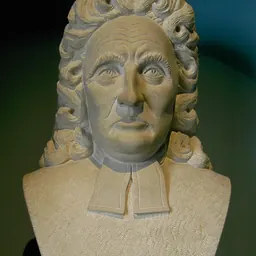
James Logan (20 October 167431 October 1751) was a Scots-Irish colonial American statesman, administrator, and scholar who served as the fourteenth mayor of Philadelphia and held a number of other public offices.
Logan was born in the town of Lurgan in County Armagh, Ireland to Ulster Scots Quakers. He served as colonial secretary to William Penn. He was a founding trustee of the College of Philadelphia, the predecessor of the University of Pennsylvania. In 1699, he came to the colony of Pennsylvania aboard the Canterbury as William Penn's secretary. Logan is described as "tall and well-proportioned, with a graceful yet grave demeanor. He had a good complexion, and was quite florid, even in old age; nor did his hair, which was brown, turn grey in the decline of life, nor his eyes require spectacles." Logan advanced through several political offices, including clerk (1701), commissioner of property (1701), receiver general (1703), and member of the provincial council (1703).
In 1717, Logan's mother came to live with him in Philadelphia; she died on 17 January 1722, at his family home at Stenton in present-day neighbourhood of Logan, named in Logan's honour, in Philadelphia.
Philadelphia and Pennsylvania government In 1722, Logan was elected mayor of Philadelphia. During his tenure as mayor, Logan allowed Irish Catholic immigrants to participate in the city's first public Mass. He later served as the colony's chief justice from 1731 to 1739, and in the absence of a governor of Pennsylvania, became acting governor from 1736 to 1738.
On October 9, 1736, Logan responded to requests from Native American leaders to control the sale of alcohol, which was creating serious social problems, by prohibiting the sale of rum in indigenous communities, but since the penalty was merely a fine of ten pounds and the law was poorly enforced, it did not have a significant effect.
During his tenure as acting governor, Logan played an active role in the territorial expansion of the colony. While William Penn and his immediate successors pursued a policy of friendly relations with the Lenape Indian tribe, Logan and other colony proprietors, including William Penn's indebted sons, John, Richard and Thomas Penn, pursued a policy of land acquisition. As a result, the Iroquois (nominally the diplomatic overlords and protectors of the Lenape people) rebuffed Lenape attempts to have the Iroquois intervene on their behalf.
Wealth and writings Throughout his life in the Province of Pennsylvania, Logan engaged in various mercantile pursuits, especially fur trading, with such success that he became one of the wealthiest men in the Thirteen Colonies. Logan authored several scholarly papers published by the American Philosophical Society and European journals. Logan was also a natural scientist whose primary contribution to the emerging field of botany was a treatise that described experiments on the impregnation of plant seeds, especially corn. He tutored John Bartram, the American botanist, in Latin and introduced him to Linnaeus.
Logan's daughter, Sarah, married Isaac Norris, a Philadelphia businessman and statesman.
Death Logan died in 1751 in Stenton in the present-day Logan neighbourhood, named in Logan's honour, in Philadelphia at the age of 77. He was interred in the graveyard of Arch Street Friends Meeting House, built in 1804, in Philadelphia. He collected a personal library of over 3,000 volumes. Some commentators consider Logan's library to have been the largest and best collection of classical writings in America at that time.
Logan would in time become known to Benjamin Franklin and his "Junto"; an influential group of friends that would meet weekly and discuss scholarly and political issues. He became a mentor to Franklin, who published Logan's translation of Cicero's essay "Cato Maior de Senectute". Eventually, the Junto decided to establish a subscription library, a cooperative endeavour where members would pay a fee for use of the library. Franklin and the other members of the Junto considered Logan the "best Judge of Books in these parts" and chose him to select the first 43 titles for the Library Company of Philadelphia.
The Loganian Library
The Loganian Library, as he wished it to be called, was diverse. The catalogue of its final holdings is now lost but a partial inventory done in 1760 reveals a wide selection of books. The book distribution by date reveals nothing out of the ordinary. Most were from the seventeenth century with 57 percent. Next came those from the eighteenth century at 27 percent. Finally, there was a good number from the fifteenth and sixteenth centuries at 16 percent. The collection was mostly British and northern European with 33 percent from Britain; the Netherlands, 24 percent; Germany, 17 percent; France, 13 percent; Switzerland, 9 percent; Italy, 2 percent; and others (Scandinavia, Spain, Poland, Russia, America) at 2 percent
The distribution of the books by subject in the 1760 catalogue is equally diverse with history, antiquities, geography, chronology, etc. at 22 percent. Religious subjects of divinity and ecclesiastical history constituted 15 percent. Scientific subjects such as "physick," "mathematicks", and natural history was at 16 percent. Literary subjects such as orators, poets, fables, romances, etc. at 14 percent with philology at 13 percent. Philosophy, surprisingly, was only 6 percent while arts, liberal and mechanical, "magick," etc. was 3 percent. The remaining subjects were as follows: medicine, surgery, and "chymistry," 2 percent; law, 2 percent; voyages and travels, 1 percent; philosophical history, 1 percent, and miscellaneous, 5 percent.
Logan's library contained many 17th and 16th century classical works such as a 1615 edition of Archimedes' works, the mathematical treatise of Pappus of Alexandria printed in 1660, an Aratus of Soles from 1672, Elzevir's architecture publication of 1649 from Amsterdam, Johann Vossius' De Quatuar Artibus Popularibus published in 1650, and a 1599 edition of astronomy edited by Barthelemy Pitiscus. In one famous episode, Logan was reading a treatise on early astronomy by Johann Fabricius and read that the first printed edition of Greek astronomer Ptolemy's Almagest was printed in Greek in 1538. Logan was certain that it was released in an earlier Latin version, having sold it and his other books in Dublin before he left in 1699. Logan wrote Fabricius and politely explained his conviction. In reply, Fabricius reaffirmed his contention and sent his own 1538 copy as proof. Unconvinced, Logan wrote his agent in London, explaining that he had sold his library to a bookseller who lived on Castle Street and to see if he knew of the book's location. His agent was successful in finding the book and sent to Logan where it was confirmed that it was a Latin edition of the Almagest published in 1515. Such was the strength of Logan's bibliographic mind as professed by Benjamin Franklin.
Legacy In Philadelphia, the Logan neighbourhood and the landmark Logan Circle are both named in honour of Logan. His 1730 estate Stenton in the Logan neighbourhood has been named a National Historic Landmark and operates as a public museum.
Don’t just read it —
keep it.
Full-length biographies made to live with: read them, listen on the way to work, watch them tonight.
- E-book
- Audio
- Video
Instant download · yours to keep · every purchase keeps this site free
Important facts
People in James Logan's life
Named in this biography and alive at the same time
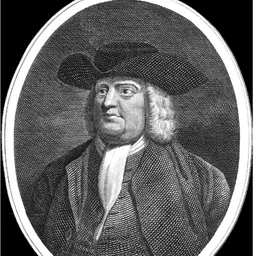
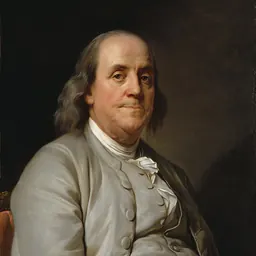


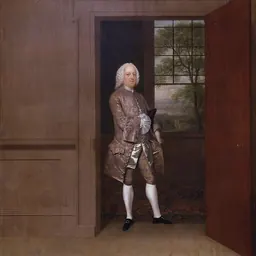
Related people
Same field, nearest in time



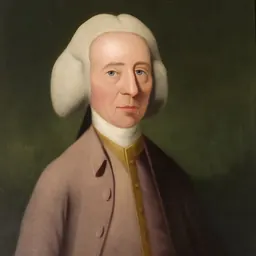

Contemporaries
People whose lives overlapped James Logan's


Frequently asked questions
Who was James Logan?
Scots-Irish emigrant to the colony of Pennsylvania (20 October 1674 – 31 October 1751)
When was James Logan born?
James Logan was born on 20 October 1674 in Lurgan.
When did James Logan die?
James Logan died on 31 October 1751 in Stenton.
What was James Logan's occupation?
James Logan was a politician and scholar.
What was James Logan known for?
James Logan was known for University of Pennsylvania.
What nationality was James Logan?
James Logan's recorded nationality: British North America.
Sources & further reading
· DBpedia: James Logan (statesman)
Cite this page
APA: Biography.guide. (2026). James Logan. https://biography.guide/james-logan-politician/
MLA: "James Logan." Biography.guide, https://biography.guide/james-logan-politician/.
Chicago: "James Logan." Biography.guide. https://biography.guide/james-logan-politician/.
Data last updated: 2026-09-22 · Spot an error? Report a correction.
Page generated 2026-09-27 05:20 UTC