
Onisaburo Deguchi
Japanese co-founder of the Oomoto religion
About Onisaburo Deguchi
Lived 1871 – 1948 (aged 76). Onisaburo Deguchi was a Japanese religious leader, esperantist, potter, waka poet, ceramicist and cleric.
, born Kisaburō Ueda 上田 喜三郎 (1871–1948) was a Japanese religious leader. Together with his mother-in-law Nao Deguchi, he was one of the two spiritual leaders of the Oomoto religious movement in Japan. While Nao Deguchi is the of Oomoto, Onisaburo Deguchi is the .
Biography Onisaburo had studied Honda Chikaatsu's Spirit Studies (Honda Reigaku) and also learned to mediate spirit possession (chinkon kishin 鎮魂帰神) from Honda's disciple in Shimizu, Shizuoka. Starting from March 1, 1898, he followed a hermit named Matsuoka Fuyō (松岡芙蓉), who was a messenger of the kami Kono-hana-saku-ya-hime-no-mikoto (木花咲耶姫命), to a cave on Mount Takakuma near Kameoka, Kyoto, where Onisaburo performed intense ascetic training for one week. While enduring cold weather with only a cotton robe, as well as hunger and thirst, Onisaburo received divine revelations and claimed to have traveled into the spirit world.
Onisaburo met the founder of Omotokyo in 1898 and in 1899 they established the Kinmeikai, later called Kinmei Reigakkai. In 1900, Kisaburō married Nao's fifth daughter Sumi (also known as Sumiko) and adopted the name Deguchi Onisaburō. Oomoto teaches that the guardian spirit of Nao is Amaterasu, described as a male spirit in a female body, and Onisaburo's spirit is Susanowo, a female spirit in a male body.
In 1905, he published , and Portuguese translations were published in 1997. Another book similar in length and topic, , was also published. Onisaburo Deguchi also wrote the Three Mirrors or San Kagami (三鏡, 844 chapters total), which consists of the Water Mirror (水鏡, 249 chapters), Moon Mirror (月鏡, 212 chapters), and Jade Mirror (玉鏡, 383 chapters).
In 1908, he and Deguchi Nao founded the Dai Nihon Shūseikai (大日本修斎会), which in 1913 became Taihonkyō (大本教) and in 1916 the Kōdō Ōmoto (皇道大本). Soon afterwards, he began publishing a periodical journal called Shinreikai (神霊界; "World of Gods and Spirits").
Sacred sites Zuisen-en (瑞泉苑) in Anao village, Kameoka. According to Michi no Shiori, "The spring from which the teaching was born came forth in Anao in Sogabe." Some Oomoto sacred sites associated with Onisaburo Deguchi include:
The Cave of Onisaburo Deguchi on Mount Takakuma, where Onisaburo entered the spirit world during his asceticism there during the first half of 1898. Today, Oomoto followers organize monthly pilgrimages to the cave. , the historic site of Onisaburo's birth home in Anao, Kameoka.
Selected works Onisaburo Deguchi was a highly prolific writer. As a result, the list of works below consists of a selection of some of his most representative sacred writings, and is far from exhaustive.
Michi no Shiori (道の栞, composed in 1904 and published in 1905) (online text). Translated into Esperanto, Portuguese, and English in 1997. Michi no Hikari (道の光, composed in 1903 and 1905; later published in 1920). Excerpted from Chapter 6 (玉の礎) and Chapter 9 (道の大本) in Oni bunko (王仁文庫). Various passages in Michi no Hikari contain paraphrases from the New Testament gospels, particularly the Sermon on the Mount. Michi no Oomoto (道の大本, composed in 1905 and published in 1927). (online text) Izunome Shin'yu (伊都能売神諭, 37 volumes, composed during 1918–1919) (online text) Reikai Monogatari (81 volumes composed during 1921–1926 and 1933–1934) (online text) Tama no Ishizue (霊の礎, 11 pieces composed around 1922 and published in 1924). These texts show influences from Honda Chikaatsu (本田親徳), from whom Onisaburo Deguchi derived his practice of chinkon kishin (鎮魂帰神), and from Emanuel Swedenborg's spiritualism. They are in volumes 16–20, 23, 24, 37. (Tenseisha book) Oomoto sanbika (大本讃美歌), songs of praise from volumes 61 and 62 of the Reikai Monogatari Three Mirrors (三鏡 San Kagami, 844 chapters total). Dictated by Onisaburo Deguchi from 1925 to 1934. A 1958 edition was published in 1958 by Tenseisha (天声社), Oomoto's publishing house. The most recent complete edition was published in 1999 by Hachiman Shoten (八幡書店). (online text) Water Mirror (水鏡, 249 chapters) Moon Mirror (月鏡, 212 chapters) Jade Mirror (玉鏡, 383 chapters) Oomoto sendenka-shū (大本宣伝歌集) (1926). Historically, these were songs sung by Oomoto missionaries during their proselytization activities. Azuma no Hikari (東の光) (1931, with 4,943 poems) Kannagara no Michi (惟神の道) (1932–1935, with 106 essays). This is a collection of 106 essays that were originally published by Onisaburo Deguchi in the newspaper Jinrui Aizen Shinbun (人類愛善新聞) between 1932 and 1935. The newspaper essays often did not contain Deguchi's original words, since they were edited and redacted by other editors. The essays were published as a book on December 5, 1935. These essays were published 3 days before the Second Oomoto Incident and were banned by the government immediately afterwards. However, they have since been republished in 1994. (online text) Oomoto no Michi (大本の道, "The Path of Oomoto"). Consists of 1,068 poems published in 1957, which is a revised edition of Aizen no Michi (愛善の道) (1947, with 497 poems). The poems summarize the basic teachings of Oomoto. (online text)
Don’t just read it —
keep it.
Full-length biographies made to live with: read them, listen on the way to work, watch them tonight.
- E-book
- Audio
- Video
Instant download · yours to keep · every purchase keeps this site free
Important facts
People in Onisaburo Deguchi's life
Named in this biography and alive at the same time

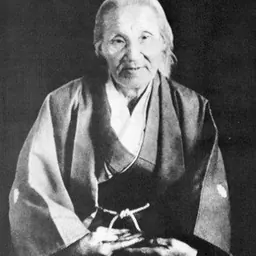
Related people
Same field, nearest in time

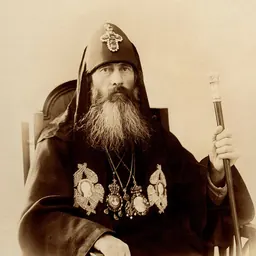


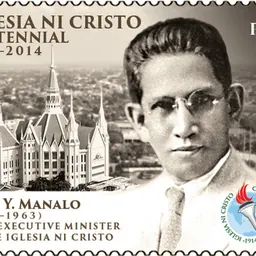
Contemporaries
People whose lives overlapped Onisaburo Deguchi's
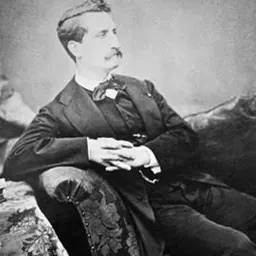


Frequently asked questions
Who was Onisaburo Deguchi?
Japanese co-founder of the Oomoto religion (1871–1948)
When was Onisaburo Deguchi born?
Onisaburo Deguchi was born on 27 August 1871 in Tamba Province.
When did Onisaburo Deguchi die?
Onisaburo Deguchi died on 19 January 1948.
What was Onisaburo Deguchi's occupation?
Onisaburo Deguchi was a religious leader, esperantist, potter, waka poet, ceramicist and cleric.
What nationality was Onisaburo Deguchi?
Onisaburo Deguchi was Japanese.
Sources & further reading
· Wikipedia: Onisaburo Deguchi
Cite this page
APA: Biography.guide. (2026). Onisaburo Deguchi. https://biography.guide/onisaburo-deguchi/
MLA: "Onisaburo Deguchi." Biography.guide, https://biography.guide/onisaburo-deguchi/.
Chicago: "Onisaburo Deguchi." Biography.guide. https://biography.guide/onisaburo-deguchi/.
Data last updated: 2026-09-20 · Spot an error? Report a correction.
Page generated 2026-09-27 05:22 UTC