
Honda Chikaatsu
19th-century Japanese spiritualist and writer
About Honda Chikaatsu
Lived 1822 – 1889 (aged 67). Honda Chikaatsu was a Japanese spiritual teacher.
(February 4, 1822 – April 9, 1889) was a Japanese Shinto writer, philosopher, religious teacher, and spiritualist. Honda is known for devising the meditation and spirit possession techniques chinkon (鎮魂) and kishin (帰神), respectively. He produced several writings in Japanese and literary Chinese (kanbun) at the start of the Meiji era during the 1870s and 1880s.
Since the 1970s, there has been a resurgence of interest in Honda's writings as they were published and became widely available. The study of Honda's teachings is typically referred to in Japan as Honda reigaku (本田霊学, "Honda spiritualist studies").
Today, the Japanese new religions Shinto Tenkokyo, Ananaikyo, and Oomoto are direct descendants of Honda's spiritual lineage, since the founders of these religions had all been dedicated disciples of Honda's student Nagasawa Katsutate. Honda's teachings and practices have also significantly influenced other Oomoto-derived religions. He was the eldest son of Honda Shuzō (本田主蔵), who was either a physician or of samurai descent. As a child, he studied classic literature and martial arts. in present-day Okabe-cho (岡部町), Fujieda, Shizuoka from around 1884 to 1888, where he was hosted by Miwa Takeshi (三輪武, 1849–1912). During his time at Miwa Shrine, Nagasawa Katsutate became his disciple. Afterwards, Honda moved to his wife's hometown in Chichibu District, Saitama. He died in 1889 in Kawagoe, Saitama.
Theorems of the Great Three In Reigakushō (霊学抄), the are , , and . These can be further analyzed to consist of the following.
Kotodama and kazudama Kotodama (言霊), the spiritual power of words, was an important part of Honda's beliefs. In Kinmon Hirayama daikyōsei kakka (謹問平山大教正閣下), Honda interprets chinkon as being centered around the kanji character 'to invite, summon'. Honda's writings also teach the use of kazudama (数霊), the spiritual power of numerals.
Title (Japanese kanji) Title (Japanese romaji) Title (English meaning) Date Pages (Suzuki 1976) Notes 産土百首 Ubusuna hyakushu 100 poems on local deities 6 May 1885 1–10 2 volumes, 50 poems each (100 poems total) on the perceptible and imperceptible aspects of local deities; written in man'yōgana 産土神徳講義 Ubusuna shintoku kōgi Lectures on the divine virtue of local deities June 1885 11–21 Importance of revering local deities (notes written by disciple Iwasaki Genkō 岩崎元巧 during two of Honda's lectures) 霊魂百首 Reikon hyakushu 100 poems on spirits 1885 (second half) 23–34 10 poems, each about a separate issue relating to spirits; written in man'yōgana 道之大原 Michi no taigen Great origin of the way March 1883 35–42 24 brief chapters or sections summarizing the essence of Honda's teachings, in literary Chinese 真道問対 Shintō montai Questions and replies on the true way October 1883 43–80 114 questions from Soejima Taneomi, along with answers from Honda, in literary Chinese 謹問平山大教正閣下 Kinmon Hirayama daikyōsei kakka Respectfully enquired of your excellence, the senior instructor Hirayama 1874 81–93 Criticism of by Hirayama Seisai, which was an explanation of the Taikyo Proclamation 難古事記 Nankojiki Difficult Kojiki June 1879 to September 1883 95–243 6 volumes, about 30 sections each, on reinterpreting the Kojiki; 4 other volumes might have been lost 古事記神理解 Kojiki kami rikai Understanding of the Kojiki's deities May 1885 245–334 Interpretation of deities in the Kojiki; written by Honda's student Kawaguchi Shinji (川口信之) 霊学抄 Reigakushō Excerpt from Spirit Studies undated 369–376 Divination, chinkon and kishin, etc.; also known as the
The full text of Michi no taigen (道之大原), along with commentary, can be found at the end of by . The full texts of Michi no taigen (道之大原) and Shintō montai (真道問対) in Literary Chinese (kanbun) can also be found at the end of , which was published by Shintō Tenkōkyo founder in 1920. Satō (1978) also has the original text of Michi no taigen along with his own extensive commentary, as well as a modern Japanese translation and his own commentary of Shintō montai. (In 1936, Satō Akihiko (佐藤卿彦, 1913–1986) founded the Kenshin Honkai 顕神本会, a society dedicated to "Honda spiritual studies", and was its executive until his death in 1986. )
A similar text is compiled by Sasaki Tetsutarō (佐佐木哲太朗) in 1898. It contains 98 questions and answers on Soejima Taneomi's explanations of Honda's spiritual studies and is also written in Literary Chinese. The questions are asked by Soejima Taneomi, while the answers are from Honda Chikaatsu. The text can be found at the end of , a book published by Tomokiyo Yoshisane in 1920.
The 100-poem collections Ubusuna hyakushu (産土百首) and Reikon hyakushu (霊魂百首) can be found at the end of , published by Shinto Tenkokyo in 1937.
Don’t just read it —
keep it.
Full-length biographies made to live with: read them, listen on the way to work, watch them tonight.
- E-book
- Audio
- Video
Instant download · yours to keep · every purchase keeps this site free
Important facts
People in Honda Chikaatsu's life
Named in this biography and alive at the same time
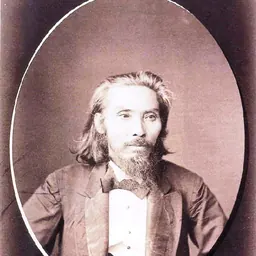

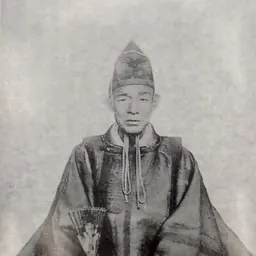
Related people
Same field, nearest in time
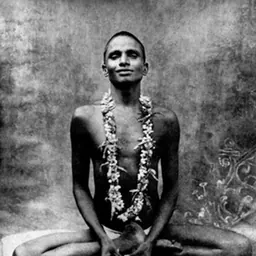



Contemporaries
People whose lives overlapped Honda Chikaatsu's





Frequently asked questions
Who was Honda Chikaatsu?
19th-century Japanese spiritualist and writer
When was Honda Chikaatsu born?
Honda Chikaatsu was born on 4 February 1822 in Kagoshima Prefecture.
When did Honda Chikaatsu die?
Honda Chikaatsu died on 9 April 1889 in Kawagoe.
What was Honda Chikaatsu's occupation?
Honda Chikaatsu was a spiritual teacher.
What nationality was Honda Chikaatsu?
Honda Chikaatsu was Japanese.
Sources & further reading
Cite this page
APA: Biography.guide. (2026). Honda Chikaatsu. https://biography.guide/honda-chikaatsu/
MLA: "Honda Chikaatsu." Biography.guide, https://biography.guide/honda-chikaatsu/.
Chicago: "Honda Chikaatsu." Biography.guide. https://biography.guide/honda-chikaatsu/.
Data last updated: 2026-09-20 · Spot an error? Report a correction.
Page generated 2026-09-27 05:26 UTC