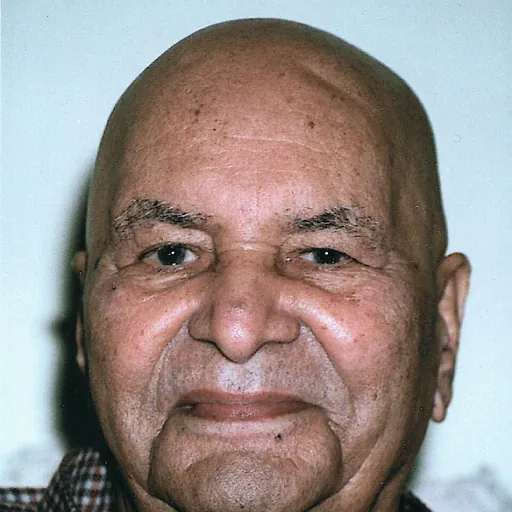
H. W. L. Poonja
Indian spiritual teacher
About H. W. L. Poonja
Lived 1910 – 1997 (aged 86). H. W. L. Poonja was an Indian spiritual teacher.
Hariwansh Lal Poonja (; born 13 October 1910 (or later) in Punjab, British India – 6 September 1997 in Lucknow, India) was an Indian sage. Poonja was called "Poonjaji" or "Papaji" by devotees.
Biography
Early life
At the age of six, he spontaneously experienced a state of supreme consciousness:
His mother, an ardent devotee of Lord Krishna, persuaded her son, who had experienced this state of supreme consciousness, saying: "Did you see Krishna? If you see Krishna again, you will be able to experience this supreme state once more." From that time on, Poonjaji came to love Lord Krishna with great fervour, and Lord Krishna appeared before him many times. And they played together.
The Search for God
Poonjaji constantly sought to see Lord Krishna, and travelled throughout India visiting saints and sages, asking each of them: "Can you show me God?" However, the great saints would only reply: "It takes decades of spiritual practice before one can see God. Come and practise at our ashram."
Then one day, a sadhu appeared at our door, asking for food. I invited him in, offered him some food and asked him: "Can you show me God? If not, do you know of anyone who can?" Much to my surprise he told me: "Yes, I know a person who can show you God. His name is Ramana Maharshi." And he gave him the address.
Meeting Ramana Maharshi
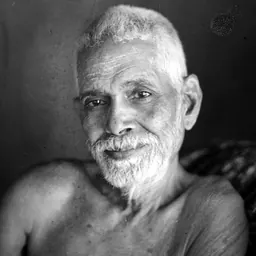
Poonjaji visited Ramana Maharshi's ashram and asked him the same question as always. However, rather than giving him a vision of God, Ramana Maharshi directed his awareness toward his own Self:
From that time on, Poonjaji found that the desire to think of God or to perform japa and other spiritual practices had completely vanished. He sought Ramana Maharshi's help once more.
Devotees
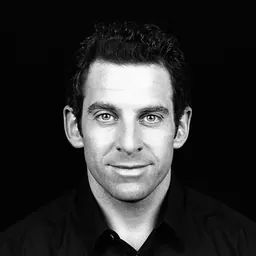
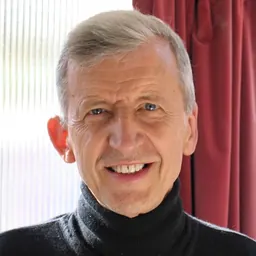
H. W. L. Poonja later settled in Lucknow, where he received visitors from all around the world. Among his well-known devotees who give satsang are Mira Ganga, Gangaji and Mooji. Besides these prominent devotees, Ram Dass (Richard Alpert), Christopher Titmuss, and Sam Harris also visited Poonjaji several times in the early 1990s.
David Godman, a devotee of Ramana Maharshi, moved to Lucknow in 1992 to spend time around Poonjaji and remained until Poonjaji's passing in 1997. Godman wrote prolifically about Poonjaji, including the interview anthology Papaji Interviews, The Fire of Freedom, and the three-volume, 1,200-page biography Nothing Ever Happened, and also released interview videos.
Teaching
Teaching through Silence
His teaching emphasises that words can only point to ultimate truth but can never themselves be ultimate truth, and that intellectual understanding alone — without directly realising truth through self-enquiry — is insufficient. Like Sri Ramana, he stressed that teaching through silence points to truth more directly than teaching through words.
The Process
Poonjaji described "the process and conditions for Self-realisation to occur" as follows:
"There must be a desire for God, a love for Him, or an ardent desire for liberation. Without that, realisation is impossible." "This desire for God or realisation is like an inner flame. One must kindle it and fan it until it becomes a raging fire that consumes all other desires and interests." "If this inner flame burns long and intensely enough, it will finally consume even the desire for God or the Self itself, and at that point all desires will be extinguished." The final ingredient is the presence of the Master: "When Maharshi's gaze met my vasana-free mind, the Self reached out and destroyed it in such a way that it could never rise or function again. And in the end, only the Self remained."
Self-Enquiry
Like his teacher Sri Ramana, his message was always that the Self is already realised and always free. Like Sri Ramana, he taught self-enquiry — the practice of locating the thought of the individual "I," the sense of "I," tracing back where it arises from, and abiding at the source of one's own existence. He maintained that all forms of practice and sadhana other than self-enquiry merely sustain the existence of the ego that performs them and cannot destroy the ego itself; he therefore recommended self-enquiry and surrender.
Liberation
According to Poonjaji, Self-realisation is in itself liberation from karmic cause and effect and from rebirth. Poonjaji stated: "Even after Self-realisation, the karma that is destined to be experienced in this life continues to unfold, but since the realised being no longer identifies with it, no further karmic consequences are accumulated. Therefore, there is no rebirth for such a one."
Works Poonja, H. W. L. (1992). Wake Up and Roar. Pacific Center Pub. .
Don’t just read it —
keep it.
Full-length biographies made to live with: read them, listen on the way to work, watch them tonight.
- E-book
- Audio
- Video
Instant download · yours to keep · every purchase keeps this site free
Important facts
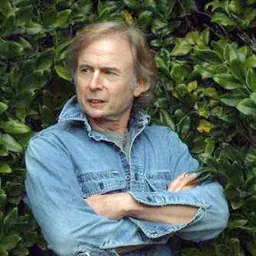
People in H. W. L. Poonja's life
Named in this biography and alive at the same time


Related people
Same field, nearest in time



Contemporaries
People whose lives overlapped H. W. L. Poonja's






Frequently asked questions
Who was H. W. L. Poonja?
Indian spiritual teacher (1910-1997)
When was H. W. L. Poonja born?
H. W. L. Poonja was born on 13 October 1910 in Gujranwala.
When did H. W. L. Poonja die?
H. W. L. Poonja died on 6 September 1997 in Lucknow.
What was H. W. L. Poonja's occupation?
H. W. L. Poonja was a spiritual teacher.
What nationality was H. W. L. Poonja?
H. W. L. Poonja was Indian.
Sources & further reading
Cite this page
APA: Biography.guide. (2026). H. W. L. Poonja. https://biography.guide/h-w-l-poonja/
MLA: "H. W. L. Poonja." Biography.guide, https://biography.guide/h-w-l-poonja/.
Chicago: "H. W. L. Poonja." Biography.guide. https://biography.guide/h-w-l-poonja/.
Data last updated: 2026-09-22 · Spot an error? Report a correction.
Portrait: Wikimedia Commons · author & licence
Page generated 2026-09-27 05:03 UTC