
Olivia P Stokes
African-American religious educator, ordained Baptist minister, author, administrator, and civil rights activist
About Olivia P Stokes
Lived 1916 – 2002 (aged 86). Olivia P Stokes was an American activist and politician.
Olivia Pearl Stokes (January 11, 1916 – May 24, 2002) was a religious educator, ordained Baptist minister, author, administrator, and civil rights activist. As the first African American woman to receive a doctorate in religious education, Stokes was a pioneer in her field dedicated to empowering disenfranchised and underrepresented groups. A majority of her work reflects her primary role as a religious educator, her commitment to develop leadership training, and her efforts to eliminate negative stereotypes of women and African Americans. She was also an avid student of African cultures, and developed programs to promote understanding of African civilizations.
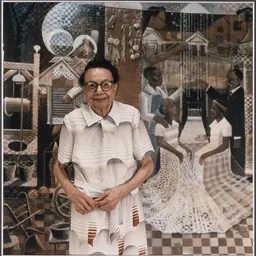
Early life Photograph of StokesOlivia Pearl Stokes was born in Middlesex, North Carolina, on January 11, 1916, on the Stokes Place — a collection of farmland owned by the Stokes family, known across the county as one of the few upper middle-class black property owning families in North Carolina. She was the second eldest and the first daughter of four children to Bessie Thomas Stokes Vann, a schoolteacher (b. 1893) and William Harmon Stokes (d. 1923) and one child to Bessie Thomas Stokes Vann and Lester Lee Vann. Her siblings are Clarence (d. 1970), Bernice (d. 1943), Beatrice, and Lester (d. 1946). After the death of Olivia's father when Olivia was 7, Bessie Thomas Stokes Vann sold their land and moved the family to Harlem, New York in 1925 for the goal of educating her children, where they joined the Abyssinian Baptist Church. These tenets shaped her upbringing, and from an early age, Olivia's identity and values were tied to her family.
She spent her early childhood on Stokes Place, a collection of hundreds of acres that belonged to the Stokes family—one of the only Black property owning families in North Carolina. Though their initial acquisition of land is unclear, the Stokes grew their landholding significantly over the years. The Stokeses were well known in the county as employers, employing a number of both white and Black employees throughout the seasons. After Olivia's paternal grandfather, T.O. Stokes, died, he gave land to erect the Stokes Chapel (now a federal landmark on Route 64). Furthermore, Olivia is 5th cousins with Bishop Anson Phelps Stokes, who was head of the Episcopal church in Massachusetts. As for her maternal heritage, Olivia's great-great-grandfather, William Allen Thomas, was the first and only white Chief of the Cherokee Natives, making Olivia Cherokee Native. Thomas also served as a member of the North Carolina state legislature and Congress.
Throughout her childhood growing up in the Black church (Abyssinian Baptist Church), Olivia and her siblings were taught to understand the contribution that Africa has in the world, as well as the African patterns of life, the rules, culture, crafts, and governments.
Out of her siblings, Olivia was closest to her sister Beatrice. The two girls shared common interests and spent a great deal of time together despite their differences in personality: even as a child, Olivia was strong-minded and outspoken while her sister was considered more "gentle". The sisters' friendly history contrasts with Olivia's strained relationship to her brother, Clarence. In her writings, Olivia has little compassion for her brother's struggles with alcoholism and seems disappointed in how he lived his life. Very little is said about Olivia's relationship with her other siblings, Bernice and Lester.
Her father passed away when she was seven years old. This ultimately led to her mother moving them to Harlem, New York to start living a new life and to provide the best education for her five children.
Despite never getting married, Olivia spent her life immersed in her work both in the ministry and in education, deriving much joy from nurturing learning and curiosity in her students and peers.
Early career Stokes began her career in 1935, as director of the information desk at YWCA. She worked there until 1941, when she was offered the position of associate director of the Baptist Educational Center, a school that provided training programs for ministers and the parishes of 157 churches. The school trained over 500 Baptists—who were mostly black—across Harlem every week. During this period of time, she also acted as president of the New York State Christian Youth Conference, and became secretary of the Youth Movement in 1941.
Notable connections
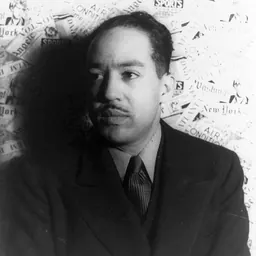
Through Olivia's long-time work in the Christian community and network, Stokes befriended a number of influential academics, activists, and artists in the New York area. These acquaintances included, but were not limited to: Benjamin Mays, the former leader of the academic community in Atlanta, who authored a number of papers and columns about the Black community Fred Patterson, the former head of the United Negro College Fund Marian Anderson, the first African-American soloist in 1941 to sing at the New York Metropolitan Opera Langston Hughes, the renowned poet, novelist, and activist Jackie Robinson, the first African American baseball player to play in the MLB Ella Fitzgerald, the American jazz singer.
Massachusetts Council of Churches and National Council of Churches In 1953, Stokes became Director of the Department of Religious Education of the Massachusetts Council of Churches. She was the only black staff member on the Massachusetts Council, and she held a position generally held by white men.
Study of African culture Stokes grew up immersed in African culture: her mother, Bessie Stokes Vann, worked frequently with Christian missionaries who traveled to Africa. By the time Mrs. Vann was in her mid-twenties, she possessed extensive knowledge of African culture and history. Meanwhile, farther back in Olivia's family tree, her great-aunt Alberta Thomas was involved in Marcus Garvey's Back-to-Africa movement.
As Olivia grew older, she took after her family, becoming known for her in-depth study of African culture— particularly the role of women and families. Part of her work involved creating educational materials that she hoped would change the way American schoolchildren understood Africa through their textbooks. She similarly attempted to improve American understanding of African culture through her own fictional children's stories: she authored Why the Spider Lives in Corners: African Facts and Fun and The Beauty of Being Black: Folktales, Poems, and Art From Africa, two children's books that incorporate African culture and relied on African co-authors. These books placed particular emphasis on African art and expression, as well as the variety of cultures present in different African countries. Meanwhile, in her work with the Christian community, Olivia pushed churches to include lessons about Africa in their ministry, encouraging pastors to emphasize the importance of African heritage and history.
Stokes began traveling to Africa herself in 1958, continuing to visit the continent throughout the remainder of her life. Stokes' initial trip to Africa was inspired by her own desire to learn more about the country, as well as for the sake of "personal growth and significant research." Two years later, in 1960, she approached publishing company Houghton Mifflin with a book idea that incorporated discussions on the ability of African women to rise quickly through the social ranks of society. After her initial travel to Africa, Stokes began leading tours of Africa for graduate students, spearheading twenty separate trips between the years of 1958 and 1981. Stokes' work also extended to improving the education system of Africa: From 1973 to 1976, she worked on building a graduate program to train educators in Nigeria, ultimately partnering with 5 different Nigerian universities.
Other community involvement and employment Outside of her work in the church community and the education advocacy world, Stokes was a teacher herself. Between 1973 and 1976, she taught as associate professor of education at the Herbert H. Lehman College of City University of New York. There, she also served as chairperson of the development of a multi-ethnic, multi-cultural teacher education program. Later, she taught part-time at New York University's School of Education while serving as interim pastor at the Emmanuel Baptist Church in Brooklyn. She was also a member of the American Association of University Professors. Her extensive experience in religious education allowed her to serve as trustee of Berea College between 1976 and 1988, educational consultant at various theological schools, and other influential roles. In 1955, 1960 and 1979, she led White House Conferences on Education. In 1976, Stokes, with a group of other professionals, founded the Harlem Guidance Center, which provides a family-focused guidance service for underachieving children in Harlem.
Her talents also extended beyond teaching and into writing: in 1952, Jackie Robinson offered her a job as an NBC sports writer. Stokes' passion for service outweighed his generously salaried offer, however, and she opted instead to continue working at the community center where she was previously employed.
Awards Stokes was a member of Delta Kappa Delta, the National Association for the Study of Afro-American Life and History, the Adult Education Association, the American Association of University Professors. In 1957, she was the recipient of the Negro Business and Professional Women's Clubs' Sojourner Truth Award. In 1976, she received the National Council of Negro Women's Bethune Achievement Award.
Don’t just read it —
keep it.
Full-length biographies made to live with: read them, listen on the way to work, watch them tonight.
- E-book
- Audio
- Video
Instant download · yours to keep · every purchase keeps this site free
Important facts
People in Olivia P Stokes's life
Named in this biography and alive at the same time




Related people
Same field, nearest in time


Contemporaries
People whose lives overlapped Olivia P Stokes's


Frequently asked questions
Who was Olivia P Stokes?
African-American religious educator, ordained Baptist minister, author, administrator, and civil rights activist (1916–2002)
When was Olivia P Stokes born?
Olivia P Stokes was born on 11 January 1916.
When did Olivia P Stokes die?
Olivia P Stokes died on 24 May 2002.
What was Olivia P Stokes's occupation?
Olivia P Stokes was an activist and politician.
What nationality was Olivia P Stokes?
Olivia P Stokes was American.
Sources & further reading
Cite this page
APA: Biography.guide. (2026). Olivia P Stokes. https://biography.guide/olivia-p-stokes/
MLA: "Olivia P Stokes." Biography.guide, https://biography.guide/olivia-p-stokes/.
Chicago: "Olivia P Stokes." Biography.guide. https://biography.guide/olivia-p-stokes/.
Data last updated: 2026-09-26 · Spot an error? Report a correction.
Page generated 2026-09-27 05:15 UTC