
About Ōgimachi
Lived 1517 – 1593 (aged 75). Ōgimachi was a Japanese sovereign.
was the 106th Emperor of Japan, according to the traditional order of succession. He reigned from November 17, 1557, to his abdication on December 17, 1586, corresponding to the transition between the Sengoku period of the Muromachi bakufu and the dawn of the new Azuchi–Momoyama period. His personal name was Michihito (方仁).
Genealogy Ōgimachi was the first son of Emperor Go-Nara. Lady-in-waiting (Naishi-no-Suke): Madenokōji (Fujiwara) Fusako (万里小路 房子; d.1580) later Seiko-in (清光院), Madenokōji Hidefusa's daughter Second daughter: Princess Eikō (1540–1551; 永高女王) Third daughter (b.1543) Eldest son: , also known as Prince Sanehito and posthumously named Yōkwōin daijō-tennō. Masahito's eldest son was who became Emperor Go-Yōzei. Go-Yōzei elevated the rank of his father, even though his father's untimely death made this impossible in life. In this manner, Go-Yōzei himself could enjoy the polite fiction of being the son of an emperor. Daughter (1562–67, mother speculated) Lady-in-waiting (Naishi-no-Suke): Asukai Masatsuna's daughter daughter: ??? (春齢女王; 1549–1569) daughter: Princess Eisho (永尊女王; 1563–1571) Lady-in-waiting (Naishi-no-Suke): Dai-Naishi (大典侍), Madenokōji Katafusa's daughter First daughter (1539–1543)
Events of Ōgimachi's life Ōgimachi became Emperor upon the death of Emperor Go-Nara.
1560 (Eiroku 3, 1st month): Ōgimachi was proclaimed emperor. The ceremonies of coronation were made possible because they were paid for by Mōri Motonari and others. 1560 (Eiroku 3, 5th month): Imagawa Yoshimoto led the armies of the province of Suruga against the Owari; at the Battle of Okehazama, his forces fought against Oda Nobunaga, but Imagawa's army was vanquished and he was slain. Then Nobunaga took over the province of Owari. Tokugawa Ieyasu took over the province of Mikawa and made himself master of Okazaki Castle. 1568 (Eiroku 11, 2nd month): Ashikaga Yoshihide became shōgun. 1568 (Eiroku 11, 9th month): Shōgun Yoshihide died from a contagious disease.
In 1586, Emperor Ōgimachi abdicated in favor of his grandson, Imperial Prince Katahito (周仁親王), who became the Emperor Go-Yōzei. Ōgimachi retired to the Sentō Palace. On February 6, 1593, he died.
During Ōgimachi's reign, with the assistance of Oda Nobunaga and Toyotomi Hideyoshi, the imperial family was able to halt the political, financial, and cultural decline it had been in since the Ōnin War, and began a time of recovery.
Ōgimachi is enshrined with other emperors at the imperial tomb called Fukakusa no kita no misasagi (深草北陵) in Fushimi-ku, Kyoto.
Kugyō Kugyō (公卿) is a collective term for the very few most powerful men attached to the court of the Emperor of Japan in pre-Meiji eras. Even during those years in which the court's actual influence outside the palace walls was minimal, the hierarchic organization persisted.
In general, this elite group included only three to four men at a time. These were hereditary courtiers whose experience and background would have brought them to the pinnacle of a life's career. During Ōgimachi's reign, this apex of the Daijō-kan included:
Kampaku (Regent for an adult Emperor): Konoe (Fujiwara) Sakihisa (1554–1568) Nijō (Fujiwara) Haruyoshi (1569–1578) Kujō (Fujiwara) Kanetaka (1579–1581) Ichijō (Fujiwara) Uchimoto (1581–1585) Nijō (Fujiwara) Akizane (1585) Hashiba (Fujiwara > Toyotomi) Hideyoshi (1585–1592) Daijō-daijin (Chancellor): Konoe (Fujiwara) Sakihisa (1582) Hashiba (Fujiwara > Toyotomi) Hideyoshi (1586–1598) Sadaijin (Minister of the Left): Konoe (Fujiwara) Sakihisa (1554–1557) Saionji (Fujiwara) Kintomo (1557–1576) Kujō (Fujiwara) Kanetaka (1576–1577) Ichijō (Fujiwara) Uchimoto (1577–1585) Nijō (Fujiwara) Akizane (1585) Konoe (Fujiwara) Nobusuke (1585–1592) Udaijin (Minister of the Right): Kazannoin (Fujiwara) Iesuke (1557–1574) Kujō (Fujiwara) Kanetaka (1574–1576) Ichijō (Fujiwara) Uchimoto (1576–1577) Oda (Taira) Nobunaga (1577–1578) Nijō (Fujiwara) Akizane (1579–1585) Imadegawa (Fujiwara) Harusue (1585–1595) Naidaijin (Minister of the center): Nakanoin (Minamoto) Michitame (one day in 1565) Kajūji (Fujiwara) Tadatoyo (1572) Madenokōji (Fujiwara) Korefusa (one day in 1573) Ichijō (Fujiwara) Uchimoto (1575–1576) Oda (Taira) Nobunaga (1576–1577) Nijō (Fujiwara) Akizane (1577–1579) Sanjōnishi (Fujiwara) Saneki (1579) Imadegawa (Fujiwara) Harusue (1579–1580) Tokudaiji (Fujiwara) Kinfusa (1580) Imadegawa (Fujiwara) Harusue (second time, 1580) Konoe (Fujiwara) Nobusuke (1580–1585) Hashiba (Fujiwara > Toyotomi) Hideyoshi (1585–1587)
Eras of Ōgimachi's reign The years of Ōgimachi's reign are more specifically identified by more than one era name or nengō. 1= 1. Emperor Ōgimachi 2= 2. Emperor Go-Nara (1495–1557) 3= 3. (1494–1522) 4= 4.Emperor Go-Kashiwabara (1462–1526) 5= 5. (1464–1535) 6= 6.Madenokōji Katafusa (1466–1507) 7= 7. Kikkawa 8= 8. Emperor Go-Tsuchimikado (1442–1500) 9= 9. (1437–1492) 10= 10. (1426–1496) (=12) 11= 11. Asukai (=13) 12=12. (1426–1496) (=10) 13=13. Asukai (=11) 14=14. (1428–1520) 15=15. Sawa
Don’t just read it —
keep it.
Full-length biographies made to live with: read them, listen on the way to work, watch them tonight.
- E-book
- Audio
- Video
Instant download · yours to keep · every purchase keeps this site free
Important facts
Family & relationships
People in Ōgimachi's life
Named in this biography and alive at the same time
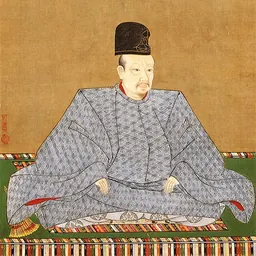
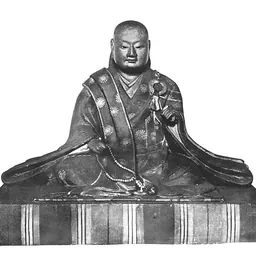
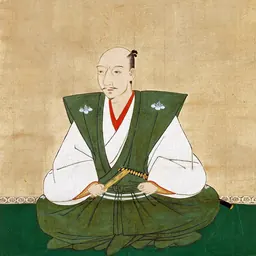
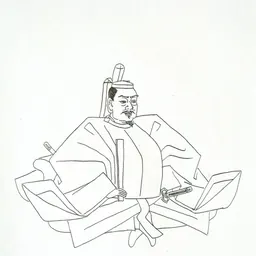


Related people
Same field, nearest in time

Contemporaries
People whose lives overlapped Ōgimachi's

Frequently asked questions
Who was Ōgimachi?
emperor of Japan
When was Ōgimachi born?
Ōgimachi was born on 18 June 1517.
When did Ōgimachi die?
Ōgimachi died on 6 February 1593 in Kyoto.
What was Ōgimachi's occupation?
Ōgimachi was a sovereign.
What nationality was Ōgimachi?
Ōgimachi was Japanese.
Sources & further reading
Cite this page
APA: Biography.guide. (2026). Ōgimachi. https://biography.guide/ogimachi/
MLA: "Ōgimachi." Biography.guide, https://biography.guide/ogimachi/.
Chicago: "Ōgimachi." Biography.guide. https://biography.guide/ogimachi/.
Data last updated: 2026-09-26 · Spot an error? Report a correction.
Page generated 2026-09-27 05:13 UTC