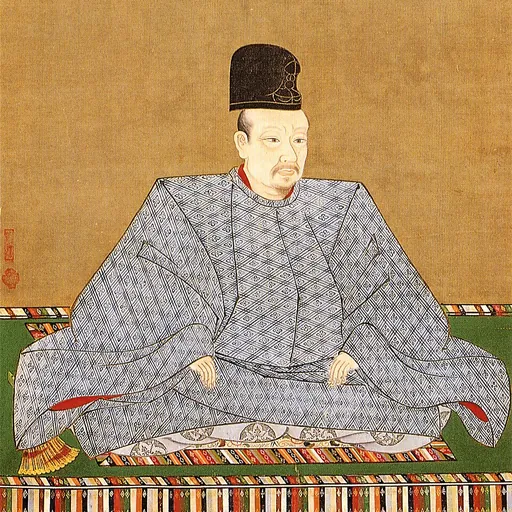
About Go-Yōzei
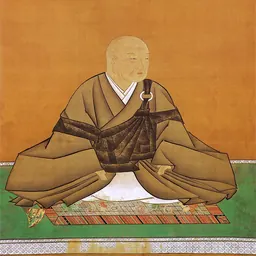
Lived 1571 – 1617 (aged 45). Go-Yōzei was a Japanese sovereign and politician.
was the 107th Emperor of Japan, according to the traditional order of succession. Go-Yōzei's reign spanned the years 1586 through to his abdication in 1611, corresponding to the transition between the Azuchi–Momoyama period and the Edo period.
This 16th-century sovereign was named after the 9th-century Emperor Yōzei, and , translates as later, and thus, he could be called the "Later Emperor Yōzei". The Japanese word go has also been translated to mean the second one, and in some older sources, this emperor may be identified as "Yōzei, the second", or as "Yōzei II".
Genealogy Before Go-Yōzei's ascension to the Chrysanthemum Throne, his personal name (imina) was or . Ninth Son: Ichijō Akiyoshi (一条 昭良, 12 June 1605 – 11 March 1672) Sixth Daughter: Imperial Princess Teishi (貞子内親王; 1606–1675) married Nijō Yasumichi Tenth Son: Imperial Prince Morochika (庶愛親王) later Imperial Prince Priest Sonkaku (1608–1661; 尊覚法親王) Twelfth Daughter: Princess Son'ren (尊蓮女王; 1614–1627) Consort (Hi): Kiyohara (Furuichi) Taneko (清原古市 胤子, 1583–1658), daughter of Furuichi Tanehide (古市胤栄) Ninth Daughter: Princess Rei'un'in (冷雲院宮; 1611) Eleventh Son: Imperial Prince Priest Dōkō (道晃法親王; 8 April 1612 – 5 August 1679) Tenth Daughter: Princess Kūkain (空花院宮; 1613) Consort (Hi): Daughter of Chūtō Tokohiro (中東時広, d. 1680) Twelfth Son: Imperial Prince Priest Dōshū (道周法親王; 1613–1634) Thirteenth Son: Imperial Prince Priest Ji'in (慈胤法親王; 1617–1699) Lady-in-waiting (Naishi-no-Suke): Fujiwara (Nakayama) Chikako (藤原中山親子; 1576–1608), daughter of Namayama Oyatsuna (中山親綱) First Son: Imperial Prince Katahito (1588–1648; 良仁親王), later Imperial Prince Priest Kakushin Second Son: Imperial Prince Priest Shōkai (承快法親王; 1591–1609) Lady-in-waiting (Naishi-no-Suke): Fujiwara (Hino) Teruko (藤原日野 輝子, 1581–1607), daughter of Hino Terusuke (日野輝資) Fifth Son: Imperial Prince Toshiatsu (1602–1651; 毎敦親王) later Imperial Prince Priest Sonsei (尊性法親王) Lady-in-waiting (Naishi-no-Suke): Fujiwara (Jimyōin) Motoko (藤原持明院 基子; d. 1644), daughter of Jimyōin Motonori (持明院基孝) Sixth Son: Imperial Prince Tsuneyoshi (常嘉親王), later Imperial Prince Priest Gyōnen (尭然法親王; 1602–1661) Lady-in-waiting (Naishi-no-Suke): Minamoto (Niwata) Tomoko (源庭田 具子; d. 1626), daughter of Niwata Shigetomo (庭田重具) Eight Son: Imperial Prince Priest Ryōjun(良純法親王; 1603–1669) Lady-in-waiting (Naishi-no-Suke): Fujiwara (Hamuro) Nobuko (藤原葉室 宣子; d. 1679), daughter of Hamuro Yorinobu (葉室頼宣) Eleventh Daughter: Princess Sonsei (尊清女王; 1613–1669) Handmaid (Naishi-no-Jō): Taira (Nishinotōin) Tokiko (平西洞院 時子, d. 1661), daughter of Nishinotōin Tokiyoshi (西洞院時慶) Seventh Daughter: Princess Eishū (永崇女王; 1609–1690) Eighth Daughter: Princess Kō'un'in (高雲院宮; 1610–1612)
Events of Go-Yōzei's life Prince Katahito became emperor when his grandfather abdicated. The succession (senso) was considered to have been received by the new monarch; and shortly thereafter, Emperor Go-Yōzei is said to have acceded (sokui). The events during his lifetime shed some light on his reign. The years of Go-Yōzei's reign correspond with the start of the Tokugawa shogunate under the leadership of Tokugawa Ieyasu and Tokugawa Hidetada.
On 31 December 1571, the Imperial prince who became known by the posthumous name of Go-Yōzei-tennō was born. On 5 November 1586, Prince Katahito was given the title Crown Prince and heir Go-Yōzei abdicated on 9 May 1611 and his son Prince Masahito received the succession (the senso). Shortly thereafter, Go-Mizunoo formally ascended to the throne (the sokui).
Legacy Go-Yōzei's reign corresponds to the rule of Toyotomi Hideyoshi and the beginning of the Edo Bakufu. He was the sovereign who confirmed the legitimacy of their accession to power; and this period allowed the Imperial Family to recover a small portion of its diminished powers. This Emperor gave Toyotomi Hideyoshi the rank of Taikō, originally a title given to the father of the emperor's chief advisor (Kampaku), or a retired Kampaku, which was essential to increase his status and effectively stabilize his power.
When Tokugawa Ieyasu was given the title of Sei-i Taishōgun, the future of any anticipated Tokugawa shogunate was by no means assured, nor was his relationship to the emperor at all settled. He gradually began to interfere in the affairs of the Imperial Court. The right to grant ranks of court nobility and change the era became a concern of the bakufu. However, the Imperial Court's poverty during the Warring States Era seemed likely to become a thing of the past, as the bakufu provided steadily for its financial needs.
Go-Yōzei did abdicate in favor of his third son; but he wanted to be succeeded by his younger brother, Imperial Prince Hachijō-no-miya Toshihito (八条宮智仁親王) (first of the Hachijō-no-miya line, later called Katsura-no-miya), who built the Katsura Imperial Villa.
Go-Yōzei loved literature and art. He published the Kobun Kokyo and part of Nihon Shoki with movable type dedicated to the emperor by Toyotomi Hideyoshi.
After abdication, Go-Yōzei lived for six years in the Sentō Imperial Palace; and thereafter, it became the usual place to which abdicated emperors would retire. The name of this palace and its gardens was Sentō-goshō; and emperors who had abdicated were sometimes called Sentō-goshō. Go-Yōzei died on 25 September 1617. The kami of Emperor Go-Yōzei is enshrined with other emperors at the imperial mausoleum (misasagi) called Fukakusa no kita no misasagi (深草北陵) in Fushimi-ku, Kyoto.
Kugyō Kugyō (公卿) is a collective term for the very few most powerful men attached to the court of the Emperor of Japan in pre-Meiji eras. Even during those years in which the court's actual influence outside the palace walls was minimal, the hierarchic organization persisted.
In general, this elite group included only three to four men at a time. These were hereditary courtiers whose experience and background would have brought them to the pinnacle of a life's career. During Go-Hanazono's reign, this apex of the Daijō-kan included:
Kampaku (Regent for an adult Emperor): Hashiba (Toyotomi) Hideyoshi (1585–1592) Hashiba (Toyotomi) Hidetsugu (1592–1595) Kujō (Fujiwara) Kanetaka (1601–1604) Konoe (Fujiwara) Nobutada (1605–1606) Takatsukasa (Fujiwara) Nobufusa (1606–1609) Kujō (Fujiwara) Tadahide (1609–1612) Daijō-daijin (Chancellor): Hashiba (Toyotomi) Hideyoshi (1586–1598) Sadaijin (Minister of the Left): Konoe (Fujiwara) Nobusuke (1585–1592) Hashiba (Toyotomi) Hidetsugu (1592–1595) Kujō (Fujiwara) Kanetaka (1601) Konoe Nobutada (formerly Nobusuke, second time, 1601–1605) Takatsukasa (Fujiwara) Nobufusa (1606–1609) Udaijin (Minister of the Right): Imadegawa (Fujiwara) Harusue (1585–1595, 1599–1603) Shōgun Tokugawa (Minamoto) Ieyasu (1603) Hashiba (Toyotomi) Hideyori (1605–1607) Kujō (Fujiwara) Tadahide (1607–1612) Naidaijin (Minister of the center): Hashiba (Toyotomi) Hideyoshi (1585–1587) Oda (Taira) Nobukatsu (1587–1590) Sanjōnishi Kinkuni (one day in 1588) Hashiba (Toyotomi) Hidetsugu (1592) Tokugawa (Minamoto) Ieyasu (1596–1603) Hashiba (Toyotomi) Hideyori (1603–1605) Shōgun Tokugawa (Minamoto) Hidetada (1605–1606) Takatsukasa (Fujiwara) Nobufusa (1606) Takatsukasa (Fujiwara) Nobuhisa (1611–1612)
Eras of Go-Yōzei's reign The years of Go-Yōzei's reign are more specifically identified by more than one era name or nengō: Tenshō (1573–1592), Bunroku (1592–1596), and Keichō (1596–1615).
Ancestry
Don’t just read it —
keep it.
Full-length biographies made to live with: read them, listen on the way to work, watch them tonight.
- E-book
- Audio
- Video
Instant download · yours to keep · every purchase keeps this site free
Important facts
Family & relationships
People in Go-Yōzei's life
Named in this biography and alive at the same time



Related people
Same field, nearest in time

Contemporaries
People whose lives overlapped Go-Yōzei's



Frequently asked questions
Who was Go-Yōzei?
emperor of Japan from 1586 to 1611
When was Go-Yōzei born?
Go-Yōzei was born on 31 December 1571.
When did Go-Yōzei die?
Go-Yōzei died on 25 September 1617 in Kyoto.
What was Go-Yōzei's occupation?
Go-Yōzei was a sovereign and politician.
What nationality was Go-Yōzei?
Go-Yōzei was Japanese.
Sources & further reading
Cite this page
APA: Biography.guide. (2026). Go-Yōzei. https://biography.guide/go-yozei/
MLA: "Go-Yōzei." Biography.guide, https://biography.guide/go-yozei/.
Chicago: "Go-Yōzei." Biography.guide. https://biography.guide/go-yozei/.
Data last updated: 2026-09-20 · Spot an error? Report a correction.
Portrait: Wikimedia Commons · author & licence
Page generated 2026-09-27 04:57 UTC