
About Canibek Giray
Lived 1568 – 1636 (aged 67–68). Canibek Giray was a sovereign.
Canibek Giray (1568–1636) was twice khan of the Crimean Khanate. He reigned from 1610 to 1623 and again from 1628 to 1635. During his first reign he fought for the Turks in Persia and Poland. He proved a poor commander and had difficulty making his men obey. He was removed by the Turks in 1623. In the following year the Turks tried to restore him and failed. During his second reign there were raids on Poland and Russia. The Turks again removed him and he died in exile.
Chronology: 1588: born, 1609: raids Muscovy, 1610: becomes khan, 1615: raids Poland, 1617: fights Persians while brother fights Poles, 1618: in Istanbul. 1621: fights Poles, 1623: deposed by Turks, 1624: Turks try to restore him, 1628: restored, 1635: deposed by Turks, 1636: dies in exile.
His younger brother was one of the many people named Devlet Giray. His father was Shakai Mubarek, one of the many sons of Devlet I Giray (1550–77), five of whom had been khans in the period 1577 to 1608. Since his father was not a khan he was not technically eligible for the throne.
Early life In 1588, on the accession of Gazi II Giray, Mubarak (Gazi's brother and Janibek's father) fled to the north Caucasus where he died in 1593. His widow married his brother Fetih I Giray who was briefly khan in 1596. During the reign of Selâmet I Giray (1608–10) Mubakek's widow Dur-Bike arrived in Crimea with her sons Janibek and Devlet. Selyamet married Dur-Bike and adopted her sons. In 1609 Selyamet's kalga and nureddin (the future khan Mehmed III and his brother Shahin Giray) conspired against him and were forced to flee. Janibek and Devlet replaced them. In 1609 and 1610 Janibek led significant raids against Muscovy and twice crossed the Oka. In late May or early June 1610 the 52-year-old Selyamet died.
First Reign
Accession Selyamet had arranged for Janibek to follow him, even though Mehmed (later Mehmed III Giray), being the son of a khan, had a better claim. When he died the brothers Mehmed and Shahin Giray invaded and made themselves khan and kalga. Jannibek fled to Kaffa, and appealed to the Turks. The Turks sent eight galleys with janissaries and Mehmed and Shahin fled to the steppes. Hearing that the Turks were leaving the brothers invaded again and were defeated by the remaining Turks.
Zaporozhian and Budjak raids
At this time the Budjak Horde under Khan Temir was unusually active in raiding Poland. When Shahin Giray was driven out of Crimea in 1610 he joined the Budjak raiders. He brought his followers so much loot that he became more popular than the inactive Janibek. Janibek sent two armies against him. In 1614 the Turks drove him out. The Budjaks later fought for the Turks at Khotin and elsewhere.
The Poles had little control over their Zaporozhian subjects and the Turks had little control over the Budjak Horde. Each power used their subject-raiders to put pressure on the other.
Fighting the Persians Around 1616 the sultan ordered Jannibek to fight the Persians (Ottoman–Safavid War (1603–1618)). During his absence his brother Devlet was in charge of Crimea. Crossing north of the Caucasus he became involved with his son-in-law, Ish-Terek, Bey of the Great Nogai Horde. Ish-Terek had declared himself a direct subject of the sultan. Previously the Nogais had recognized the supremacy of the Crimeans just as the Crimeans recognized the supremacy of the Turks. He also proposed a Nogai-Turkish attack of Astrakhan, which the Turks refused. When Ish-Terek claimed to be the khan's equal, Jannibeg moved against him and Ish-Terek fled for protection of the Russian governor of Astrakhan. Instead of following him, the khan attacked his Kabardian allies. When he then tried to cross the passes of Dagestan to Persia he found them blocked by the Nogais, Kabardians and Kumyks whom he had offended. Seeing no way to break through, the khan returned to Crimea in shame.
The following year the troops were transported by ship across the Black Sea from Kaffa to Trabzon and then marched east across the Trans-Caucasus. The result was a disaster for the Turco-Crimean side. The begs of the Shirin and Mansur clans were killed, the khan's advisor Bek-Ata was captured and the Crimeans lost at least 8000 men. The Turks blamed the Crimeans and the Crimeans blamed Shahin Giray who was helping the Persians.
In late 1617 or early 1618 Jannibek went to Istanbul to explain himself. In the spring of 1619 he returned to Crimea
Fighting the Poles In 1615 Janibek led a very successful raid into Podolia and Galicia. He claimed it was in retaliation for the Zaporozhian raids.
In 1617, while Jannibek was fighting the Persians, the Sultan ordered Janibek's brother Devlet to fight the Poles. Devlet tried to hold his troops back since he feared an attack from Shahin Giray. Many of his men slipped away to Poland, hoping for loot. It is possible that Shahin could have captured Crimea at this time if he had known about the shortage of troops. The Sultan planned a joint Turkish-Crimean-Budjak attack to force the Poles to rein in the Zaporozhians. Stanisław Żółkiewski brought up an army. The sides chose not to fight and made a compromise in which they agreed to limit the raids of their subjects (Peace of Busza). These promises had little effect since they had little control over the freebooters whom they claimed to rule. (? )
Around 1620 Moldavia revolted against the Turks (Polish–Ottoman War (1620–21)). Polish crown hetman Zolkievski entered Moldavia in September 1620. The Turks called in their Crimean and Budjak vassals. Jannibek stayed in Crimea for fear of Shahin and sent his brother Devlet. Devlet quarreled with Khan Temir. At the Battle of Cecora (1620) the Poles were at defeated and began to retreat. They were surrounded and defeated by Khan Temir. The Budjaks began a massive looting of Polish territory and were joined by the Crimeans.
Encouraged by this success, the Turks began the Battle of Khotyn (1621) in September 1621, aided by Janibek in person. The fighting lasted four weeks and was not decisive, but the Turks lost so many men that it discouraged further advance. The Turks were pleased with Khan Temir and displeased with Jannibek, who seemed reluctant to fight. Jannibek went back to Crimea but most of his men abandoned him and stayed to loot. The Turks began to consider removing him.
Turkish problems and deposition
Deposition and death In the spring of 1635 Janibek and his army were on the Kuban River moving toward Persia when a Turkish ambassador arrived with a decree removing him. When word got out Janibek lost all authority and fled to Taman, then Kaffa and then Istanbul. He was exiled to Rhodes where he met his old enemy Shahin Geray who was also then in exile. After a year and half the 70-year-old Janibek died. Because he had no living sons, his property was given to Shahin.
Source and footnotes Oleksa Gaivoronsky «Повелители двух материков», Kiev-Bakhchisarai, second edition, 2010, Volume 2 pp. 27,30,31, 33–35, 41–67
Don’t just read it —
keep it.
Full-length biographies made to live with: read them, listen on the way to work, watch them tonight.
- E-book
- Audio
- Video
Instant download · yours to keep · every purchase keeps this site free
Important facts
People in Canibek Giray's life
Named in this biography and alive at the same time


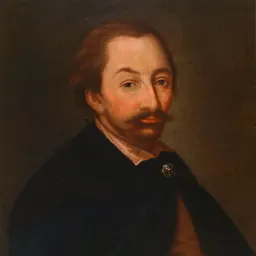
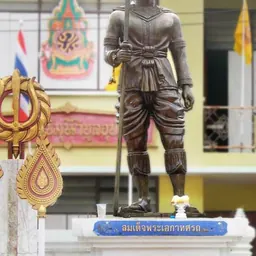
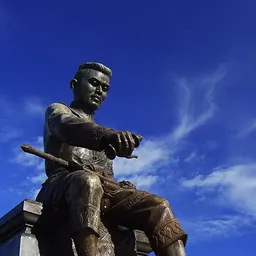
Related people
Same field, nearest in time




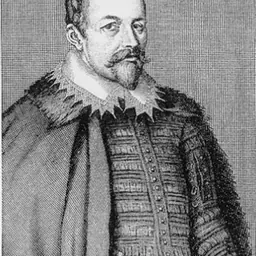
Contemporaries
People whose lives overlapped Canibek Giray's



Frequently asked questions
Who was Canibek Giray?
crimean khan
When was Canibek Giray born?
Canibek Giray was born in 1568.
When did Canibek Giray die?
Canibek Giray died in 1636 in Rhodes.
What was Canibek Giray's occupation?
Canibek Giray was a sovereign.
Sources & further reading
Cite this page
APA: Biography.guide. (2026). Canibek Giray. https://biography.guide/canibek-giray/
MLA: "Canibek Giray." Biography.guide, https://biography.guide/canibek-giray/.
Chicago: "Canibek Giray." Biography.guide. https://biography.guide/canibek-giray/.
Data last updated: 2026-09-20 · Spot an error? Report a correction.
Page generated 2026-09-27 05:32 UTC