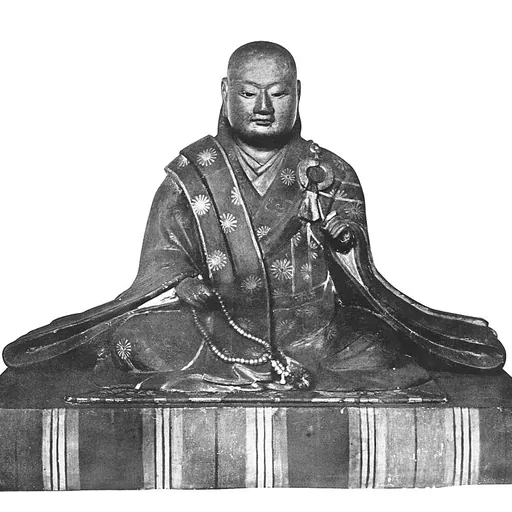
About Go-Nara
Lived 1495 – 1557 (aged 62). Go-Nara was a Japanese sovereign.
was the 105th Emperor of Japan, according to the traditional order of succession. He reigned from June 9, 1526, until his death in 1557, during the Sengoku period of the Muromachi Bakufu.
Genealogy He was the second son of Emperor Go-Kashiwabara. His mother was Fujiwara Fujiko (藤原藤子)
Nyōin: Madenokōji (Fujiwara) Eiko (万里小路栄子; 1499–1522), Madenokōji Katafusa's daughter First daughter: (1514–1515) First son: Imperial Prince Michihito (方仁親王) later Emperor Ōgimachi Second daughter: Princess Eiju (1519–1535; 永寿女王) Second Son: (1521–1530) Lady-in-waiting: Takakura (Fujiwara) Kazuko? (高倉(藤原)量子), Tachibana Yukio's daughter Fifth daughter: Princess Fukō? (d.1579; 普光女王) Lady-in-waiting: Hirohashi (Fujiwara) Kuniko? (広橋(藤原)国子), Hirohashi Kanehide's daughter Seventh daughter: Princess Seishū (1552–1623; 聖秀女王) Naishi: Fujiwara (Hino) Tomoko, Minase Hidekane's daughter Court lady: Iyo-no-Tsubone (伊予局), Mibu Harutomi's Daughter Third son: kakujyo (1521–1574; 覚恕) Court lady: Daughter of Jimyoin Motoharu Princess (Twins, 1520) Princess (Twins, 1520) Court lady: Daughter of Imperial Prince Tokiwai Tsunenao
Events of Go-Nara's life Daiei 6, in the 4th month (June 9, 1526): Go-Nara was proclaimed emperor upon the death of his father, Emperor Go-Kashiwabara. He began his reign at age 31. Daiei 6, 7th month (1526): An army from Awa Province marched towards Miyako. Hosokawa Takakuni attacked these forces at the Katsura River, but his forces were unsuccessful. Hosokawa Takakage came to the aid of Takakuni, and their combined forces were successful in stopping the advancing army. Daiei 6, 12th month (1526): Shōgun Ashikaga Yoshiharu invited archers from neighboring provinces to come to the capital for an archery contest. The Imperial Court was so impoverished, that a nationwide appeal for contributions went out. Contributions from the Hōjō clan, the Ōuchi clan, the Imagawa clan, and other great daimyō clans of the Sengoku period allowed the Emperor to carry out the formal coronation ceremonies ten years later. The Imperial Court's poverty was so extreme that the Emperor was forced to sell his calligraphy. Tenbun 11, 25th day of the 8th month (1543): Portuguese ship drifts ashore at Tanegashima, and European guns are introduced into Japan. Tenbun 20, 8th to 9th month (1551): Courtiers in preparation to move the emperor from war-torn Kyoto to the Ōuchi city of Yamaguchi were caught in the Tainei-ji incident, a coup within the Ōuchi clan. The massacre of the courtiers in Yamaguchi resulted in a widespread loss of court records along with knowledge of court rituals and imperial calendar-making. The emperor remained in Kyoto. Kōji 3, 5th day of 9th month (1557): Emperor Go-Nara died at age 62. He was unburied for 70 days.
Go-Nara is enshrined with other emperors at the imperial tomb called Fukakusa no kita no misasagi (深草北陵) in Fushimi-ku, Kyoto.
Kugyō Kugyō (公卿) is a collective term for the very few most powerful men attached to the court of the Emperor of Japan in pre-Meiji eras. Even during those years in which the court's actual influence outside the palace walls was minimal, the hierarchic organization persisted.
In general, this elite group included only three to four men at a time. These were hereditary courtiers whose experience and background would have brought them to the pinnacle of a life's career. During Go-Nara's reign, this apex of the Daijō-kan included: Kampaku, Konoe Sakihisa, 1536–1612. Sadaijin Udaijin Nadaijin Dainagon
Eras of Go-Nara's reign The years of Go-Nara's reign are more specifically identified by more than one era name or nengō. Daiei (1521–1528) Kyōroku (1528–1532) Tenbun (1532–1555) Kōji (1555–1558)
Ancestry
Don’t just read it —
keep it.
Full-length biographies made to live with: read them, listen on the way to work, watch them tonight.
- E-book
- Audio
- Video
Instant download · yours to keep · every purchase keeps this site free
Important facts
Family & relationships
People in Go-Nara's life
Named in this biography and alive at the same time
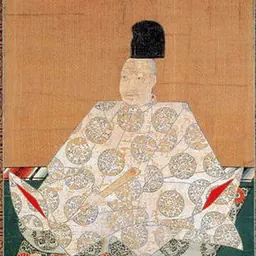
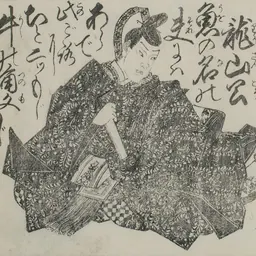
Related people
Same field, nearest in time

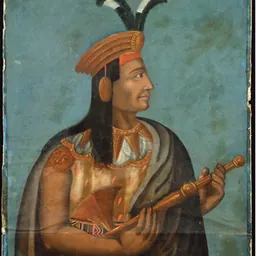
Contemporaries
People whose lives overlapped Go-Nara's





Frequently asked questions
Who was Go-Nara?
emperor of Japan
When was Go-Nara born?
Go-Nara was born on 26 January 1495.
When did Go-Nara die?
Go-Nara died on 27 September 1557.
What was Go-Nara's occupation?
Go-Nara was a sovereign.
What nationality was Go-Nara?
Go-Nara was Japanese.
Sources & further reading
Cite this page
APA: Biography.guide. (2026). Go-Nara. https://biography.guide/go-nara/
MLA: "Go-Nara." Biography.guide, https://biography.guide/go-nara/.
Chicago: "Go-Nara." Biography.guide. https://biography.guide/go-nara/.
Data last updated: 2026-09-20 · Spot an error? Report a correction.
Page generated 2026-09-27 05:09 UTC