
About Nusratullo Mahsum
Lived 1881 – 1937 (aged 56). Nusratullo Mahsum was a politician.
Nusratullo Mahsum (; 1 July 1881 – 1 November 1937), also known as Nusratullo Lutfullayev, was a Tajik Soviet politician and statesman who played a pivotal role in the establishment of Soviet rule in Central Asia and the founding of the Tajik Soviet Socialist Republic. He served as the first leader of Soviet Tajikistan, holding the positions of Chairman of the Revolutionary Committee (1924–1926), Prime Minister of the Tajik ASSR (1925–1926), and Chairman of the Central Executive Committee of Tajikistan (1926–1933). He later rose to the all-union level as co-chairman of the Presidium of the Central Executive Committee of the Soviet Union (1931–1934), making him one of the highest-ranking Tajik officials in the Soviet hierarchy.
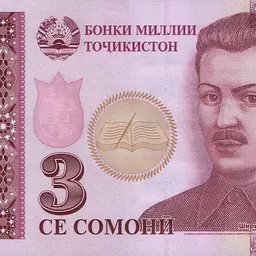
Following Tajikistan's independence from the Soviet Union in 1991, Mahsum's historical role was systematically reassessed, and he came to be recognised as one of the founders of modern Tajik statehood. In 2006, President Emomali Rahmon posthumously awarded him the title of Hero of Tajikistan, the country's highest honour. His portrait appears on the 200 Tajikistani somoni banknote, and a central avenue in Dushanbe bears his name. In May 2026, soil from his burial site at Kommunarka was repatriated to Tajikistan in a state ceremony and reburied at the Luchob Cemetery in Dushanbe, cementing his legacy as a national hero.
Early life
Nusratullo Mahsum was born Nusratullo Lutfulloyev on 1 July 1881 in the mountain village of Chashmai Qozi, in the Garm Valley, then part of the Karategin Beigdom within the Emirate of Bukhara (present-day Rasht District, Tajikistan). He was born into a poor dehqan family and was of Tajik nationality. Mahsum received his primary education at a traditional local school and a madrasa, where he acquired basic literacy and religious instruction. From an early age, he helped his parents with agricultural work and learned the hardships of peasant life. As economic hardship afflicted the region, many villagers were forced to leave their homes to find work in larger cities. At the age of 14, in 1895, Mahsum moved to Kokand, a major commercial and industrial center in the Fergana Valley, where he found employment as a laborer at a cotton factory. He worked at the factory for ten years and later continued working in Kokand until 1906. During the Russian Revolution of 1905–1906, Mahsum, like many other workers, became actively involved in the burgeoning labor movement and participated in actions advocating for workers' rights. His involvement in revolutionary activities, however, came at a cost: he was fired from his job at the factory and returned to his native village. contributing decisively to the establishment of Soviets in the region. commissioner of the Bukhara Central Executive Committee (CIK) in Eastern Bukhara, He also served as chairman of the Central Executive Committee of Eastern Bukhara. The new government faced immense challenges. The Revkom's first session on 7 December 1924 formalized documents for the republic's creation, defined its territorial borders, established its administrative divisions, and approved the structure of its state apparatus. On 14 December, key government posts were confirmed, with Mahsum leading the government which included figures like Shirinsho Shotemur and Abdulqader Muhidinov. A critical early decision was the choice of Dushanbe as the capital, with the new government relocating there in early February 1925. Mahsum's role at the all-union level expanded significantly when, on 18 March 1931, he was elected one of the co-chairmen (Presidium) of the Central Executive Committee of the Soviet Union, a collective presidency of the USSR. He served in this capacity until 4 January 1934. At the time of his arrest, he was still formally a student at the Planning Academy. and his contributions to the establishment of the Tajik Soviet Republic within the Soviet Union were acknowledged by the post-Soviet Tajik state. Mahsum was a recipient of the Order of the Red Banner. On 27 June 2006, by decree of President Emomali Rahmon, Mahsum was posthumously awarded the title Hero of Tajikistan, the highest state honour of the Republic of Tajikistan. The same decree also awarded the title to his associate Shirinsho Shotemur. The banknote was first issued in 2010. A central avenue in Dushanbe, the capital of Tajikistan, bears his name (Prospekt Nusratullo Mahsuma). In 2026, a museum dedicated to Mahsum's life and legacy began construction in the village of Kaznok in the Rasht District, his native region. The two-story museum is scheduled to open in commemoration of the 35th anniversary of Tajikistan's independence, with the participation of local entrepreneurs and residents. On 18 May 2026, a ceremony was held at the Donskoye Cemetery in Moscow to collect capsules containing soil from the burial sites of Mahsum, Shirinsho Shotemur, and Nisor Muhammad. In September 2022, the Tajik airline Somon Air named one of its Boeing 737-800 aircraft after Nusratullo Mahsum, alongside another aircraft named after the poet Mirzo Tursunzoda. Mahsum is now regarded in Tajikistan as a defender of the Tajik people's right to self-determination and national identity during the national delimitation of Central Asia in the 1920s. His role in the founding of the Tajik Soviet Republic within the Soviet Union has been acknowledged, and he is commemorated as one of the nation's distinguished sons.
Notelist
Don’t just read it —
keep it.
Full-length biographies made to live with: read them, listen on the way to work, watch them tonight.
- E-book
- Audio
- Video
Instant download · yours to keep · every purchase keeps this site free
Important facts
People in Nusratullo Mahsum's life
Named in this biography and alive at the same time
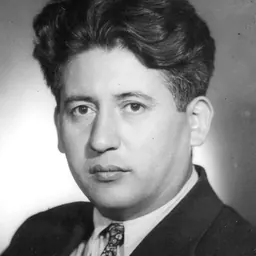
Related people
Same field, nearest in time





Contemporaries
People whose lives overlapped Nusratullo Mahsum's

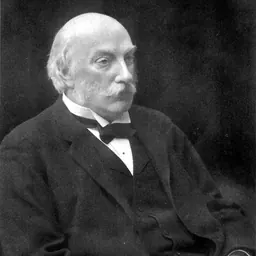
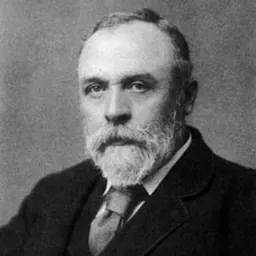


Frequently asked questions
Who was Nusratullo Mahsum?
Tajik politician (1881–1937)
When was Nusratullo Mahsum born?
Nusratullo Mahsum was born on 1 July 1881 in Chashmai Qozī.
When did Nusratullo Mahsum die?
Nusratullo Mahsum died on 1 November 1937 in Moscow.
What was Nusratullo Mahsum's occupation?
Nusratullo Mahsum was a politician.
Sources & further reading
· Wikipedia: Nusratullo Mahsum
Cite this page
APA: Biography.guide. (2026). Nusratullo Mahsum. https://biography.guide/nusratullo-mahsum/
MLA: "Nusratullo Mahsum." Biography.guide, https://biography.guide/nusratullo-mahsum/.
Chicago: "Nusratullo Mahsum." Biography.guide. https://biography.guide/nusratullo-mahsum/.
Data last updated: 2026-09-25 · Spot an error? Report a correction.
Page generated 2026-09-27 05:11 UTC