
About Nosson Meir Wachtfogel
Lived 1910 – 1998 (aged 88). Nosson Meir Wachtfogel was a rabbi.
Nosson Meir Wachtfogel (18 February 1910 in Kuliai, Lithuania – 21 November 1998 in Lakewood, New Jersey, USA), known as the Lakewood Mashgiach, was an Orthodox rabbi and long-time mashgiach ruchani (spiritual supervisor) of Beth Medrash Govoha (the Lakewood Yeshiva) in Lakewood, New Jersey. He also helped establish branches of the Lakewood Yeshiva in dozens of cities, and opened a combination Torah study and Orthodox outreach centers in the United States and other countries.
Early life Nosson Meir Wachtfogel was born on 9 Adar I, 1910, in the small Lithuanian town of Kuliai, where his father, Moshe Yom Tov Wachtfogel, was a rabbi.
He studied in the Kelm Talmud Torah as a child. In the early 1920s, his father accepted a rabbinical post in Montreal, Quebec, Canada and moved there with his mother, while Nosson Meir remained in Kuhl to complete his mesivta (Jewish secondary school) program. where he remained for seven years. He was influenced there by rabbis Yeruchom Levovitz, Yechezkel Levenstein, and Boruch Ber Leibowitz.
When Wachtfogel's mentor, Levovitz, died in the summer of 1936, he decided to return to Canada. At that point he received semicha (rabbinic ordination) from Leibowitz, Shimon Shkop, the rosh yeshiva of the Grodno yeshiva, and Eliezer Yehuda Finkel, rosh yeshiva of the Mir.
When Wachtfogel arrived in New York Elchonon Wasserman, rosh yeshiva of the Baranowitz Yeshiva, was also there, and they spoke of Wachtfogel's concerns about living in materialistic America. Wasserman advised him to return immediately to Europe and study in the Kelm Talmud Torah.
The group departed on a Shabbat, 26 October 1940, taking a train to Moscow via Riga. The next day they boarded the Trans-Siberian Express to Vladivostok, a journey of nine days, during which they had no kosher food but fruit and tea. From Vladivostok they traveled by steamship to Brisbane, a voyage of nearly four and a half weeks (here their rations were limited to sardines, eggs, and tomatoes). While the British citizens in the group spent over six years in Australia waiting to be repatriated, Wachtfogel, Schechter and Wachtfogel's bride were given first-class tickets to New York by the Board of Governors of the Australian Jewish community, which feared that they would foment a religious revival in their community.
Mashgiach In spring 1942 Wachtfogel and 19 other avreichim (young married men) started the first kollel in America, called Beth Medrash Govoha, in White Plains, New York. including Montreal, Boston, Long Beach, New York, Scranton, Pennsylvania, Miami Beach, Denver, Pittsburgh, Deal, New Jersey, and Melbourne. He was involved in founding Talmudical Yeshiva of Philadelphia in 1953.
Community kollel pioneer In the 1960s and onwards, Wachtfogel oversaw the opening of community kollels (part-time learning programs) in cities including Passaic, New Jersey (which developed into the Yeshiva Gedola of Passaic), Chicago, Pittsburgh, Detroit, Los Angeles, Toronto, and Melbourne, Australia.
In his final years he founded and directed a new organization called Kollel International to fund-raise and establish kollels in small communities. Two such kollels were founded near Lakewood, in Manalapan Township and Howell Township, New Jersey, before his death. Less than a week before his death, he was involved in establishing another kollel on Long Island.
Final years The graves of Wachtfogel (left) and his wife, Chava, in the Har HaMenuchot cemetery of Jerusalem. The names of her parents and siblings killed in the Holocaust are engraved on the side of her tombstone. In 1997 Wachtfogel and Rabbi Shlomo Wolbe led a delegation of senior rabbis, roshei yeshiva and mashgichim to try to save a Jewish cemetery from destruction in the city of Kaliningrad. The mayor said that this prompted him to sign the permit for its protection.
Wachtfogel died on 21 November 1998. He was buried in the Chelkas HaRabbonim (rabbinical section) of the Har HaMenuchot cemetery in Jerusalem.
His son, Rabbi Elya Ber Wachtfogel, is rosh yeshiva of the Yeshiva of South Fallsburg, New York. Leket Reshimos B'inyanei Chanukah Leket Reshimos B'inyanei Elul v'Yamim Nora'im Leket Reshimos B'inyanei Tefillah Noam Hamusar
Don’t just read it —
keep it.
Full-length biographies made to live with: read them, listen on the way to work, watch them tonight.
- E-book
- Audio
- Video
Instant download · yours to keep · every purchase keeps this site free
Important facts
People in Nosson Meir Wachtfogel's life
Named in this biography and alive at the same time

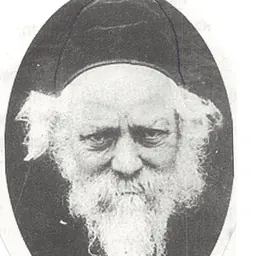
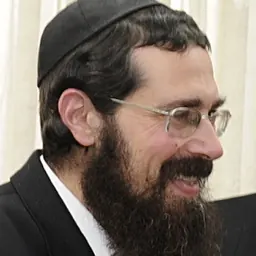


Related people
Same field, nearest in time
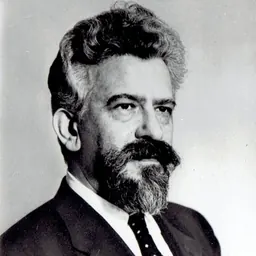

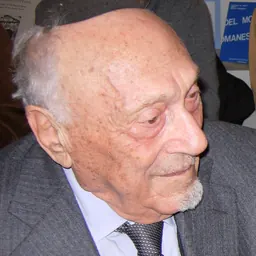

Contemporaries
People whose lives overlapped Nosson Meir Wachtfogel's






Frequently asked questions
Who was Nosson Meir Wachtfogel?
mashgiach of Beth Medrash Govoha
When was Nosson Meir Wachtfogel born?
Nosson Meir Wachtfogel was born on 18 February 1910 in Kuliai.
When did Nosson Meir Wachtfogel die?
Nosson Meir Wachtfogel died on 21 November 1998 in Lakewood.
What was Nosson Meir Wachtfogel's occupation?
Nosson Meir Wachtfogel was a rabbi.
Sources & further reading
· Wikipedia: Nosson Meir Wachtfogel
· DBpedia: Nosson Meir Wachtfogel
Cite this page
APA: Biography.guide. (2026). Nosson Meir Wachtfogel. https://biography.guide/nosson-meir-wachtfogel/
MLA: "Nosson Meir Wachtfogel." Biography.guide, https://biography.guide/nosson-meir-wachtfogel/.
Chicago: "Nosson Meir Wachtfogel." Biography.guide. https://biography.guide/nosson-meir-wachtfogel/.
Data last updated: 2026-09-20 · Spot an error? Report a correction.
Page generated 2026-09-27 05:24 UTC