
About Elchonon Wasserman
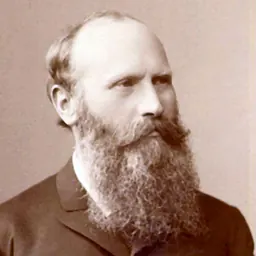
Lived 1875 – 1941 (aged 65–66). Elchonon Wasserman was a Russian, Polish and Lithuanian rabbi.
Rabbi Elchonon Bunim Wasserman (; ; 1874 6 July 1941) was a prominent rabbi and rosh yeshiva (dean) in prewar Europe. He was one of the closest students of Rabbi Yisrael Meir Kagan (the Chofetz Chaim) and a noted Talmid Chacham. In the interwar period, he served as rosh yeshiva of Yeshiva Ohel Torah-Baranovich. He was murdered during the Holocaust.
Early life and education Elchonon Bunim Wasserman was born in Biržai (Birz) in present-day Lithuania to Naftali Beinish, a shopkeeper and Sheina Rakhel. In 1890, the family moved to Bauska (Boisk) in present-day Latvia, and Wasserman, then 15 years old, studied in the Telshe Yeshiva in Telšiai (Telz) under Rav Eliezer Gordon and Rav Shimon Shkop. When Wasserman returned home during vacation, he participated in classes given by Rav Avraham Yitzchak Kook, who was appointed rabbi of Bauska in 1895. In the summer of 1897, Wasserman met Rav Chaim Soloveitchik at a health resort and "became deeply attached to him and his way of learning."
In 1914, the yeshiva was exiled to Smilavichy, near Minsk, and Rav Wasserman was appointed its rosh yeshiva one year later when Rav Kagan decided to relocate to Siemiatycze (Semiatitch). Together with Rav Yitzchok Hirshowitz (son-in-law of Rav Eliezer Gordon from Telz Yeshiva), Wasserman was asked to keep Torah alive in Smilavichy. He visited dozens of cities and towns, and raised around $10,000. While there, he made an impression on many young Jews.
Wasserman returned to Poland. This was partly because he did not want to abandon his students, and partly because he took a dim view of American Jewry. In 1939, just before the Nazi invasion, he advised a student against accepting a visa to the United States if it meant studying at Yeshiva University and what is now the Hebrew Theological College, due to what he perceived as a spiritually dangerous atmosphere in these two institutions. He suggested instead that the student consider Yeshiva Torah Vodaas in Brooklyn, New York.
Death in the Holocaust
When World War II broke out, Reb Wasserman fled to Vilnius (Vilna). In 1941, while on a visit to Kaunas (Kovno), he was arrested by Lithuanian Nazi sympathizers with twelve other rabbis. Wasserman was taken and murdered by Lithuanian collaborators on the 11th of Tammuz, 1941, in the Seventh Fort of Kaunas Fortress. Before he was taken he gave this statement:"In Heaven it appears that they deem us to be righteous because our bodies have been chosen to atone for the Jewish people. Therefore, we must repent now, immediately. There is not much time. We must keep in mind that we will be better offerings if we repent. In this way we will save the lives of our brethren overseas. Let no thought enter our minds, God forbid, which is abominable and which renders an offering unfit. We are now fulfilling the greatest mitzvah. With fire she [Jerusalem] was destroyed and with fire she will be rebuilt. The very fire which consumes our bodies will one day rebuild the Jewish people".
There was no monument, only a marker to the pit where, with others, he was shot.
Family Wasserman had several sons. Elazar Simcha (1899-1992), Rav Wasserman's other son, Naftoli, was murdered in the Holocaust.
Anti-Zionism Wasserman was an opponent of Zionism. He based his opinion upon the Torah views of his teachers, including Rabbis Kagan, Gordon, Shkop, and Soloveitchik. He considered all forms of Zionism to be heretical, even that of the religious Mizrachi party. He was opposed to the idea of a Jewish state because it constituted kefirah (rejection) of the coming of Moshiach (the Messiah). He held this position even in reference to a state run according to Torah law. He declared that any religious Jew who collaborated with the Zionists was causing others to sin. He rejected the notion that the creation of a state was a signal to the Atchalta De'Geulah (beginning of the Jewish redemption), considering it instead to be the beginning of a new galus (exile).
Even during the Holocaust, Reb Wasserman discouraged emigration to the United States or British-Mandate Palestine, viewing them as places of spiritual danger. He was particularity critical of the Zionist enterprise in Palestine and claimed, "Anti-Semites want to kill the body, but Zionists kill the soul. Better to die than consort with the Zionists."
Reb Wasserman viewed the two ascendant political movements of his time, nationalism and socialism, as "two forms of idolatry that had poisoned the hearts and minds of Jewish youth", and saw Nazism as an amalgam of both. He viewed the rise of the Nazi Party as a tool of God to exact punishment on the Jewish people for their pursuit of these foreign belief systems.
Notable students Aryeh Leib Baron Shmuel Berenbaum Meyer Juzint Shneur Kotler Aryeh Leib Malin Nochum Partzovitz Dovid Povarsky Moshe Shmuel Shapiro Simcha Sheps Boruch Sorotzkin Simcha Wasserman
Works Wasserman was famous for his clear, penetrating Talmudic analysis. His popular works, essential material in yeshivas around the world, are unique in their approach. He would often quote his rebbe, Chaim Soloveitchik, saying "Producing chiddushim (novel Torah concepts) is not for us. That was only in the power of the Rishonim. Our task is to understand what it says." This approach is evident in his works, which include: Kovetz Heoros Kovetz Shiurim Kovetz Biyurim Kovetz Shemuos Kovetz Inyanim Kovetz Maamarim Ikvasa Demeshicha
Wasserman also published the responsa of the Rashba with annotations in 1932. His talmudic novellae appeared in the rabbinic journal Sha'arei Tzion (1929–1934) and in other publications.
Don’t just read it —
keep it.
Full-length biographies made to live with: read them, listen on the way to work, watch them tonight.
- E-book
- Audio
- Video
Instant download · yours to keep · every purchase keeps this site free
Important facts
People in Elchonon Wasserman's life
Named in this biography and alive at the same time

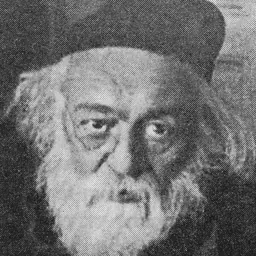

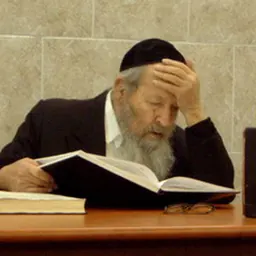



Related people
Same field, nearest in time
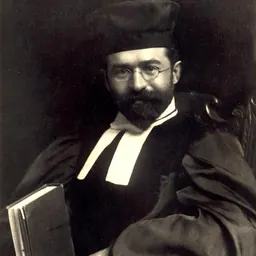
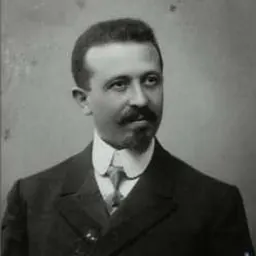

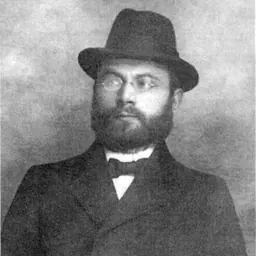

Contemporaries
People whose lives overlapped Elchonon Wasserman's
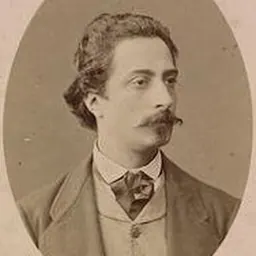


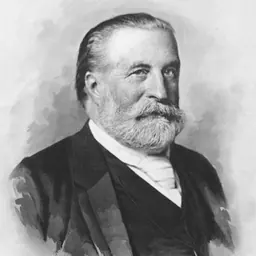
Frequently asked questions
Who was Elchonon Wasserman?
Belarusian Orthodox rabbi and rosh yeshiva (1874–1941)
When was Elchonon Wasserman born?
Elchonon Wasserman was born in 1875 in Biržai.
When did Elchonon Wasserman die?
Elchonon Wasserman died on 6 July 1941 in Seventh Fort.
What was Elchonon Wasserman's occupation?
Elchonon Wasserman was a rabbi.
What nationality was Elchonon Wasserman?
Elchonon Wasserman was Russian, Polish and Lithuanian.
Sources & further reading
· Wikipedia: Elchonon Wasserman
Cite this page
APA: Biography.guide. (2026). Elchonon Wasserman. https://biography.guide/elchonon-wasserman/
MLA: "Elchonon Wasserman." Biography.guide, https://biography.guide/elchonon-wasserman/.
Chicago: "Elchonon Wasserman." Biography.guide. https://biography.guide/elchonon-wasserman/.
Data last updated: 2026-09-20 · Spot an error? Report a correction.
Page generated 2026-09-27 05:08 UTC