
Norman Orentreich
American dermatologist
About Norman Orentreich
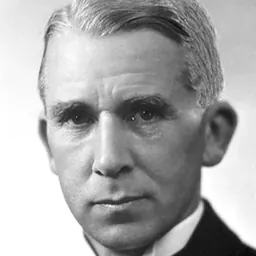
Lived 1922 – 2019 (aged 96). Norman Orentreich was an American dermatologist, known for Dermatology and Hair transplantation.
Norman Orentreich (; December 26, 1922 – January 23, 2019) was a New York dermatologist, a biogerontologist, a foundational innovator in cosmetics, and the father of hair transplantation.
Orentreich created Estée Lauder Companies' Clinique line of skin care products, invented a number of dermatologic procedures and was the first president of the American Society for Dermatologic Surgery. He is the founder of the Orentreich Medical Group and the Orentreich Foundation for the Advancement of Science, and the co-director of the latter organization.
Hair transplantation The New York Academy of Medicine cited Orentreich's early research, as a young man, as being critical to later developments in hair transplantation: While at NYU’s Skin and Cancer hospital, Norman focused his clinical research on patients with hair loss, making use of small scalp skin grafts to better understand the pathophysiology of these diverse conditions. This led to the establishment of the theory of donor and recipient dominance, making it surgically possible to transplant healthy “androgen insensitive” hair from the back of the scalp to the “androgen sensitive” bald areas in the front where it would take and grow permanently.
In 1952, Orentreich, having graduated from New York University School of Medicine in 1948, performed the first modern, and successful, hair transplants in his office in New York. By 1961, Orentreich had performed transplants on approximately 200 patients. By 1966, approximately 10,000 men over the world had undergone the treatment invented by Orentreich. According to the textbook Hair Transplantation, edited by Walter P. Unger, M.D. and Ronald Shapiro, M.D.: As at one time all roads led to Rome, no discussion of the origins of hair transplantation, as a treatment for MPB (Male Pattern Baldness) or of any of the men who first practiced this technique can begin without homage to this extraordinary clinician and scientist who gladly -- and from the beginning -- shared his knowledge with colleagues all over the world... The true "fathers" of hair restoration for MPB (male pattern baldness) all emerged as a result of collaboration or friendship with Dr. Orentreich. In the process of performing hair transplants, Orentreich discovered that "hair maintained the characteristics of the area from which it comes (the hair-bearing donor area), rather than to the area in which it is transplanted (the bald recipient area)," he coined this principle donor dominance.
Orentreich's hair transplant method was referred as the "cookie cutter" method, as the medical technique of cutting out pieces of haired skin resembles the act of cutting cookie dough with a cookie cutter.
Clinique In 1968, Orentreich was the expert interviewed for an article in Vogue by Carol Philips titled Can Great Skin Be Created? Clinique's promotional materials highlight Orentreich's influence on the brand's ethos:
Dr Norman Orentreich holds that human skin is intuitively capable of renewing itself, although this capability weakens with the passage of age and environmental conditions. He believes that great skin can be created if the secrets of the natural skin development are unlocked.
Orentreich worked with Clinique as one of the brand's "Guiding Dermatologists," as did two of his children, Dr. David Orentreich and Dr. Catherine Orentreich.
In 1986, he was among the group of dermatologists who heavily criticized the Glycel ad where the famous South African surgeon Christiaan Barnard promoted the "miracle cream" despite a complete lack of scientific study to back up any of the brand's claims.
Sued The New York Times, (October 7.,1977), reported that singer Kitty Kallen had sued Orientreich, who had prescribed an estrogen drug, Premarin, for her small facial wrinkles. She subsequently suffered blood clots in her lungs, caused directly by the drug. She was awarded $300,000 at trial.
Biology of Aging and The Orentreich Foundation for the Advancement of Science As an undergraduate student, Orentreaich learned of experiments done by Nobel laureate Alexis Carrell that showed that the rate of wound healing declined with age, and that the rate of cell proliferation in tissue culture could be increased by the addition of blood serum from younger donors or decreased using serum from older donors.
In 1961, Orentreich founded the Orentreich Foundation for the Advancement of Science (OFAS), a biomedical research organization. OFAS has done work on the biology of aging, cancer and dermatology.
In celebration of the bicentennial of the United States, the Orentreich foundation was called upon to study hairs belonging to President George Washington to determine the blood type of America's first president. After seeking out the assistance and expertise of Dr. M. Mitsuo Yokoyama it was determined that Washington had B type blood.
Publications
Don’t just read it —
keep it.
Full-length biographies made to live with: read them, listen on the way to work, watch them tonight.
- E-book
- Audio
- Video
Instant download · yours to keep · every purchase keeps this site free
Important facts
People in Norman Orentreich's life
Named in this biography and alive at the same time





Related people
Same field, nearest in time


Contemporaries
People whose lives overlapped Norman Orentreich's



Frequently asked questions
Who was Norman Orentreich?
American dermatologist
When was Norman Orentreich born?
Norman Orentreich was born on 26 December 1922 in New York City.
When did Norman Orentreich die?
Norman Orentreich died on 24 January 2019 in New York City.
What was Norman Orentreich's occupation?
Norman Orentreich was a dermatologist.
What was Norman Orentreich known for?
Norman Orentreich was known for Dermatology and Hair transplantation.
What nationality was Norman Orentreich?
Norman Orentreich was American.
Sources & further reading
· Wikipedia: Norman Orentreich
Cite this page
APA: Biography.guide. (2026). Norman Orentreich. https://biography.guide/norman-orentreich/
MLA: "Norman Orentreich." Biography.guide, https://biography.guide/norman-orentreich/.
Chicago: "Norman Orentreich." Biography.guide. https://biography.guide/norman-orentreich/.
Data last updated: 2026-09-20 · Spot an error? Report a correction.
Page generated 2026-09-27 05:29 UTC