
About Christiaan Barnard
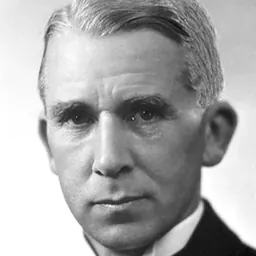
Lived 1922 – 2001 (aged 78). Christiaan Barnard was a South African and Austrian surgeon, writer and physician.
Christiaan Neethling Barnard (8November 19222September 2001) was a South African cardiac surgeon who performed the world's first human-to-human heart transplant operation. His father, Adam Barnard, was a minister in the Dutch Reformed Church. Barnard matriculated from the Beaufort West High School in 1940, and went to study medicine at the University of Cape Town Medical School, where he obtained his MB ChB in 1945.
His father served as a missionary to mixed-race people. His mother, Maria Elisabeth de Swart, instilled in the surviving brothers the belief that they could do anything they set their minds to. In 1951, he returned to Cape Town where he worked at the City Hospital as a Senior Resident Medical Officer, and in the Department of Medicine at Groote Schuur as a registrar.
Owen Wangensteen at the University of Minnesota in the United States had been impressed by the work of Alan Thal, a young South African doctor working in Minnesota. Wangensteen asked the Groote Schuur Head of Medicine John Brock if he might recommend any similarly talented South Africans, and Brock recommended Barnard. In December 1955, Barnard travelled to Minneapolis, Minnesota to begin a two-year scholarship under Chief of Surgery Wangensteen, who assigned Barnard more work on the intestines, which Barnard accepted even though he wanted to move onto something new. Simply by luck, whenever Barnard needed a break from this work, he could wander across the hall and talk with Vince Gott who ran the lab for open-heart surgery pioneer Walt Lillehei. Gott had begun to develop a technique of running blood backwards through the veins of the heart so Lillehei could more easily operate on the aortic valve (McRae writes, "It was the type of inspired thinking that entranced Barnard"). In March 1956, Gott asked Barnard to help him run the heart-lung machine for an operation. Shortly thereafter, Wangensteen agreed to let Barnard switch to Lillehei's service. It was during this time that Barnard became acquainted with fellow future heart transplantation surgeon Norman Shumway. Barnard also became friendly with Gil Campbell, who had demonstrated that a dog's lung could be used to oxygenate blood during open-heart surgery. (The year before Barnard arrived, Lillehei and Campbell had used this procedure for twenty minutes during surgery on a 13-year-old boy with ventricular septal defect, and the boy had made a full recovery.) Barnard and Campbell met regularly for early breakfast. In 1958, Barnard received a Master of Science in Surgery for a thesis titled "The aortic valve – problems in the fabrication and testing of a prosthetic valve". He was promoted to full-time lecturer and Director of Surgical Research at the University of Cape Town. In 1960, he flew to Moscow in order to meet Vladimir Demikhov, a top expert on organ transplants (later he credited Demikhov's accomplishment saying that "if there is a father of heart and lung transplantation then Demikhov certainly deserves this title.") In 1961 he was appointed Head of the Division of Cardiothoracic Surgery at the teaching hospitals of the University of Cape Town. He rose to associate professor in the Department of Surgery at the University of Cape Town in 1962. Barnard's younger brother Marius, who also studied medicine, eventually became Barnard's right-hand man at the department of Cardiac Surgery. Among the recognition he received over the years, he was named Professor Emeritus in 1984.
Historical context
Following the first-ever successful kidney transplant in 1953, in the United States, Barnard performed South Africa's second kidney transplant in October 1967, the first having been done in Johannesburg the previous year.
On 23 January 1964, James Hardy at the University of Mississippi Medical Center in Jackson, Mississippi, performed the world's first heart transplant and world's first cardiac xenotransplant by transplanting the heart of a chimpanzee into a desperately ill and dying man. This heart did beat in the patient's chest for approximately 60 to 90 minutes. The patient, Boyd Rush, died without regaining consciousness.
Barnard had experimentally transplanted forty-eight hearts into dogs, which was about a fifth the number that Adrian Kantrowitz had performed at Maimonides Medical Center in New York and about a sixth the number Norman Shumway had performed at Stanford University in California. Barnard had no dogs which had survived longer than ten days, unlike Kantrowitz and Shumway who had had dogs survive for more than a year.
With the availability of new breakthroughs introduced by several pioneers, also including Richard Lower at the Medical College of Virginia, several surgical teams were in a position to prepare for a human heart transplant. Barnard had a patient willing to undergo the procedure, but as with other surgeons, he needed a suitable donor. of surgeons, and assisted with Barnard's organ transplant program. Barnard said, "Hamilton Naki had better technical skills than I did. He was a better craftsman than me, especially when it came to stitching, and had very good hands in the theatre". A popular myth, propagated principally by a widely discredited documentary film called Hidden Heart and an erroneous newspaper article,
First human-to-human heart transplant Barnard performed the world's first human-to-human heart transplant operation in the early morning hours of Sunday 3 December 1967. Louis Washkansky, a 54-year-old grocer who was suffering from diabetes and incurable heart disease, was the patient. Barnard was assisted by his brother Marius Barnard, as well as a team of thirty staff members. The operation lasted approximately five hours.
Barnard stated to Washkansky and his wife Ann Washkansky that the transplant had an 80% chance of success. This has been criticised by the ethicists Peter Singer and Helga Kuhse as making claims for chances of success to the patient and family which were "unfounded" and "misleading".
Barnard later wrote, "For a dying man it is not a difficult decision because he knows he is at the end. If a lion chases you to the bank of a river filled with crocodiles, you will leap into the water, convinced you have a chance to swim to the other side." The donor heart came from a young woman, Denise Darvall, who had been rendered brain dead in an accident on 2 December 1967, while crossing a street in Cape Town. Coert Venter and Bertie Bosman requested permission from Darvall's father for Denise's heart to be used in the transplant attempt. The afternoon before his first transplant, Barnard dozed at his home while listening to music. When he awoke, he decided to modify Shumway and Lower's technique. Instead of cutting straight across the back of the atrial chambers of the donor heart, he would avoid damage to the septum and instead cut two small holes for the venae cavae and pulmonary veins. Prior to the transplant, rather than wait for Darvall's heart to stop beating, at his brother Marius Barnard's urging, Christiaan had injected potassium into her heart to paralyse it and render her technically dead by the whole-body standard.
Additional heart transplants Barnard and his patient received worldwide publicity. A 2017 BBC retrospective article described the occasion as one where "Journalists and film crews flooded into Cape Town's Groote Schuur Hospital, soon making Barnard and Washkansky household names." Barnard himself was described as "charismatic" and "photogenic" while initial reports labeled the operation as "successful" despite the death of Washkansky 18 days later.
Worldwide, approximately 100 transplants were performed by various doctors during 1968. However, only a third of these patients lived longer than three months. Many medical centers stopped performing transplants. In fact, a US National Institutes of Health publication states, "Within several years, only Shumway's team at Stanford was attempting transplants." Blaiberg's heart was donated by Clive Haupt, a 24-year-old black man who suffered a stroke, inciting controversy (especially in the African-American press) during the time of South African apartheid. Dirk van Zyl, who received a new heart in 1971, was the longest-lived recipient, surviving over 23 years.
Between December 1967 and November 1974 at Groote Schuur Hospital in Cape Town, South Africa, ten heart transplants were performed, as well as a heart and lung transplant in 1971. Of these ten patients, four lived longer than 18 months, with two of these four becoming long-term survivors. One patient, Dorothy Fischer, lived for over thirteen years and another for over twenty-four years.
Full recovery of donor heart function often takes place over hours or days, during which time considerable damage can occur. Other deaths to patients can occur from preexisting conditions. For example, in pulmonary hypertension the patient's right ventricle has often adapted to the higher pressure over time and, although diseased and hypertrophied, is often capable of maintaining circulation to the lungs. Barnard designed the idea of the heterotopic (or "piggy back" transplant) in which the patient's diseased heart is left in place while the donor heart is added, essentially forming a "double heart". Barnard performed the first such heterotopic heart transplant in 1974.
From November 1974 through December 1983, 49 consecutive heterotopic heart transplants on 43 patients were performed at Groote Schuur. The survival rate for patients at one year was over 60%, as compared to less than 40% with standard transplants, and the survival rate at five years was over 36% as compared to less than 20% with standard transplants.
Public life
Barnard was an outspoken opponent of South Africa's laws of apartheid, and was not afraid to criticise his nation's government, although he had to temper his remarks to some extent to travel abroad. Rather than leaving his homeland, he used his fame to campaign for a change in the law. Christiaan's brother, Marius Barnard, went into politics, and was elected to the legislature from the Progressive Federal Party. Barnard later stated that the reason he never won the Nobel Prize in Physiology or Medicine was probably because he was a "white South African".
Shortly before his visit to Kenya in 1978, the following was written about his views regarding race relations in South Africa; "While he believes in the participation of Africans in the political process of South Africa, he is opposed to a one-man-one-vote system in South Africa".
In answering a hypothetical question on how he would solve the race problem were he a "benevolent dictator in South Africa", Barnard stated the following in a long interview at the Weekly Review: While "I would abolish Social discrimination", political discrimination would continue. International fame took a toll on his family, and in 1969, Barnard and his wife divorced. In 1970, he married heiress Barbara Zoellner (1950-1998) when she was 19, the same age as his son, and they had two children: Frederick (born 1972) and Christiaan Jr. (born 1974). He divorced Zoellner in 1982. that occurred in January 1968. During that visit to Rome he received an audience from Pope Paul VI.
In October 2016, US Congresswoman Ann McLane Kuster stated that Barnard sexually assaulted her when she was 23 years old. According to Kuster, Barnard attempted to grope her under her skirt while she was seated at a business luncheon with US Representative Pete McCloskey, for whom she worked at the time.
Retirement Barnard retired as Head of the Department of Cardiothoracic Surgery in Cape Town in 1983 after developing rheumatoid arthritis in his hands which ended his surgical career. He had struggled with arthritis since 1956, when it was diagnosed during his postgraduate work in the United States.
He had by this time become very interested in anti-aging research, and his reputation suffered in 1986 when he promoted Glycel, an expensive "anti-aging" skin cream, whose approval was withdrawn by the United States Food and Drug Administration soon thereafter. He also spent time as a research advisor to the Clinique la Prairie, in Switzerland, where the controversial "rejuvenation therapy" was practised.
Barnard divided the remainder of his years between Austria, where he established the Christiaan Barnard Foundation, dedicated to helping underprivileged children throughout the world, and his game farm in Beaufort West, South Africa. In his later years, he had Basal-cell carcinoma (skin cancer) on his face, for which he was treated in Parow, South Africa.
Death
Christiaan Barnard died on 2 September 2001, while on holiday in Paphos, Cyprus. Early reports stated that he had died of a heart attack, but an autopsy showed his death was caused by a severe asthma attack.
Books Barnard wrote two autobiographies. His first book, One Life, was published in 1969 and sold copies worldwide. Some of the proceeds were used to set up the Chris Barnard Fund for research into heart disease and heart transplants in Cape Town. His second autobiography, The Second Life, was published in 1993, eight years before his death .
Apart from his autobiographies, Barnard wrote books including: The Donor Your Healthy Heart In the Night Season The Best Medicine Arthritis Handbook: How to Live With Arthritis Good Life Good Death: A Doctor's Case for Euthanasia and Suicide South Africa: Sharp Dissection 50 Ways to a Healthy Heart Body Machine
Don’t just read it —
keep it.
Full-length biographies made to live with: read them, listen on the way to work, watch them tonight.
- E-book
- Audio
- Video
Instant download · yours to keep · every purchase keeps this site free
Important facts
People in Christiaan Barnard's life
Named in this biography and alive at the same time
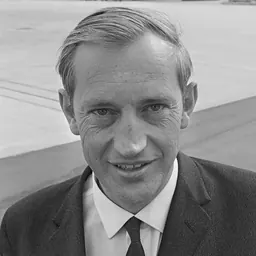

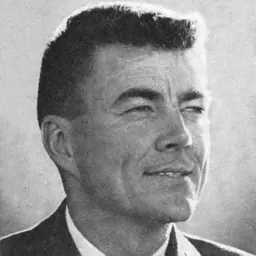

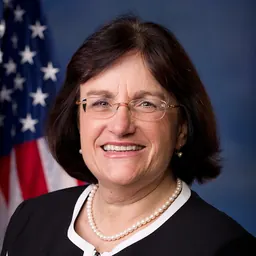



Related people
Same field, nearest in time


Contemporaries
People whose lives overlapped Christiaan Barnard's

Frequently asked questions
Who was Christiaan Barnard?
South African cardiac surgeon
When was Christiaan Barnard born?
Christiaan Barnard was born on 8 November 1922 in Beaufort West.
When did Christiaan Barnard die?
Christiaan Barnard died on 2 September 2001 in Paphos.
What was Christiaan Barnard's occupation?
Christiaan Barnard was a surgeon, writer and physician.
What nationality was Christiaan Barnard?
Christiaan Barnard was South African and Austrian.
Sources & further reading
· Wikipedia: Christiaan Barnard
Cite this page
APA: Biography.guide. (2026). Christiaan Barnard. https://biography.guide/christiaan-barnard/
MLA: "Christiaan Barnard." Biography.guide, https://biography.guide/christiaan-barnard/.
Chicago: "Christiaan Barnard." Biography.guide. https://biography.guide/christiaan-barnard/.
Data last updated: 2026-09-20 · Spot an error? Report a correction.
Page generated 2026-09-27 05:20 UTC