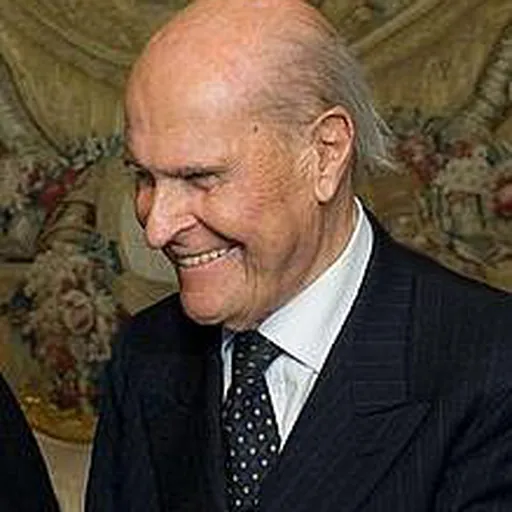
About Umberto Veronesi
Lived 1925 – 2016 (aged 90). Umberto Veronesi was an Italian surgeon, politician and oncologist, known for Breast-conserving surgery.
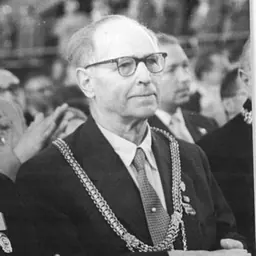
Umberto Veronesi (; 28 November 1925 – 8 November 2016) was an Italian oncologist, physician, scientist, and politician, internationally known for his contributions on prevention and treatment of breast cancer throughout a career spanning over fifty years. He was the founder and president of the Umberto Veronesi Foundation. He also founded and held the role of scientific director and scientific director emeritus of the European Institute of Oncology. During his life and career, Veronesi was awarded a number of prizes for his contributions.
Veronesi was the scientific director of the National Cancer Institute in Milan from 1976 to 1994. His clinical and research activity focused on the prevention and treatment of cancer. In particular, he dealt with breast cancer, the leading cause of cancer death in women, and was the first theorist and staunch proponent of quadrantectomy; he demonstrated how in the majority of cases the survival curves of this technique, provided it is combined with radiotherapy, are the same as those of mastectomy but with a better aesthetic and psychosexual impact. As a politician, Veronesi was Minister of Health from 2000 to 2001 and a member of the Senate of the Republic. He was also a supporter of civil rights, vegetarianism, and animal rights.
Early life, family, and education Veronesi was born in Milan on 28 November 1925. He grew up in via Vallazze, in Casoretto, in the then agricultural suburbs of Milan, with four older brothers and a younger sister. Veronesi failed high school twice. Given the early death of his father, the maternal figure of Erminia Verganti, to whom he dedicated the book Dell'amore e del dolore delle donne, was fundamental for him. (In October 2010, Veronesi recalled: "My mother acted as my father, as my big sister, as my traveling companion, because I lost my father at 6 years old...) a child needs guidance and my mother was the great guide, a deeply religious woman... she taught me two important things: one is tolerance... and the other is seeking the causes of events; if a person is hostile to you, don't just reject them or treat them badly: if they are hostile to you, there is a reason and you need to identify it." He later declared that, after Auschwitz, the study of oncology had increasingly convinced him of the non-existence of God. In 2010, he said: "Religion, by definition, is fundamentalist, while science lives in doubt, in the search for truth." Veronesi obtained his professional degree in medicine and surgery from the University of Milan in 1951, and specialised in surgery in 1956 at the University of Pavia. Veronesi dedicated his professional life to the study and treatment of cancer.
Scientific career After spending brief periods in England and France, In 1965, he participated in the foundation of the Italian Cancer Research Association and founded the European School of Oncology in 1982. The Umberto Veronesi Foundation for the progress of science, with the aim of supporting scientific research at a national level in oncology, cardiology, and neurosciences and promoting scientific dissemination, was established in 2003. which compared outcomes from radical mastectomy against quadrantectomy. The results, published in 1981, and confirmed in 2002 in a 20-year follow-up study, played a key role in establishing breast conserving surgery as the standard of care for patients with early breast cancer, alongside results from trials of lumpectomy led by the American breast surgeon Bernard Fisher. In June 2005, 1,800 surgeons called for Veronesi to be awarded a Nobel Prize for having revolutionised cancer treatment.
Veronesi, who was chairman of the BioGeM Scientific Committee and also a member of the boards of directors of Mondadori, supported and promoted scientific research aimed at improving conservative surgical techniques, including sentinel lymph node biopsy, which resulted in axillary dissection in breast cancer with clinically negative lymph nodes no longer being performed. He contributed to breast cancer prevention conducting studies on tamoxifen and retinoids, and verifying their capabilities to prevent the formation of carcinoma. He was also an activist in anti-tobacco campaigns. In 2012, some Italian websites reported that the institute led by Veronesi had purportedly certified the effectiveness of the Di Bella method, which he had already dismissed as part of the 1998 parliamentary commission and again in 2005; the news proved to be a hoax and Veronesi described it as fake news and confirmed the ineffectiveness of the Di Bella method.
Political career
During his early life, Veronesi shared his father's reformist socialist views and was close to the Italian Socialist Party (PSI). In 1995, he campaigned for drug liberalisation through the decriminalisation and legalisation of soft drugs, with the aim of achieving regulation of hemp derivatives, mainly for therapeutic use. and was in office until 11 June 2001. Citing the health effects of tobacco, he was instrumental in the promotion of anti-smoking legislation in public places, calling for non-smokers to take to the streets with posters, hold marches, and occupy the Italian Parliament to have the law passed; the law was implemented by his successor Girolamo Sirchia. After being appointed on 5 November 2010 as the head of the Italian Nuclear Safety Agency, Veronesi, who was a member of the 7th Public Education Commission on Cultural Heritage from 22 May 2008 to 22 February 2011, renounced to his senatorial seat in order to preside over the Nuclear Safety Agency. He was succeeded by Francesco Monaco. Later on 3 November 2011, Veronesi left the Nuclear Safety Agency, after announcing his resignation on 3 September 2011, Beppe Grillo and other activists questioned Veronesi's statements, with Grillo arguing for a conflict of interest and claiming the existence of a sort of business for the benefit of the Cancer Institute, consisting in causing tumors and treating them. Veronesi responded to these criticisms with a letter. Some activists also argued that the partners of the Umberto Veronesi Foundation include companies that deal with incinerators and their construction, coal, fuel oil, and nuclear power plants. In addition to Enel, the companies involved are Acea and Veolia Environnement, which deal not only with water networks but also with incineration within the scope of energy production and waste treatment, respectively. These companies are among the twenty-three partners of the world conference The Future of Science, of which the Umberto Veronesi Foundation is one of the three organizing foundations, while they are not among the over one hundred partners of the organisation. For a list of the Umberto Veronesi Foundation's partners, see Veronesi was in favour of nuclear power plants. In May 2007, he declared that, in order to respect the commitments made in the Kyoto Protocol and avoid sanctions for non-compliance, Italy should build ten nuclear power plants in ten years, exceeding what he called "the unjustified bogeyman" of atomic technology, with the justification that this source "does not pose risks to health and the environment". Carlo Rubbia, the 1984 winner of the Nobel Prize in Physics, disagreed with Veronesi. In 2008, Grillo referred to Veronesi as "Canceronesi" and wrote: "For him incinerators and the tumor institute are a virtuous cycle of disease creation. A business. It causes it and cures it." Together, they had seven children (five boys and two girls), two of whom, Paolo and Giulia, followed in his footsteps and are surgeons, while a third, Alberto Veronesi, is an orchestra director. Veronesi died in his home in Milan on 8 November 2016, aged 90.
Activism and political campaigns
Among the various campaigns promoted by Veronesi was that in 1995 for the decriminalisation and regulation of soft drugs and hemp derivates, especially for its therapeutic uses in the field of pain therapy. He argued that legalisation had positive effects, citing the liberal drug policy of Switzerland as having decreased the number of drug addicts. He was part of the guarantors of the Liberta e Giustizia association, which acts in defense of the secular state and the balance between powers. He was in favour of genetically modified organisms (GMOs). In March 2005, on the occasion of a conference on environmental communication, Veronesi mentioned the toxins contained in certain foods, for example polenta, potatoes, flour, or basil. This statement, which was widely reported in the Italian press, including Corriere della Sera, Il Giornale, Il Giorno, Il Messaggero, La Repubblica, Il Secolo XIX, and La Stampa, provoked indignation from slow food, organic food growers, and movements against the legalisation of GMOs, including Beppe Grillo. He was also against the death penalty and life imprisonment, and carried out an abolitionist campaign with the Science for Peace association, stating that "our system of neurons is not immutable but is renewed because the brain is equipped with stem cells capable of generating new cells. So the person we locked up in prison is not the same twenty years later. For every man there is the possibility to change and evolve. Secondly, DNA studies demonstrate that violence is not a biological imperative. On the contrary, the message of our genetic code is the perpetuation of the species, a natural predisposition to solidarity." In 2009, Veronesi became ambassador of the Internet for Peace movement, which was founded by Wired Italia with the aim of nominating the Internet for the Nobel Peace Prize in 2010. In this regard, Veronesi, who defined himself as "an extremist pacifist", stated: "I started the movement for universal peace, but in the Tolstoyan sense, peace not as the absence of war, or not only as the absence of war, but as a return to a natural, peaceful, profound condition of our thinking. So we are fighting for peace in the world, against wars, against weapons, against abuses of power, against violence, against the death penalty, in favour of women whose identity is trampled upon in many countries. And therefore we could say that it is a great movement for non-violence."
Ethical views
Over the years, Veronesi publicly expressed his views on several ethical and bioethical issues in interviews, televised debates, and his books, He was opposed in principle to a doctors' strike, saying: "It is a legitimate instrument of struggle ... but, in my opinion, not for those doctors who work in hospitals." In 1981, he was threatened with death by the Red Brigades.
Veronesi was personally opposed to abortion, describing it as "a dramatic and traumatic event that everyone would like to avoid", but was equally opposed to anti-abortion laws, and supported the legalisation of abortion to protect "those who find themselves facing it", as he argued that criminalisation does not stop abortions and that in fact the abortion law in Italy had reduced the number of abortions, as well as contraception pills, which he also advocated to reduce ovarian cancer, and mifepristone. Veronesi supported the moral and intellectual superiority of women over men. He wrote that "a woman's greatness is instinctive and complete, a genetic greatness because it is based on a combination of DNA, and mental characteristics, which leads to a better ability to adapt". In his opinion, women would be more resistant to pain and fatigue, more loyal to the company or institution they represent, less aggressive, more decisive, and more devoted to harmony, peace, and civil progress.
Veronesi was an ethical vegetarian and an animal rights advocate. He was a vegetarian for ethical reasons but also promoted the health benefits of a lacto-ovo vegetarian diet. In 2012, Veronesi co-authored Verso la scelta vegetariana (Towards the Vegetarian Choice) with Mario Pappagallo. The book included 200 vegetarian recipes. Veronesi supported GMOs as a way to produce food with higher nutritional capabilities and deprived of potentially carcinogenic substances. He criticised the opposition to GMOs as being due to a lack of scientific knowledge. During a public conference in 2005, Veronesi stated that some toxins contained in particular foods caused cancer rather than GMOs, a statement that sparked criticism and various controversies from the slow food movement, among others. In a 2006 statement, he further underlined how GMOs can be used to fight world hunger, reduce the impact of pesticides, and combat desertification.
Veronesi became an honorary citizen of several cities, including Asti on 31 January 2004, Monte Argentario in 2006, and Inveruno in 2015. In 2009, he received the America Prize of the Italy–USA Foundation. In 2012, he received the Art, Science and Peace Prize for his career. In 2014, Veronesi won the inaugural Vespasiano Gonzaga National Golden Fleece Award, which is intended for those who "exceptionally honoured society without limits of age, nationality, sex, rank, profession and political or religious affiliation", for "the extraordinary scientific contributions provided to oncology research, prevention, diagnosis and treatment of tumors". In March 2017, the European School of Oncology, of which he was the founder, named after him the Umberto Veronesi Memorial Award, a biennial award given to researchers who contribute to the advancement of research in the treatment of breast cancer. The first award was given to Giuseppe Curigliano.
Works Da bambino avevo un sogno. Tra ricerca e cura, la mia lotta al tumore (2002) Una carezza per guarire. La nuova medicina tra scienza e coscienza (with Mario Pappagallo, 2005) Il diritto di morire. La libertà del laico di fronte alla sofferenza (2005) La fecondazione assistita. Riflessioni di otto grandi giuristi (2005, preface) Essere laico (with Alain Elkann, 2007) L'ombra e la luce. La mia lotta contro il male (2008) Dell'amore e del dolore delle donne (2010) Scienza e pace (with Alessandro Cecchi Paone, 2011) Il diritto di non soffrire. Cure palliative, testamento biologico, eutanasia (2011) Verso la scelta vegetariana. Il tumore si previene anche a tavola (with Mario Pappagallo, 2011) Longevità (2012) Responsabilità della vita (2013, with Giovanni Reale) La dieta del digiuno. Perdere peso e prevenire le malattie con la restrizione calorica (2013) Il mestiere di uomo (2014) Il mio mondo è donna (2015 with Maria Giovanni Luini) Tre sere alla settimana. 300 film, 12 anni di passione cinematografica (2015) Breast Cancer: Innovations in Research and Management (with Aron Goldhirsch, 2017) Il diritto di essere umani (2018) I segreti della lunga vita (with Mario Pappagallo, 2021)
Don’t just read it —
keep it.
Full-length biographies made to live with: read them, listen on the way to work, watch them tonight.
- E-book
- Audio
- Video
Instant download · yours to keep · every purchase keeps this site free
Important facts
People in Umberto Veronesi's life
Named in this biography and alive at the same time




Related people
Same field, nearest in time

Contemporaries
People whose lives overlapped Umberto Veronesi's


Frequently asked questions
Who was Umberto Veronesi?
Italian oncologist and politician (1925-2016)
When was Umberto Veronesi born?
Umberto Veronesi was born on 28 November 1925 in Milan.
When did Umberto Veronesi die?
Umberto Veronesi died on 8 November 2016 in Milan.
What was Umberto Veronesi's occupation?
Umberto Veronesi was a surgeon, politician and oncologist.
What was Umberto Veronesi known for?
Umberto Veronesi was known for Breast-conserving surgery.
What nationality was Umberto Veronesi?
Umberto Veronesi was Italian.
Sources & further reading
Cite this page
APA: Biography.guide. (2026). Umberto Veronesi. https://biography.guide/umberto-veronesi/
MLA: "Umberto Veronesi." Biography.guide, https://biography.guide/umberto-veronesi/.
Chicago: "Umberto Veronesi." Biography.guide. https://biography.guide/umberto-veronesi/.
Data last updated: 2026-09-20 · Spot an error? Report a correction.
Page generated 2026-09-27 05:10 UTC