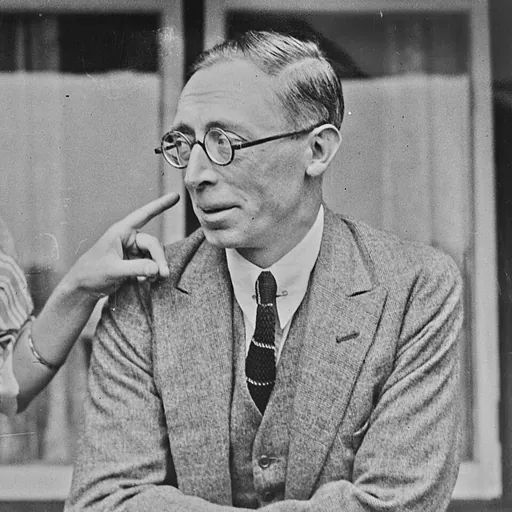
Norman Clapham
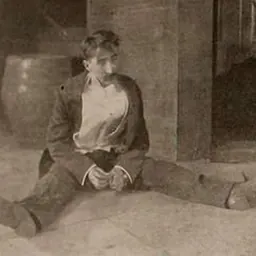
British comedian, performing under the stage name of "John Henry"
About Norman Clapham
Lived 1879 – 1934 (aged 54). Norman Clapham was a British comedian.
Norman Clapham (3 September 1879 – 14 May 1934) was a British comedian, who performed under the stage name John Henry. He was known for his pioneering work in radio comedy, and his early commercial recordings in the genre. He killed himself after the death of his romantic and stage partner Gladys Horridge coincided with the imminent exposure of his deceptions about their marital status.
Career
Clapham was born in Wakefield, West Riding of Yorkshire, in 1879, and emigrated to Canada where he was employed as a journalist. During World War I he worked as a comedian, entertaining Canadian troops.
He subsequently found work as a clerk with the British civil service, working at the Board of Trade.
He performed in the guise of John Henry, a "lugubrious Yorkshireman". In 1925, he introduced his wife, Blossom, into the comedy show An Hour in a Restaurant. a role latterly played by Gladys Horridge. According to Gifford, "the team of John Henry and Blossom... can be considered the start of domestic comedy in radio."
Between 1925 and 1932, a number of commercial gramophone recordings of his sketches were released on the His Master's Voice label. Some of these also featured Horridge.
Henry also appeared as the subject of a comic strip in the Daily Sketch, and Tit-Bits.
Personal life
Clapham married, and had at least one child, a son. He and his wife separated in or around 1914, but did not divorce. Clapham gave evidence at her inquest, His manager, Sydney Brandon, said that Clapham subsequently drank heavily, and had said that he would not "get over" her loss.
He also mentioned killing himself to Hazel Wilford (also known as Mrs. Hudson), an actress with whom he had begun to work. They had made their debut as "John Henry and the New Blossom" in late April. The pair were also planning film work, and a West End show. He left a sealed envelope with her, to be opened "when I'm not here".
Clapham's death
On 14 May, Clapham's upstairs neighbour at Holland Road noticed the smell of gas coming from Clapham's flat, and entered to find his body leaning against his gas stove, with a suicide note and letters lying adjacent. He was holding a photograph of Horridge.
In one of the letters he left with Hazel Wilford, he had written:
An inquest, held by the coroner for Paddington, Ingleby Oddie on 16 May, gave a verdict of death from coal gas poisoning, and that Clapham "killed himself while of unsound mind". During the inquest, it emerged that Clapham had feared that the exposure of and prosecution for his pretence of being married to Horridge would harm his career, and that he was being pursued by his estranged wife for alimony.
Around 500 mourners attended his funeral, at Streatham Park Cemetery, which was paid for by the Variety Artistes' Benevolent Fund.
Legacy
Seán Street, Professor of Radio at Bournemouth University, described Clapham as the "forerunner of a number of great radio comedians, among them Tommy Handley, Gillie Potter, Arthur Askey, Frankie Howerd and Tony Hancock".
Jennifer Purcell of Saint Michael's College called him "the first artist to write and perform radiogenic material." She noted his experimental use of sound effects, and called his style as "warm and conversational, with a sense of casual armchair intimacy, well-suited to the domestic space of radio listening". However, she also critiqued how he "delineated the collective identity of his audience with remarks aimed at married men and fathers", giving as an example his comparison of wives to loudspeakers.
Don’t just read it —
keep it.
Full-length biographies made to live with: read them, listen on the way to work, watch them tonight.
- E-book
- Audio
- Video
Instant download · yours to keep · every purchase keeps this site free
Important facts
People in Norman Clapham's life
Named in this biography and alive at the same time





Related people
Same field, nearest in time



Contemporaries
People whose lives overlapped Norman Clapham's




Frequently asked questions
Who was Norman Clapham?
British comedian, performing under the stage name of "John Henry"
When was Norman Clapham born?
Norman Clapham was born on 3 September 1879 in Wakefield.
When did Norman Clapham die?
Norman Clapham died on 14 May 1934 in Holland Road.
What was Norman Clapham's occupation?
Norman Clapham was a comedian.
What nationality was Norman Clapham?
Norman Clapham was British.
Sources & further reading
Cite this page
APA: Biography.guide. (2026). Norman Clapham. https://biography.guide/norman-clapham/
MLA: "Norman Clapham." Biography.guide, https://biography.guide/norman-clapham/.
Chicago: "Norman Clapham." Biography.guide. https://biography.guide/norman-clapham/.
Data last updated: 2026-09-22 · Spot an error? Report a correction.
Portrait: Wikimedia Commons · author & licence
Page generated 2026-09-27 05:00 UTC