
About Arthur Askey
Lived 1900 – 1982 (aged 82). Arthur Askey was a British film actor, screenwriter and comedian.
Arthur Bowden Askey (6 June 1900 – 16 November 1982) was an English comedian and actor. Askey was known for his short stature and distinctive horn-rimmed glasses, and his playful humour incorporating improvisation and catchphrases including "Hello, playmates", "I thank you" (pronounced "Ay-thang-yaw") and "Before your very eyes".
Askey achieved prominence in the 1930s in the BBC's first radio comedy series Band Waggon and subsequently starred in several Gainsborough Pictures comedy films during the Second World War including Charley's (Big-Hearted) Aunt (1940) and The Ghost Train (1941). His novelty recordings for the His Master's Voice label include "The Bee Song" (1938), a lasting part of his act. Askey was a prominent television presence from the 1950s onward, and made regular appearances on the BBC's long-running music hall programme The Good Old Days. He was made an OBE in 1969 and a CBE in 1981; he continued to appear frequently on television, radio and the stage until his death in 1982.
Early life and education Askey was born at 29 Moses Street, Dingle, Liverpool, the eldest child and only son of Betsy (née Bowden), originally from Knutsford, Cheshire, and Samuel Askey, company secretary of Sugar Products of Liverpool. Six months after his birth, the family moved to 90 Rosslyn Street, Liverpool. It was here that a sister, Irene Dorothy, was born. Askey was educated at St. Michael's Council School (1905–11) and the Liverpool Institute for Boys (1911–16).
Career Askey served in the Royal Welch Fusiliers in the First World War and performed in army entertainments. This would prove an excellent training ground for his career in show business. He performed with the touring pantomime "Little Miss Muffet" in the early 1920s and made his first professional appearance coming on stage at the Headgate Theatre in Colchester on the 31 March 1924. After working as a clerk for Liverpool Corporation's Education Department, he was in a touring concert party, the music halls and was in the stage company of Powis Pinder on the Isle of Wight in the early 1930s before he rose to stardom in 1938 through his role in the first regular radio comedy series, Band Waggon on the BBC. Band Waggon began as a variety show, but had been unsuccessful until Askey and his partner, Richard Murdoch, took on a larger role in the writing.
Film roles
During the Second World War Askey starred in several Gainsborough Pictures comedy films, including Band Waggon (1940), based on the radio show; Charley's (Big-Hearted) Aunt (1940); The Ghost Train (1941); I Thank You (1941); Back-Room Boy (1942); King Arthur Was a Gentleman (1942); Miss London Ltd. (1943); Bees in Paradise (1944); The Love Match (1955) and Make Mine a Million (1959).
His last film was Rosie Dixon – Night Nurse (1978), starring Debbie Ash.
Television In the early 1930s, Askey appeared on an early form of BBC television—the spinning disc invented by John Logie Baird that scanned vertically and had only thirty lines. Askey had to be heavily made up for his face to be recognisable at such low resolution. When television became electronic, with 405 horizontal lines, Askey was a regular performer in variety shows. When television returned after the second World War, his first TV series was Before Your Very Eyes! (1952), named after his catchphrase. On 3 May 1956, Askey presented Meet The People, a launch night programme for Granada Television. In 1957 writers Sid Colin and Talbot Rothwell revived the Band Waggon format for Living It Up, a series that reunited Askey and Murdoch after 18 years. He continued to appear frequently on television in the 1970s, such as being a panellist on the ITV talent show New Faces, where his usually sympathetic comments would offset the harsher judgments of fellow judges Tony Hatch and Mickie Most. He also appeared on the comedy panel game Jokers Wild. He made many TV appearances in variety, including BBC TV's long-running show The Good Old Days. His final professional engagement was The Green Tie on the Little Yellow Dog, recorded in 1982 and broadcast by Channel 4 in 1983.
Radio In the late 1940s, Askey participated in the BBC radio show How Do You Do in which listeners could write into the BBC asking for him to come and broadcast a show from their homes, twelve shows were broadcast with Arthur, his daughter Anthea and special guests, as well as a surprise guest each week which was revealed some time throughout the programme. The theme of each show was worked around the occupation of the family from where it was broadcast. This was broadcast on the Light Programme. Only one of the shows was recorded onto acetate discs, which are now held at the British Library.
During the 1950s and 1960s, he appeared in many sitcoms, including Love and Kisses, Arthur's Treasured Volumes and The Arthur Askey Show. He was the subject of This Is Your Life on two occasions, in December 1959 when he was surprised by Eamonn Andrews, and in December 1974, when Andrews, dressed as Humpty Dumpty, surprised him on a television show while discussing the art of pantomime. Askey made four appearances on the BBC Radio series Desert Island Discs in 1942, 1955, 1968 and 1980. He shares the record for most appearances on the programme with David Attenborough.
Theatre Askey appeared in the West End musical Follow the Girls. He also made many stage appearances as a pantomime dame.
Recordings Askey's recording career included "The Bee Song", which was an integral part of his stage and television act for many years, "The Thing-Ummy Bob", "I'd Like a Banana", and his theme tune, "Big-Hearted Arthur" (which was also his nickname). In 1941 a song he intended to record, "It's Really Nice to See You Mr Hess" (after Hitler's deputy Rudolf Hess fled to Scotland), was banned by the War Office. A collection of Askey's wartime recordings appear on the CD album Band Waggon/Big Hearted Arthur Goes To War.
Private Eye Private Eye magazine in the 1970s regularly made the comment that he and the Queen Mother had "never been seen in the same room together", referring to the fact that they were about the same age and height and suggesting that the Queen Mother was Askey in drag.
Honours Askey was appointed OBE in 1969 and advanced to CBE in 1981.
Personal life, illness and death Askey was married to Elizabeth May Swash in 1925 until her death in 1974; he was the father of actress Anthea Askey (1933–1999).
Askey carried on working on his comedy career until just before he was hospitalised in July 1982, owing to poor circulation, which resulted in gangrene and the amputation of both legs. He died in London's St Thomas's Hospital on 16 November 1982 and was cremated at Putney Vale Crematorium. himself BBC, 14 episodes 1952 Bet Your Life Arthur Golightly TV movie 1953 The Love Match Bill Brown TV movie 1955 Love and Kisses Bill Brown 5 episodes 1956 Before Your Very Eyes himself ITV, 14 episodes 1957 A Santa for Christmas TV movie 1957–1958 Living it Up himself 9 episodes 1959–1960 The Arthur Askey Show himself 6 episodes 1960 Arthur's Treasured Volumes various 6 episodes 1961 The Arthur Askey Show Arthur Pilbeam 6 episodes 1964 Ninety Years On Billy Merson TV movie 1966 Second Honeymoon Arthur Bowden TV movie 1966 Aladdin and His Wonderful Lamp Widow Twankey TV movie 1967 No Strings Arthur Anders TV film
Legacy Arthur Askey is among other famous names in the Dirk Wears White Sox version of "Friends" by Adam and the Ants.
Don’t just read it —
keep it.
Full-length biographies made to live with: read them, listen on the way to work, watch them tonight.
- E-book
- Audio
- Video
Instant download · yours to keep · every purchase keeps this site free
Important facts
People in Arthur Askey's life
Named in this biography and alive at the same time




Related people
Same field, nearest in time

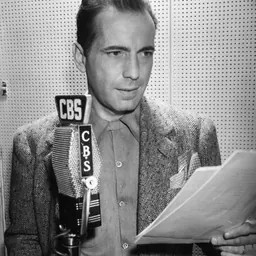


Contemporaries
People whose lives overlapped Arthur Askey's



Frequently asked questions
Who was Arthur Askey?
English comedian and actor (1900–1982)
When was Arthur Askey born?
Arthur Askey was born on 6 June 1900 in Liverpool.
When did Arthur Askey die?
Arthur Askey died on 16 November 1982 in London.
What was Arthur Askey's occupation?
Arthur Askey was a film actor, screenwriter and comedian.
What nationality was Arthur Askey?
Arthur Askey was British.
Sources & further reading
Cite this page
APA: Biography.guide. (2026). Arthur Askey. https://biography.guide/arthur-askey/
MLA: "Arthur Askey." Biography.guide, https://biography.guide/arthur-askey/.
Chicago: "Arthur Askey." Biography.guide. https://biography.guide/arthur-askey/.
Data last updated: 2026-09-20 · Spot an error? Report a correction.
Page generated 2026-09-27 05:32 UTC