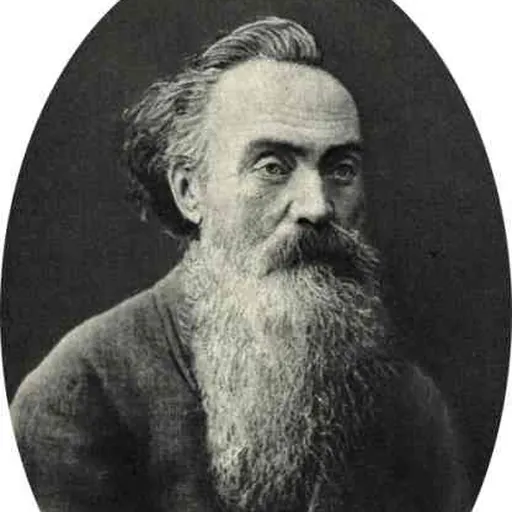
About Nikolay Strakhov
Lived 1828 – 1896 (aged 67). Nikolay Strakhov was a Russian literary critic, philosopher, journalist, translator, writer and literary historian.
Nikolay Nikolayevich Strakhov, also transliterated as Nikolai Strahov (; 16 October 1828 – 24 January 1896) was a Russian philosopher, publicist, journalist and literary critic. He shared the ideals of Pochvennichestvo and was a longtime friend and correspondent of Leo Tolstoy.
Strakhov was born in Belgorod, Kursk Governorate in a priest family. After leaving St Petersburg University (unable to afford the fees), in 1851 Strakhov graduated from Saint Petersburg's Main Pedagogical Institute, after which he taught for one year in Odessa, followed by nine years' teaching at a gymnasium in Saint Petersburg. In 1861, Strakhov became a prominent publicist and literary critic. Strakhov worked on the literary journals Time and Epoch together with Fyodor Dostoyevsky and Apollon Grigoryev. He became one of the very few close friends of Leo Tolstoy.
In the 1870s Nikolay Strakhov wrote his most famous philosophical work World as a Whole and was among the first (if not the first) to recognize Tolstoy's War and Peace as one of the world's greatest novels. Nikolay Strakhov was also one of the most prominent opponents of Liberalism, Rationalism and Utilitarianism in Russia, who contributed greatly to the development of traditionalist Slavophile ideology and its more conservative and nationalist variant known as Pochvennichestvo. In 1883 Nikolay Strakhov wrote The Struggle Against the West in Russian Literature and supported ideas of Nikolay Danilevsky and claimed that Western European rationalism lacks scientific grounds.
Nikolay Strakhov supported and encouraged the young Vasily Rozanov to become a writer and philosopher. Despite his conservatism and support for official government ideology of Orthodoxy, Autocracy, and Nationality he was at times criticized by pro-government publications such as Mikhail Katkov's Moskovskie Vedomosti. Russian liberals bitterly resented Strakhov and considered him a reactionary philosopher.
Strakhov died in Saint Petersburg in 1896; he never married and had no children.
Don’t just read it —
keep it.
Full-length biographies made to live with: read them, listen on the way to work, watch them tonight.
- E-book
- Audio
- Video
Instant download · yours to keep · every purchase keeps this site free
Important facts
People in Nikolay Strakhov's life
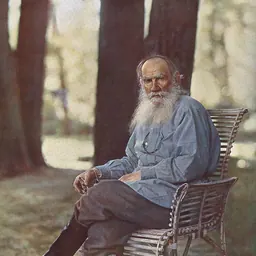
Named in this biography and alive at the same time




Related people
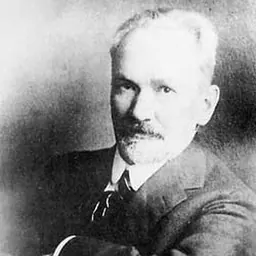
Same field, nearest in time


Contemporaries
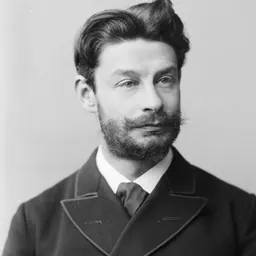
People whose lives overlapped Nikolay Strakhov's
Frequently asked questions
Who was Nikolay Strakhov?
Russian philosopher (1828–1896)
When was Nikolay Strakhov born?
Nikolay Strakhov was born on 16 October 1828 in Belgorod.
When did Nikolay Strakhov die?
Nikolay Strakhov died on 24 January 1896 in Saint Petersburg.
What was Nikolay Strakhov's occupation?
Nikolay Strakhov was a literary critic, philosopher, journalist, translator, writer and literary historian.
What nationality was Nikolay Strakhov?
Nikolay Strakhov was Russian.
Sources & further reading
Cite this page
APA: Biography.guide. (2026). Nikolay Strakhov. https://biography.guide/nikolay-strakhov/
MLA: "Nikolay Strakhov." Biography.guide, https://biography.guide/nikolay-strakhov/.
Chicago: "Nikolay Strakhov." Biography.guide. https://biography.guide/nikolay-strakhov/.
Data last updated: 2026-09-23 · Spot an error? Report a correction.
Portrait: Wikimedia Commons · author & licence
Page generated 2026-09-27 05:06 UTC