
About Apollon Grigoryev
Lived 1822 – 1864 (aged 42). Apollon Grigoryev was a Russian poet, literary critic, journalist, translator, literary historian and writer.
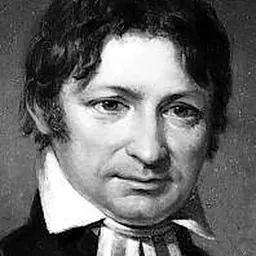
Apollon Aleksandrovich Grigoryev (; 20 July 1822 – 7 October 1864) was a Russian poet, literary and theatrical critic, translator, memoirist and author of popular art songs. One historian called him "the best of the non-radical literary critics in the nineteenth century and arguably the greatest of all of Russia's critics in the century."
Life Grigoryev was born in Moscow, where his father was secretary to the city magistrate. He was educated at home, and studied at Imperial Moscow University.
Literary career Several of Grigoryev's poems were published in Otechestvennye Zapiski in 1845, Although they were not Slavophiles, Moskvityanin attracted them because they could base their social and political ideology on Russian reality. Grigoryev was the chief theorist of the circle, reaching his peak during the early 1860s.
Later years Grigoryev wrote for Moskvityanin until it ceased publication in 1856. He then worked for Russian Conversation, Reading Library, the original Russian Word (as one of three editors), Russian World, Svetoch, Albert Starchevsky's Syn Otechestva and Mikhail Katkov's Russian Herald.
In 1861, Grigoryev worked for a year at the Dostoyevsky brothers' Epoch [most likely the earlier Vremja, Time]. As at Moskvityanin, his circle consisted of pochvenniki; however, his enthusiasm waned and he returned to St. Petersburg. Grigoryev resumed his bohemian existence, falling into debt before he began writing theatre reviews for several newspapers. Although his reviews were popular, alcoholism had taken its toll and he died in 1864. Grigoryev is buried in Mitrofaniyevsky Cemetery, next to poet Lev Mey. Grigoryev's articles were collected and published in 1876 by Nikolay Strakhov.
Critique Grigoryev is difficult to evaluate, and his writing is characterized by opacity, darkness and a lack of discipline. His work in Moskvityanin, Time and Epoch appears careless, but he defended their "sincerity".) Grigoryev's worldview was unclear even to his friends and admirers; his final, unfinished article ("The Paradoxes of Organic Criticism"), in response to Dostoyevsky's invitation to state his critical philosophy, was typically wide-ranging. He referred to his style of criticism as "organic", in contrast to "theorists" (Chernyshevsky, Nikolai Dobrolyubov and Dmitri Pisarev), "aesthetics" and "historians" (Vissarion Belinsky). Although Grigoryev admired Belinsky, calling him an "immortal champion of ideas ... with great and powerful spirit", he considered the latter's criticism too direct and logical.
Don’t just read it —
keep it.
Full-length biographies made to live with: read them, listen on the way to work, watch them tonight.
- E-book
- Audio
- Video
Instant download · yours to keep · every purchase keeps this site free
Important facts
People in Apollon Grigoryev's life
Named in this biography and alive at the same time

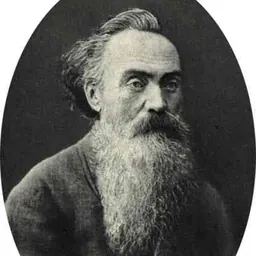


Related people
Same field, nearest in time
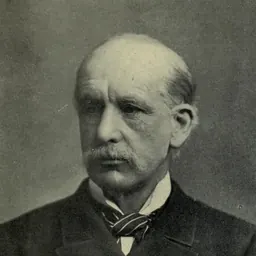
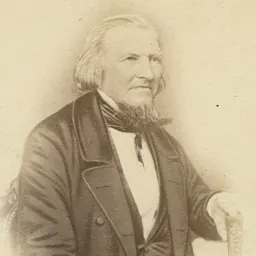
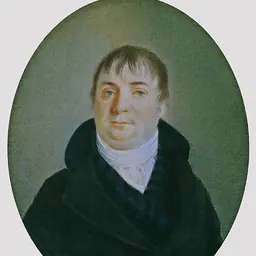
Contemporaries
People whose lives overlapped Apollon Grigoryev's




Frequently asked questions
Who was Apollon Grigoryev?
Russian writer (1822–1864)
When was Apollon Grigoryev born?
Apollon Grigoryev was born on 28 July 1822 in Moscow.
When did Apollon Grigoryev die?
Apollon Grigoryev died on 25 September 1864 in Saint Petersburg.
What was Apollon Grigoryev's occupation?
Apollon Grigoryev was a poet, literary critic, journalist, translator, literary historian and writer.
What nationality was Apollon Grigoryev?
Apollon Grigoryev was Russian.
Sources & further reading
· Wikipedia: Apollon Grigoryev
Cite this page
APA: Biography.guide. (2026). Apollon Grigoryev. https://biography.guide/apollon-grigoryev/
MLA: "Apollon Grigoryev." Biography.guide, https://biography.guide/apollon-grigoryev/.
Chicago: "Apollon Grigoryev." Biography.guide. https://biography.guide/apollon-grigoryev/.
Data last updated: 2026-09-20 · Spot an error? Report a correction.
Page generated 2026-09-27 05:32 UTC