
About Nikolay Semyonov
Lived 1896 – 1986 (aged 90). Nikolay Semyonov was a Russian physicist, chemist, professor and politician, known for Chemical transformation.
Nikolay Nikolayevich Semyonov , sometimes Semenov, Semionov or Semenoff (; – 25 September 1986) was a Soviet physicist and chemist. Semyonov was awarded the 1956 Nobel Prize in Chemistry for his work on the mechanism of chemical transformation.
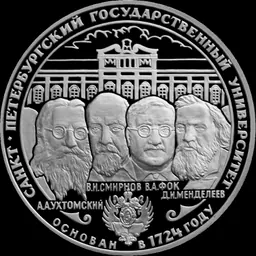
Life and career Semyonov was born in Saratov in April 1896, the son of Yelena Dmitrieva and Nikolai Aleksandrovich Semyonov. He graduated from the department of physics of Petrograd University (1913–1917), where he was a student of Abram Fyodorovich Ioffe. After graduating from Saint Petersburg State University, Semyonov worked as an assistant and lecturer in Tomsk at the Tomsk University Institute of Technology, where he published his first research paper in 1916. In 1918, he moved to Samara, where he was enlisted into Kolchak's White Army in 1919 during the Russian Civil War, although he obtained a teaching deferment and managed to avoid service. In December of that same year, he was pressed into the radio service of the Red Army. After his discharge in the winter of 1920, Semyonov obtained work at universities in Perm and Tomsk. After the war, Semyonov returned to Petrograd and took charge of the electron phenomena laboratory of the Petrograd Physico-Technical Institute, continuing to occasionally travel back to Tomsk as well as at times meeting with officials from Moscow. He also became the vice-director of the institute.
In 1921, he married philologist Maria Boreishe-Liverovsky (student of Zhirmunsky). She died two years later. On September 15, 1924, Nikolay married Maria's niece, Natalia Nikolayevna Burtseva. They had two children, son Yuri and daughter Lyudmila.
During that difficult time, Semyonov, together with Pyotr Kapitsa, discovered a way to measure the magnetic field of an atomic nucleus (1922). Later the experimental setup was improved by Otto Stern and Walther Gerlach and became known as Stern–Gerlach experiment.
In 1925, Semyonov, together with Yakov Frenkel, studied kinetics of condensation and adsorption of vapors. In 1927, he studied ionisation in gases and published an important book, Chemistry of the Electron. In 1928, he, together with Vladimir Fock, created a theory of thermal disruptive discharge of dielectrics.
In 1927, Semyonov studied the ionization of gases, the chemistry of the electron. In 1928, he created the theory of the broken discharge of dielectrics with Vladimir Fock.
He lectured at the Petrograd Polytechnical Institute and was appointed Professor in 1928. In 1931, he organized the Institute of Physical Chemistry of the USSR Academy of Sciences (which moved to Chernogolovka in 1943) and became its first director. In 1932, he became a full member of the Soviet Academy of Sciences.
The ideas of Semyonov have been applied in the science of reaction and production of polymerization reactions. His ideas are also applied in catalysis studies in biological systems.
Semyonov married Natalya Nikolayevna Semyonov and together they both have a son and a daughter. Semyonov died on September 25, 1986, in Moscow, and was buried at the Novodevichy Cemetery.
Significant works Semyonov (right) and Kapitsa, portrait by Boris Kustodiev, 1921.
Semyonov's outstanding work on the mechanism of chemical transformation includes an exhaustive analysis of the application of the chain theory to varied reactions (1934–1954) and, more significantly, to combustion processes. He proposed a theory of degenerate branching, which led to a better understanding of the phenomena associated with the induction periods of oxidation processes. He spent most of his career focusing and developing the field of chemical chain reactions.
Semyonov wrote two important books outlining his work. Chemical Kinetics and Chain Reactions was published in 1934, with an English edition in 1935. It was the first book in the U.S.S.R. to develop a detailed theory of unbranched and branched chain reactions in chemistry. Some Problems of Chemical Kinetics and Reactivity, first published in 1954, was revised in 1958; there are also English, American, German, and Chinese editions. He is the only Soviet/Russian Chemistry Nobel Laureate, who received the Nobel Prize in Chemistry (together with Sir Cyril N. Hinshelwood) for his work in 1956.
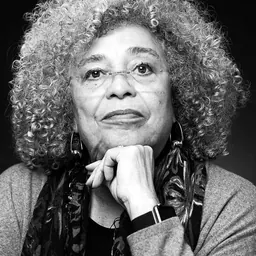
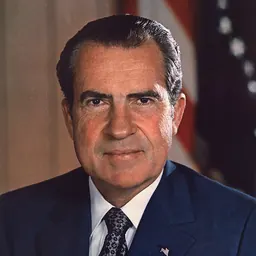
Semyonov had long been a supporter of the Communist Party and the Soviet Union. After the Bulletin of the Atomic Scientists accused the Soviet Union of heavy scientific censorship in 1953, he coauthored the Soviet response which denied all accusations. He is also noted as being the most famous signatory to a 1971 public letter from Soviet scientists to United States president Richard Nixon, on displeasure in the murder trial of Angela Davis.
Semyonov trained Russian organometallic chemist Alexander Shilov, who discovered platinum catalyzed C-H activation.
Honours and awards Orders of Lenin, nine times (incl. 1945, 1953, 1956, 1966, 1971, 1976, 1981 ) Stalin Prize (1941, 1949) Honorary member of the Hungarian Academy of Sciences (1961) Honorary member of the New York Academy of Sciences (1962) Foreign member of the United States National Academy of Sciences (1963) Honorary Member of the Romanian Academy (1965) Hero of Socialist Labour, twice (1966, 1976) The memorial plaque is installed on the facade of the Main building of the A.F. Ioffe Institute of Physics and Technology in St. Petersburg (26 Politechnicheskaya str.). On July 27, 1996, and one of the streets in the South-Western Administrative District of the city of Moscow on the territory of the Yuzhnoye Butovo District was given the name Academician Semyonov Street; In Saratov, one of the streets is named after Semyonov; In Tyumen, one of the streets is named after Semyonov; A memorial plaque is installed on the house in Moscow at 24 Frunzenskaya Embankment, where Semyonov spent his last years of life; The Presidium of the Russian Academy of Sciences has a Commission for the development of the scientific heritage of Academician N. N. Semyonov; Airliner Airbus A321 (VQ-BOI) of the airline "Aeroflot" "N. Semyonov"; On April 5, 2019, in Moscow on the territory of National Research Nuclear University "MEPhI" a monument was erected by the sculptor Alexandra Mironova At the beginning of April 2022, a monument to Academician Nikolai Semyonov was unveiled in Moscow on Kosygin Street, house 4.
Don’t just read it —
keep it.
Full-length biographies made to live with: read them, listen on the way to work, watch them tonight.
- E-book
- Audio
- Video
Instant download · yours to keep · every purchase keeps this site free
Important facts
People in Nikolay Semyonov's life
Named in this biography and alive at the same time



Related people
Same field, nearest in time

Contemporaries
People whose lives overlapped Nikolay Semyonov's




Frequently asked questions
Who was Nikolay Semyonov?
Soviet physical chemist (1896-1986)
When was Nikolay Semyonov born?
Nikolay Semyonov was born on 3 April 1896 in Saratov.
When did Nikolay Semyonov die?
Nikolay Semyonov died on 25 September 1986 in Moscow.
What was Nikolay Semyonov's occupation?
Nikolay Semyonov was a physicist, chemist, professor and politician.
What was Nikolay Semyonov known for?
Nikolay Semyonov was known for Chemical transformation.
What nationality was Nikolay Semyonov?
Nikolay Semyonov was Russian.
Sources & further reading
Cite this page
APA: Biography.guide. (2026). Nikolay Semyonov. https://biography.guide/nikolay-semyonov/
MLA: "Nikolay Semyonov." Biography.guide, https://biography.guide/nikolay-semyonov/.
Chicago: "Nikolay Semyonov." Biography.guide. https://biography.guide/nikolay-semyonov/.
Data last updated: 2026-09-20 · Spot an error? Report a correction.
Page generated 2026-09-27 05:20 UTC