
Nikolay Nekrasov
Russian poet, writer, critic, editor and publisher
About Nikolay Nekrasov
Lived 1821 – 1878 (aged 56). Nikolay Nekrasov was a Russian poet, writer, autobiographer, literary critic, journalist and opinion journalist.
Biography
Early years Nikolay Alexeyevich Nekrasov was born in Nemyriv (now in Vinnytsia Oblast, Ukraine), in the Bratslavsky Uyezd of Podolia Governorate. His father, Alexey Sergeyevich Nekrasov (1788–1862), was descended from Russian landed gentry and was an officer in the Imperial Russian Army. There is some uncertainty as to his mother's origins. According to the Brockhaus and Efron Encyclopedic Dictionary (and this corresponds with Nekrasov's 1887 autobiographical notes), Nekrasov's mother was Alexandra Zakrzewska, a Polish noblewoman and the daughter of a wealthy landlord who belonged to the szlachta. The church records tell a different story, and modern Russian scholars have her name as Yelena Andreyevna. "Up until recently the poet's biographers had it that his mother belonged to a Polish family. In fact she was the daughter of Ukrainian state official Alexander Semyonovich Zakrevsky, the owner of Yuzvino, a small village in the Podolia Governorate," Korney Chukovsky asserted in 1967. D. S. Mirsky explained this discrepancy by suggesting that Nekrasov "created the cult of his mother, imparted her with improbable qualities and started worshipping her after her death."
In January 1823 Alexey Nekrasov, ranked army major, retired and moved the family to his estate in Greshnevo, Yaroslavl province, near the Volga River, where young Nikolai spent his childhood years with his five siblings, brothers Andrey (b. 1820), Konstantin (b. 1824) and Fyodor (b. 1827), sisters Elizaveta (b. 1821) and Anna (b. 1823). "His was a wounded heart, and this wound that never healed served as a source for his passionate, suffering verse for the rest of his life," the latter wrote. as well as Alexey Sergeyevich's insistence that his son should join the military academy. The biographer Vladimir Zhdanov also mentions the father's unwillingness to pay for his children's education; he certainly was engaged at some point in a long-drawn correspondence with the gymnasium authorities on this matter. Finally, in July 1837 he took two of his elder sons back home, citing health problems as a reason, and Nikolai had to spend a year in Greshnevo, doing nothing besides accompanying his father in his expeditions. The quality of education in the gymnasium was poor, but it was there that Nekrasov's interest in poetry grew: he admired Byron and Pushkin, notably the latter's "Ode to Freedom". "By the age of fifteen the whole notebook [of verses] has taken shape, which was the reason why I was itching to flee to the capital," he remembered. The book, reviewed favourably by Pyotr Pletnyov and Ksenofont Polevoy, was dismissed by Alexey Galakhov and Vissarion Belinsky. Several months later Nekrasov retrieved and destroyed the unsold bulk of his first collection; some copies that survived have become a rarity since. The poet claimed later that those early conversations with Belinsky changed his life and commemorated the critic in several poems ("In the Memory of Belinsky", 1853; "V. G. Belinsky", 1855; "Scenes from The Bear Hunt", 1867). Before his death in 1848, Belinsky granted Nekrasov rights to publish various articles and other material originally planned for an almanac, to be called the "Leviathan". and Saint Petersburg Collection (1846), the latter featuring Fyodor Dostoyevsky's first novel, Poor Folk. Gathering the works of several up and coming authors (Ivan Turgenev, Dmitry Grigorovich, Vladimir Dal, Ivan Panayev, Alexander Herzen, Fyodor Dostoyevsky among them), both books were instrumental in promoting the new wave of realism in Russian literature. Several Nekrasov's poems found their way into the First of April compilation of humour he published in April 1846. Among the curiosities featured there was the novel The Danger of Enjoying Vain Dreams, co-authored by Nekrasov, Grigorovich and Dostoyevsky.
Sovremennik and Otechestvennye Zapiski
In November 1846 Panayev and Nekrasov acquired the popular magazine Sovremennik which had been founded by Alexander Pushkin but lost momentum under Pyotr Pletnyov. Much of the staff of the old Otechestvennye Zapiski, including Belinsky, abandoned Andrey Krayevsky's magazine and joined Sovremennik to work with Nekrasov, Panayev and Alexander Nikitenko, the nominal editor-in-chief. In the course of just several months Nekrasov managed to draw to the invigorated magazine the best literary forces of Russia. Among the works published in it in the course of the next several years were Ivan Turgenev's A Sportsman's Sketches, Dmitry Grigorovich's Anton Goremyka, Ivan Goncharov's A Common Story, Alexander Herzen’s Magpie the Thief and Doctor Krupov. One of the young authors discovered by Nekrasov was Leo Tolstoy, who debuted in Sovremennik with his trilogy Childhood, Boyhood and Youth. His way of befriending censors by inviting them to his weekly literary dinners proved to be another useful ploy. Gambling (a habit shared by male ancestors on his father's side; his grandfather lost most of the family estate through it) was put to the service too, and as a member of the English Club Nekrasov made a lot of useful acquaintances.
In June 1862, after the series of arsons in Petersburg for which radical students were blamed, Sovremennik was closed, and a month later Chernyshevsky was arrested. In December Nekrasov managed to get Sovremennik re-opened, and in 1863 published What Is to Be Done? by the incarcerated author. "Nekrasov's poems… brandish like fire," wrote Turgenev. "Nekrasov is an idol of our times, a worshipped poet, he is now bigger than Pushkin," wrote memoirist Elena Stakensneider. and Korobeiniki (1861). The latter was originally published in the Red Books series started by Nekrasov specifically for peasant readership. These books were distributed by vagrant traders (ofeni), not unlike the korobeiniki Tikhonych and Ivan, the two heroes of the poem.
In February 1877 groups of radical students started to arrive to Yalta from all over the country to provide moral support for the dying man. Painter Ivan Kramskoy came to stay and work upon the poet's portrait. One of the last people Nekrasov met was Ivan Turgenev who came to make peace after years of bitter feud.
Nikolai Alekseyevich Nekrasov died on 8 January 1878. Four thousand people came to the funeral, and the procession leading to the Novodevichy Cemetery turned into a political rally. Members of the Narodnik group Land and Liberty, alongside other radical groups (with wreaths "From the Socialists"), were also present. "His funeral was one of the most striking demonstrations of popularity ever accorded to a Russian writer," writes Mirsky.
Private life
Nikolai Nekrasov met the already married Avdotya Panayeva in 1842 when she was already a promising writer and a popular hostess of a literary salon. The 20-year-old Nekrasov fell in love but had to wait several years for her emotional response and at least on one occasion was on the verge of suicide, if one of his Panayeva Cycle poems, "Some time ago, rejected by you... " is to be believed. For several years she was "struggling with her feelings" (according to Chernyshevsky), then in 1847 succumbed. "This was the lucky day I count as my whole life's beginning," wrote Nekrasov later. It is only these poems that the nature of their tempestuous relationship could be judged by. There was a correspondence between them, but in a fit of rage Panayeva destroyed all letters ("Now, cry! Cry bitterly, you won’t be able to re-write them," – Nekrasov reproached her in a poem called "The Letters"). Several verses of this cycle became musical romances, one of them, "Forgive! Forget the days of the fall..." (Прости! Не помни дней паденья...) has been set to music by no less than forty Russian composers, starting with Cesar Cui in 1859, and including Rimsky-Korsakov and Tchaikovsky.
In 1849 Panayeva gave birth to a son, but the boy soon died. Another death, of Ivan Panayev in 1862, drove the couple still further apart. The main reason for Panayeva's final departure, though, was Nekrasov's 'difficult' character. He was prone to fits of depression, anger, hypochondria and could spend days "sprawling on a couch in his cabinet, greatly irritated, telling people how he hated everybody but mostly himself," according to Zhdanov.
In 1863, while still with Panayeva, Nekrasov met the French actress Celine Lefresne, who was at the time performing at the Mikhaylovsky Theatre with her troupe. She became his lover; Nekrasov, when in France, stayed in her Paris flat several times; she made a visit to Karabikha in 1867. Celine was a kindred spirit and made his journeys abroad a joy, although her attitude towards him has been described as 'dry'. Nekrasov helped Celine financially and bequeathed her a considerable sum of money (10,5 thousand rubles).
In 1870 Nekrasov met and fell in love with 19-year-old Fyokla Anisimovna Viktorova, a country girl for whom he invented another name, Zinaida Nikolayevna (the original one was deemed too 'simple').
Works Nekrasov's first collection of poetry, Dreams and Sounds (Мечты и звуки), received some favourable reviews but was dismissed as 'bland and mediocre'
"When from the darkness of delusion..." (Когда из мрака заблужденья..., 1845), arguably the first poem in Russia about the plight of a woman driven to prostitution by poverty, brought Chernyshevsky to tears. Of "Whether I ride the dark street though the night..." (Еду ли ночью по улице темной..., 1847), another harrowing story of a broken family, dead baby and a wife having to sell her body to procure money for a tiny coffin, Ivan Turgenev wrote in a letter to Belinsky (14 November): "Please tell Nekrasov that... [it] drove me totally mad, I repeat it day and night and have learnt it by heart." According to literary historian D. S. Mirsky, the early verse beginning 'Whether I ride the dark street through the night...', is "truly timeless... recognized by many (including Grigoryev and Rozanov) as something so much more important than just a verse – the tragic tale of a doomed love balancing on the verge of starvation and moral fall".
1855–1862 were the years of Nekrasov's greatest literary activity. One important poem, "Musings By the Front Door" (Размышления у парадного подъезда, 1858), was banned in Russia and appeared in Hertzen's Kolokol in January 1860. "Orina, the Soldier's Mother" (Орина, мать солдатская, 1863) glorified the motherly love that defies death itself, while The Railway (Железная дорога, 1964), condemning the Russian capitalism "built upon peasant's bones," continued the line of protest hymns started in the mid-1840s.
In the late 1860s Nekrasov published several important satires. The Contemporaries (Современники, 1865), a swipe at the rising Russian capitalism and its immoral promoters, In 1865 the law was passed abolishing preliminary censorship but toughening punitive sanctions. Nekrasov lambasted this move in his satirical cycle Songs of the Free Word (Песни свободного слова), the publication of which caused more trouble for Sovremennik. In poems like "The Morning" (Утро, 1873) and "The Frightful Year" (Страшный год, 1874) Nekrasov sounds like a precursor to Alexander Blok, according to biographer Yuri Lebedev. The need to rise above the mundane in search for universal truths forms the leitmotif of the lyric cycle Last Songs (Последние песни, 1877). ) resembling a traditional Russian folk song, is regarded Nekrasov's masterpiece.
Attacks from the right and the center-right caused Nekrasov's reputation no harm and "only strengthened [his] position as a spiritual leader of the radical youth," as Korney Chukovsky maintained. More damage has been done (according to the same author) by those of his radical followers who, while eulogizing 'Nekrasov the tribune,' failed to appreciate his 'genius of an innovator'. "His talent was remarkable if not for its greatness, then for the fine way it reflected the state of Russia of his time," wrote soon after Nekrasov's death one of his colleagues and allies Grigory Yeliseyev. "Nekrasov was for the most part a didactic poet and as such... prone to stiltedness, mannerisms and occasional insincerity," opined Maxim Antonovich. Georgy Plekhanov who in his 1902 article glorified 'Nekrasov the Revolutionary' insisted that "one is obliged to read him... in spite of occasional faults of the form" and his "inadequacy in terms of the demands of esthetic taste."
According to one school of thought (formulated among others by Vasily Rosanov in his 1916 essay), Nekrasov in the context of the Russian history of literature was an "alien... who came from nowhere" and grew into a destructive 'anti-Pushkin' force to crash with his powerful, yet artless verse the tradition of "shining harmonies" set by the classic. Decades earlier Afanasy Fet described Nekrasov's verse as a 'tin-plate prose' next to Pushkin's 'golden poetry'. Korney Chukovsky passionately opposed such views and devoted the whole book, Nekrasov the Master, to highlight the poet's stylistic innovations and trace the "ideological genealogy", as he put it, from Pushkin through Gogol and Belinsky to Nekrasov. Mirsky, while giving credit to Chukovsky's effort, still saw Nekrasov as a great innovator who came first to destroy, only then to create: "He was essentially a rebel against all the stock in trade of 'poetic poetry' and the essence of his best work is precisely the bold creation of a new poetry unfettered by traditional standards of taste," Mirsky wrote in 1925.
Nekrasov enriched the traditional palette of the Russian poetry language by adding to it elements of satire, feuilleton, realistic sketch and, most importantly, folklore and song-like structures. "Of all the 19th century poets he was the only one so close to the spirit of a Russian folk song, which he never imitated – his soul was that of a folk singer," argued Mirsky. "What distinguishes his verse is its song-like quality," wrote Zinaida Gippius in 1939. "The greatest achievement in the genre of the folk Russian song," according to Misky is the poem Who Is Happy in Russia?, its style "totally original, very characteristic and monolith. Never does the poet indulge himself with his usual moaning and conducts the narrative in the tone of sharp but good-natured satire very much in the vein of a common peasant talk... Full of extraordinary verbal expressiveness, energy and many discoveries, it's one of the most original Russian poems of the 19th century." and habitually treated his legacy as a quotation book which he used to flay enemies, left and right.
Unlike many of his radical allies, though, Nekrasov held the Orthodox Christianity and 'traditional Russian national values' in high esteem. "He had an unusual power of idealization and the need to create gods was the most profound of his needs. The Russian people was the principal of these gods; next to it stood equally idealized and subjectively conditioned myths of his mother and Belinsky," noted Mirsky. Nekrasov's poetry was admired and profusely quoted by liberals, monarchists, and nationalists, as well as Socialists.
With verdicts upon Nekrasov's legacy invariably depending upon the political views of reviewers, the objective evaluation of Nekrasov's poetry became difficult. As D. S. Mirsky noted in 1925, "Despite his enormous popularity among the radicals and of a tribute given to him as a poet by enemies like Grigoryiev and Dostoyevsky, Nekrasov can hardly be said to have had his due during his lifetime. Even his admirers admired the matter of his poetry rather than its manner, and many of them believed that Nekrasov was a great poet only because matter mattered more than form and in spite of his having written inartistically. After Nekrasov's death his poetry continued to be judged along the party lines, rejected en bloc by the right wing and praised in spite of its inadequate form by the left. Only in relatively recent times has he come into his own, and his great originality and newness being fully appreciated."
Selected bibliography
Poetry
"The Money-lender" (Rostovshchik, 1844) "On the Road" (V doroge, 1845) "Motherland" (1846) "The Doghunt" (Psovaya okhota, 1846) On the Street (Na Ulitse, 1850), 4 poems cycle "The Fine Match" (Prekrasnaya partia, 1852) "Unmowed Line" (Neszhataya polosa, 1854) "Vlas" (1855) "V.G. Belinsky" (1855) Sasha (1855) "The Forgotten Village" (Zabytaya derevnya, 1855) "Musings at the Front Door" (Razmyshlenya u paradnovo pod’ezda, 1858) "The Unhappy Ones (Neschastnye, 1856) "The Poet and the Citizen" (Poet i grazhdanin, 1856) "Silence" (Tishina, 1857) "The Song for Yeryomushka" (Pesnya Yeryomushke, 1859) Korobeiniki (1861) "The Funeral" (Pokhorony, 1861) "Peasant Children" (Krestyanskiye deti, 1861) "A Knight for An Hour" (Rytsar na thas, 1862) "Green Roar" (Zelyony shum, 1862)
"Orina, the Soldier's Mother" (Orina, mat soldatskaya, 1863) The Railway (Zheleznaya doroga, 1864) "Grandfather Frost the Red Nose" (Moroz, Krasny nos, 1864) Contemporaries (Sovremenniki, 1865) Songs of the Free Word (Pesni svobodnovo slova, 1865–1866) Poems for Russian Children (Stikhotvorenya, posvyashchyonnye russkim detyam, 1867–1873) "The Bear Hunt. Scenes from the lyrical comedy" (Medvezhya okhota, 1867) Grandfather (Dedushka, 1870) "The Recent Times" (Nedavneye vremya, 1871) Russian Women (Russkiye zhenshchiny: 1872–1873), a dilogy "The Morning" (Utro, 1873) "The Horrible Year" (Strashny god, 1874) The Last Songs (Poslednye pesni, 1877), a cycle Who Is Happy in Russia? (Komu na Rusi zhit khorosho, 1863–1876)
Plays There is No Hiding a Needle in a Sack (Shila v meshke ne utayich, 1841)
Fiction The Life and Adventures of Tikhon Trostnikov (Zhizn i pokhozhdenya Tikhona Trostnikova, 1843–1848) – autobiographical novel, unfinished
Don’t just read it —
keep it.
Full-length biographies made to live with: read them, listen on the way to work, watch them tonight.
- E-book
- Audio
- Video
Instant download · yours to keep · every purchase keeps this site free
Important facts
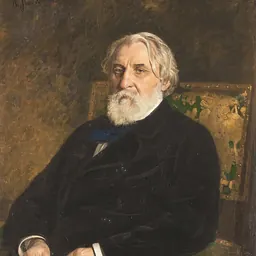
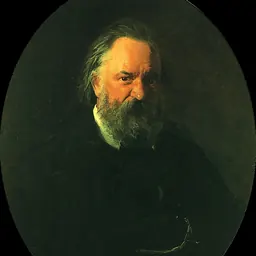
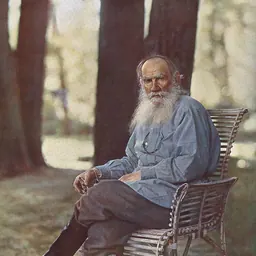
People in Nikolay Nekrasov's life
Named in this biography and alive at the same time





Related people
Same field, nearest in time
Contemporaries
People whose lives overlapped Nikolay Nekrasov's



Frequently asked questions
Who was Nikolay Nekrasov?
Russian poet, writer, critic, editor and publisher (1821–1878)
When was Nikolay Nekrasov born?
Nikolay Nekrasov was born on 28 November 1821 in Nemyriv.
When did Nikolay Nekrasov die?
Nikolay Nekrasov died on 8 January 1878 in Saint Petersburg.
What was Nikolay Nekrasov's occupation?
Nikolay Nekrasov was a poet, writer, autobiographer, literary critic, journalist and opinion journalist.
What nationality was Nikolay Nekrasov?
Nikolay Nekrasov was Russian.
Sources & further reading
Cite this page
APA: Biography.guide. (2026). Nikolay Nekrasov. https://biography.guide/nikolay-nekrasov-poet/
MLA: "Nikolay Nekrasov." Biography.guide, https://biography.guide/nikolay-nekrasov-poet/.
Chicago: "Nikolay Nekrasov." Biography.guide. https://biography.guide/nikolay-nekrasov-poet/.
Data last updated: 2026-09-20 · Spot an error? Report a correction.
Page generated 2026-09-27 05:22 UTC