
About Afanasy Fet
Lived 1820 – 1892 (aged 71). Afanasy Fet was a Russian and German poet, translator, autobiographer, writer, musician and librettist.
Afanasy Afanasyevich Fet , later known as Shenshin (; – ), was a Russian poet regarded as the finest master of lyric verse in Russian literature. In November, at Shenshin's Novosyolky estate, she gave birth to a boy who was christened Afanasy Afansyevich Shenshin.
Fourteen years later, as Shenshin and Becker's marriage, registered in Germany, proved to be legally void in Russia, Afanasy had to change his surname from Shenshin to Foeth, that of his biological father. According to Tatyana Kuzminskaya (Sophia Tolstaya's sister), Fet's "greatest grievance in life was that he was not a legitimate Shenshin like his brothers (who treated him as an equal) but the out-of-wedlock son of Foeth, a German Jew. But he couldn't bring himself to admit that the name Fet was so much superior to that of Shenshin, and that he himself had made it so through his poetry, a fact which Leo Tolstoy tried in vain to convince him of."
Education and literary debut
At age 14 Afanasy Shenshin was sent to a German boarding school in Võru. It was there that he was informed in a letter that from then on his name would be Fet, not Shenshin, which made him feel, admittedly, "like a dog that had lost its master." In 1837 Afanasy Shenshin moved his stepson to a Moscow boarding school owned by the historian Mikhail Pogodin. In autumn 1838 Fet enrolled at Moscow University to study law and philology. In his first year he started writing poetry, later citing Goethe, Heine, and Yazykov as influences, In 1841 the poem "Poseidon" appeared in Otechestvennye Zapiski; it was the first one to be published under the author's full name. Later scholars wondered if it hadn't been a mere typesetter mistake that caused the Russian ё (as in Foeth) to be turned into e (as in Fet). Regardless of this, according to biographer Tarkhov, "the transformation was significant: in one moment the surname of 'a Hesse-Darmstadt citizen' turned into the pseudonym of a Russian poet."
Military service and the Sovremennik years
In 1844 Fet graduated from the University. Later that year he lost his mother to cancer. In early 1845 he left the Novosyolky estate, went to Kherson, and in April, following the Shenshin family tradition, joined the Imperial Cuirassier regiment as a junior officer with the view of possibly retrieving his surname and all the privileges of nobility he'd lost with it.
In autumn 1848 Fet fell in love with 20-year-old Maria Lazich, a well-educated and intelligent girl, who loved him too. Seeing no way of marrying the penniless daughter of a poor Kherson landowner, Fet abandoned her. In 1851 Maria died, having set her dress on fire. Some suggested this might have been an accident, others saw it as the final statement of "a proud and desperate girl who decided life was not worthwhile without the man she loved." Maria died from her burns four days later, her last words allegedly being: "Do not blame him for this."
In the late 1840s, after stopping for several years, Fet returned to writing. In 1850 a collection called Poems by A. Fet heralded his successful return to the Russian literary scene. According to writer and memoirist Avdotya Panaeva, Fet gave Nekrasov and Turgenev carte blanche in compiling this anthology and while the former was against extensive editing, the latter insisted on drastic cuts and, in the end, his argument won out. In the preface to the book, Nekrasov wrote: "Not a single poet since Pushkin has managed to give such delight to those who understand poetry and readily open their soul to it, as Fet does. This does not mean to say both are equal: it's just that in his own field Fet is as superb as Pushkin was in his, much more vast and diverse one." In 1858 Fet retired from army service and returned to Moscow. All this evoked sharp criticism from, among others, Mikhail Saltykov-Shchedrin. For eleven years (1867–1877) Fet served as a local Justice of the peace and became much respected both by peasants and by fellow landowners. Unlike Tolstoy, though, who departed to the country looking for better working conditions, Fet stopped writing altogether. "He turned into an agronomist, a 'landlord in desperation', let his beard grow, some improbable behind-the-ears curls as well is unwilling to hear of literature and only damns all periodicals enthusiastically," Turgenev informed Polonsky in a May 1861 letter. "Once I was a poor man, a regimental adjutant, now, thank God, I am an Oryol, Kursk and Voronezh landowner, and live in a beautiful manor with a park. All this I've achieved by hard labour, not by some machinations", wrote Fet in a letter to Reveliotti, his Army officer friend.
Later years
In 1860s Fet translated Aeneid and Arthur Schopenhauer's The World as Will and Representation. His translation of Shakespeare's Julius Caesar, published in 1859, though, was negatively reviewed by Sovremennik. "There is just no dramatist gift in me whatsoever," Fet conceded later. From the Village and Notes on Civilian Labour, two collections of essays which were originally published by Russky Vestnik, Literaturnaya biblioteka and Zarya magazines in 1862–1871, featured some finely written novellas and short stories too. In retrospect, the best example of Fet's prose is considered to be the short novel The Golts Family (1870) which told the tragic story of an alcoholic village doctor's social and mental decline. Those were the years of Fet's close contact with Leo Tolstoy whom he often visited at Yasnaya Polyana. Now officially Shenshin, the poet retained Fet as his nom de plume.
Early in the morning on 21 November Fet suddenly sent for champagne. His wife protested, but he seemed to be in great agitation and haste. "Go and return as quickly as you can," he ordered. As Maria left, Fet told his secretary (referred to later as Mrs. F.): "Come with me, I will dictate to you". – "A letter?" she enquired. "No", came the reply. His secretary followed him and wrote the following: "I see no reason for consciously prolonging my suffering. I willingly chose to do what would be inevitable anyway." He signed this: "21 November. Fet (Shenshin)", with a "firm hand, certainly not that of a dying man," according to the biographer Boris Sadovskoy. Tchaikovsky wrote: quote|Fet is an exceptional phenomenon. There is no use to compare him to other first class poets, or go and analyze Pushkin, Lermontov, Al. Tolstoy and Tyutchev looking for similarities... For, in his finest moments, Fet leaves the boundaries of poetry altogether and boldly ventures into our field. That is why, when I think of Fet, often Beethoven comes to mind... Like Beethoven, he is endowed with the power to touch upon those strings of our souls which are out of reach for poets, no matter how strong, who rely on words only. Rather than a poet, he is a musician-poet. One reason for this might have been his unwillingness to change according to the 'spirit of the times'. "Unlike Nekrasov, who expressed zeitgeist perfectly, always going with the flow, Fet refused to 're-tune his lyre's strings'," the Soviet scholar Dmitry Blagoy argued.
Fet's 'cult of domesticity' held 'civil labour' as another high ideal. For him, a 'natural' attitude to work was analogous to love, serving as a link with Nature and having the potential to bringing back harmony to the society that had lost it. Built into Fet's 'philosophy of labour' was the romantic notion of freedom. He advocated the free development of human character and warned against exceedingly regulating social life.
Personality Yakov Polonsky (standing, second from the left) and members of his family guesting at Vorobyovka in 1890. Sitting, left to right: Maria Botkina, Natalya (Polonsky's daughter) and Afanasy Fet Yakov Polonsky often marveled at the duality of his friend's character and the way he managed to create the artistic world that would look like a perfect antidote to his own down-to-earth persona.
Never an open person, over the years Fet became even more secretive and self-centered. "Never, as far as I can remember, has he expressed any interest in any other person's inner world," wrote Tatyana Kuzminskaya, Leo Tolstoy's sister-in-law, to whom Fet dedicated one of his most beautiful poems ("The night was shining, trees were full of moonlight…"). According to Sergei Tolstoy, Fet, whom Pyotr Ilyich Tchaikovsky considered 'more a musician than a poet,' comparing him to Beethoven,
Dismissed as unpleasant and dour by Tolstoy's children, Fet was adored by the master of Yasnaya Polyana himself. "…The reason why we admire each other is that we two are the kind of men who are capable of thinking with, to use your own expression, 'heart's mind' as opposed to 'brain's mind'," Tolstoy wrote in a 28 June 1867 letter. "Intellectually you are superior to everybody else who's around me. You're the only one who can give [my mind] this 'different kind of bread' for it to be satiated with," he confessed on another occasion. "You are one of the very few people I came to know in my lifetime who, while retaining totally rational attitude to life, have always stood on its edge, staring into nirvana. [People like you] see life clearer for peering into timelessness, for it is this way they greatly strengthen their [earthly] vision," wrote Tolstoy in an April 1876 letter.
Sample
I Have Come to You, Delighted («Я пришёл к тебе с приветом…») Я пришёл к тебе с приветом, Рассказать, что солнце встало, Что оно горячим светом По листам затрепетало;
Рассказать, что лес проснулся, Весь проснулся, веткой каждой, Каждой птицей встрепенулся И весенней полон жаждой;
Рассказать, что с той же страстью, Как вчера, пришёл я снова, Что душа всё так же счастью И тебе служить готова;
Рассказать, что отовсюду На меня весельем веет, Что не знаю сам, что́ буду Петь — но только песня зреет.
I have come to you, delighted, To tell you that sun has risen, That its light has warmly started To fulfil on leaves its dancing;
To tell you that wood's awaken In its every branch and leafage, And with every bird is shaken, Thirsty of the springy image;
To tell you that I’ve come now, As before, with former passion, That my soul again is bound To serve you and your elation;
That the charming breath of gladness Came to me from all-all places, I don't know what I'll sing, else, But my song's coming to readiness.
Don’t just read it —
keep it.
Full-length biographies made to live with: read them, listen on the way to work, watch them tonight.
- E-book
- Audio
- Video
Instant download · yours to keep · every purchase keeps this site free
Important facts
People in Afanasy Fet's life
Named in this biography and alive at the same time
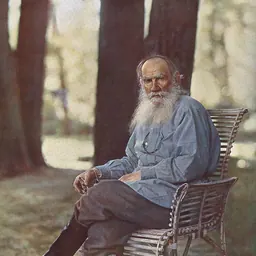
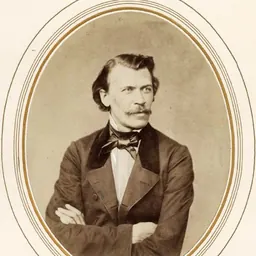
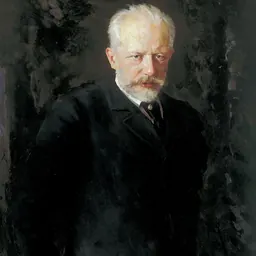


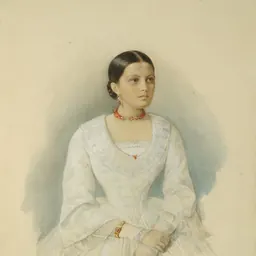

Related people
Same field, nearest in time
Contemporaries
People whose lives overlapped Afanasy Fet's



Frequently asked questions
Who was Afanasy Fet?
Russian poet (1820-1892)
When was Afanasy Fet born?
Afanasy Fet was born on 23 November 1820 in Mtsensk uyezd.
When did Afanasy Fet die?
Afanasy Fet died on 21 November 1892 in Moscow.
What was Afanasy Fet's occupation?
Afanasy Fet was a poet, translator, autobiographer, writer, musician and librettist.
What nationality was Afanasy Fet?
Afanasy Fet was Russian and German.
Sources & further reading
Cite this page
APA: Biography.guide. (2026). Afanasy Fet. https://biography.guide/afanasy-fet/
MLA: "Afanasy Fet." Biography.guide, https://biography.guide/afanasy-fet/.
Chicago: "Afanasy Fet." Biography.guide. https://biography.guide/afanasy-fet/.
Data last updated: 2026-09-20 · Spot an error? Report a correction.
Page generated 2026-09-27 05:22 UTC