
About Dmitry Grigorovich
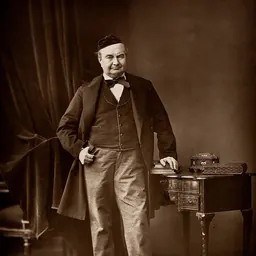
Lived 1822 – 1899 (aged 77). Dmitry Grigorovich was a Russian writer, engineer, prose writer, art critic and short story writer.
Dmitry Vasilyevich Grigorovich ( – ) was a Russian writer, best known for his first two novels, The Village and Anton Goremyka. He was lauded as the first author to have realistically portrayed the life of the Russian rural community and openly condemn the system of serfdom.
Biography
Dmitry Grigorovich was born in Simbirsk to a family of the landed gentry. His Russian father was a retired hussar officer, his French mother, Cydonia de Varmont, was a daughter of a royalist who perished on guillotine in the times of the Reign of Terror. Having lost his father early in his life, Dmitry was brought up by his mother and grandmother, the two women who hardly spoke anything but French. Up until the age of eight the boy had serious difficulties with his Russian. "I was taking my lessons of Russian from servants, local peasants but mostly from my father's old kammerdiener Nikolai... For hours on end was he waiting for the moment I'd be let out to play and then he'd grab me by the hand and walk me through fields and groves, telling fairytales and all kinds of adventure stories. Cast in coldness of my lonely childhood, I was thawing only when having these walks with Nikolai," Grigorovich remembered later. In 1840 Grigorovich quit the institute after the severe punishment he'd received for failing to formally greet the Grand Duke Mikhail Pavlovich, as the latter was passing by. He joined the Imperial Academy of Arts where Taras Shevchenko was his close friend. One of his first literary acquaintances was Nikolay Nekrasov whom he met while studying at the Academy studios.
In the mid-1840s, Grigorovich, now a journalist, specializing in sketches for Literaturnaya Gazeta and theatre feuilletons for Severnaya Ptchela, renewed his friendship with Dostoyevsky who in 1846 read to him his first novel Poor Folk. Greatly impressed, Grigorovich took the manuscript to Nekrasov, who promptly published it.
Also in 1846, Andrey Krayevsky's Otechestvennye Zapiski (Nekrasov, who had received the manuscript first, somehow gave it a miss and then forgot all about it) published Grigorovich's short novel The Village. Influenced by Dickens's Oliver Twist but based on a real life story of a peasant woman (from the village which belonged to his mother) who'd been forcefully married and then beaten by her husband to death, the novel became one of the first in Russian literature to strongly condemn the system of serfdom and "the first attempt in the history of our literature to get closer to real people's life," according to Ivan Turgenev.
Grigorovich's second short novel, Anton Goremyka ('Luckless Anton', 1847), promptly published this time by Sovremennik, made the author famous. "Not a single Russian novel has yet brought upon me such an impression of horrible, damning doom," Belinsky confided in a letter to critic Vasily Botkin. The realistic treatment of the life of Russian peasants in these two novels was praised by fellow writers Mikhail Saltykov-Shchedrin and Leo Tolstoy among others, and had a considerable impact on the writing of that period. "There'd be not a single educated man in those times and in the years to come who'd read Luckless Anton without tears of passion and hatred, damning horrors of serfdom," wrote Pyotr Kropotkin. Anton Goremyka was included into the list of the "most dangerous publications of the year," alongside articles by Belinsky and Alexander Hertzen, by the Special Literature and Publishing Committee. but also, his own works of the so-called 'seven years of reaction', 1848-1855 period were not quite up to the standard set by his first two masterpieces. Highlighting the brighter sides of the life of the Russian rural community of the time, they were closer to liberal doctrines than to the radical views of Nikolai Chernyshevsky who was gaining more and more influence in Sovremennik. The Fishermen, according to Hertzen, "brought us first signs that Russian society started to recognize an important social force in its [common] people." The emerging proletariat, though, drew little sympathy from the author. "The decline of morality in the Russian village is often caused by [vices of] the factory way of life," he opined.
Another novel dealing with the conflict between Russian serfs and their owners, The Settlers (Pereselentsy, 1855), was reviewed positively by Nikolai Chernyshevsky, who still refused to see (what he termed) 'philanthropy' as providing the means for mending profound social schisms. Critics of all camps, though, praised Grigorovich's pictures of nature, the result of his early fascination with fine arts; numerous lyrical extracts from his books have made their way into school textbooks.
In 1858, Grigorovich accepted the Russian Navy Ministry's invitation to make a round-Europe voyage on warship Retvizan and later described it in The Ship Retvizan (1858–1863).
In 1864 Grigorovich was elected the Secretary of the Russian Society for Encouraging Artists and held this post for twenty years, doing much to improve the art education throughout the country. The Museum of Art History he organized at the Society was credited with being one of the best in Europe of its kind. At the Society's School of Drawing Grigorovich gathered the best teachers from all over Russia, and made sure exhibitions and contests were being held regularly, with winners receiving grants from the Society. The story of a teenage circus virtuoso's death made its way into the Russian classic children's reading lists and was adapted for the big screen twice, in 1915 and 1957. In his Literary Memoirs (1892–1993), Grigorovich created a vast panorama of the Russian 1840s–1850s literary scene and (while carefully avoiding political issues) left vivid portraits of the people he knew well, like Ivan Turgenev, Vasily Botkin and Leo Tolstoy. Leo Tolstoy praised Grigorovich for having portrayed Russian peasants "with love, respect and something close to trepidation," writing of enormous impact his "vast, epic tapestries like Anton Goremyka have made."
According to Semyon Vengerov, Grigorovich's first two novels marked the peak of his whole career. "All of his later books were written with the same sympathy for the common man, but failed to excite," this literary historian argued. Some critics belonging to the Russian left (Vengerov included) made much of the fact that Grigorovich (as well as Turgenev) allegedly 'hated' Chernyshevsky; others considered his works deficient, for being not radical enough. Critics from all camps, though, admired Grigorovich for his fine, simple, yet colourful language and praised him as a master of 'natural landscape'. This gift, developed apparently as a result of his love for fine arts and painting, was quite extraordinary for someone who'd been brought up by two French women and up until the age of eight spoke hardly any Russian at all.
English translations The Cruel City, (novel-1855/56), Cassell Publishing Company, 1891. from Google Books The Peasant, (short novel), from Russian Sketches, Smith Elder & Co, 1913. from Archive.org The Fishermen, (novel-1853), Stanley Paul and Co, 1916. from Archive.org
Don’t just read it —
keep it.
Full-length biographies made to live with: read them, listen on the way to work, watch them tonight.
- E-book
- Audio
- Video
Instant download · yours to keep · every purchase keeps this site free
Important facts
People in Dmitry Grigorovich's life
Named in this biography and alive at the same time
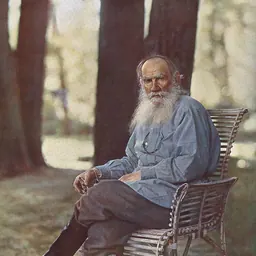
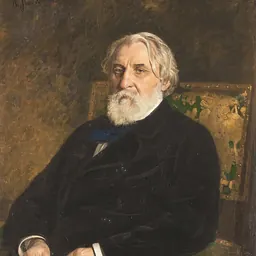






Related people
Same field, nearest in time
Contemporaries
People whose lives overlapped Dmitry Grigorovich's




Frequently asked questions
Who was Dmitry Grigorovich?
Russian writer (1822–1899)
When was Dmitry Grigorovich born?
Dmitry Grigorovich was born on 19 March 1822 in Ulyanovsk.
When did Dmitry Grigorovich die?
Dmitry Grigorovich died on 22 December 1899 in Saint Petersburg.
What was Dmitry Grigorovich's occupation?
Dmitry Grigorovich was a writer, engineer, prose writer, art critic and short story writer.
What nationality was Dmitry Grigorovich?
Dmitry Grigorovich was Russian.
Sources & further reading
· Wikipedia: Dmitry Grigorovich
· DBpedia: Dmitry Grigorovich (writer)
Cite this page
APA: Biography.guide. (2026). Dmitry Grigorovich. https://biography.guide/dmitry-grigorovich/
MLA: "Dmitry Grigorovich." Biography.guide, https://biography.guide/dmitry-grigorovich/.
Chicago: "Dmitry Grigorovich." Biography.guide. https://biography.guide/dmitry-grigorovich/.
Data last updated: 2026-09-20 · Spot an error? Report a correction.
Page generated 2026-09-27 05:22 UTC