
About Nikolay Alexandrovich Lvov
Lived 1753 – 1803 (aged 50). Nikolay Alexandrovich Lvov was a Russian anthropologist, linguist, poet, architect, composer and actor.
Early years
Nikolay Lvov was born in an impoverished country estate from Torzhok. Sources published before 2001 state date of birth March 4, 1751; in 2001, Galina Dmitrieva published newly found church records showing that Lvov was actually born May 4, 1753.
In line with tradition, his parents "enrolled" Nikolay into Preobrazhensky Lifeguard regiment in 1759. Maria still lived in her parents' house for three more years.
In April 1781, Lvov was appointed secretary to the Russian Embassy in Dresden, Kingdom of Saxony, but "her majesty's will" retained him at Saint Petersburg court. During his tour in Italy, he met with several influential people associated with the Russian court, including Count Demetrio Mocenigo in Pisa. In May 1783, Lvov transferred from Foreign Affairs to the Directorate of Post Offices, where he served under Alexander Bezborodko until 1797. Lvov as a poet belonged to emerging sentimentalism and pioneered exploration of "spontaneous, great-hearted sincerity in the Russian peasant" Kapnist married Alexandra Dyakova in 1781; Derzhavin married Yekaterina Dyakova in 1795, his second marriage. Lvov, Kapnist and Ivan Khemnitser shaped the poetic self-determination of their elder and better-known friend Derzhavin whose literary career started in 1779. The group also included painters (Dmitry Levitzky, Vladimir Borovikovsky and a testimony to an emerging new status of folk art and the very concept of a nation. faithful to Catherine and later Paul I, at the same time he was also loyal to his fraternity; he secured a diplomatic appointment to Khemnitzer, and tried to prevent the 1790 trial of Alexander Radishchev. He was the first to discover poetic qualities of Russian winter, previously overlooked or denied, and to turn it into a stylistic device. For him, winter became a manly nationalistic symbol of what makes Russians different from their Western and Southern neighbors. predating nationalist writing by Nikolai Gogol. on a folk singspiel The Coachmen (, 1787), and "astonishingly faithful to those of genuine oral polyphony." and contained the first instance of A Birch Stood in the Field recorded and performed professionally. Lvov himself wrote that one of his objectives was to impress "present-day philosophers" in patriotic virtues of the Russians. He created the Russian name for a folk song (народная песня), adopting Herder's concept of Volkslieder.
The book, containing one hundred songs, Collection of Russian Folk Songs with Their Tunes (Собрание народных русских песен с их голосами) was published at the expense of Her Majesty's Cabinet and was reissued in 1806 adding 53 new songs; vulgar or "antisocial" songs were excluded. who transcribed sheet music, and is thus known in the English world as Lvov-Prach collection, shortly LPC.
One of the songs from the LPC, Glory to the Sun, has been used by Ludwig van Beethoven in the Second Razumovsky Quartet, by Modest Mussorgsky in Boris Godunov and by other composers. Verses of yet another song were previously published by Alexander Sumarokov; its LPC version remained a staple of household music throughout the 19th century and was adopted by Mikhail Glinka, Alexander Borodin and Fernando Sor although later critics branded it "fake folk". Margarita Mazo, on the contrary, wrote that LPC material is closer to modern understanding of folk music than scientific, surgical transcriptions of the end of the 19th century, and that the creativity of Lvov and Pratsch "influenced the folk tradition itself" through numerous songbooks that circulated all over Russia.
Architecture
A list of Lvov's architectural works compiled by Tatarinov contains 87 buildings and country estates, some unconditionally attested through archive evidence, others attributed with different degrees of confidence. The first work on this list, interiors of the house for Sophie Dorothea of Württemberg, the bride of Paul I, was commissioned by Catherine in the summer of 1776. However, absolute majority of Lvov's works were built for private clients: Bezborodko, Derzhavin, Olenin (Utkina Dacha), Kochubey, the Vorontsov and Vyazemsky families in the 1780s. the project earned him honorary membership at the Imperial Academy of Arts (1786). and demolished in 1937. Also in 1780, Lvov proposed redesign of the Neva Gate of Peter and Paul Fortress in Saint Petersburg;
Bell tower of Borisoglebsky Monastery. Photograph by Sergey Prokudin-Gorsky, 1910
In 1783, Lvov designed the new building for his new employer, the Directorate of Post Offices; the block-sized compound, completed in 1789, became his largest project in Saint Petersburg as well as his home: after completion Lvov and his family moved into an apartment on the northern side of the block. The building, rebuilt by Yegor Sokolov in the 19th century and Alberto Cavos in the 1850s, stands to date.
Another high-ranking client, prince Vyazemsky, director of state porcelain factories, commissioned a suburban estate (now within the limits of Saint Petersburg) including Lvov's most unusual work, the Trinity Church in Aleksandrovskoe also known as Kulich and Paskha
In the same period, Lvov designed the cathedral of Borisoglebsky Monastery in Torzhok, a purely Neoclassical five-domed edifice that also contained hints of Russo-Byzantine architecture, a style that emerged decades after Lvov's death. The bell tower of the same monastery became Lvov's last known design; it was started after his death by Fyodor Ananyin and completed in 1811. It was the second attempt to publish Palladio in Russian, after Prince Dolgorukov's 1699 abstract that circulated only in handwritten copies; and particularly criticized French adaptations of Palladianism. ). In an ironic twist of fortune, in April 1797, Paul I dispatched Lvov to Moscow to redesign Bartolomeo Rastrelli's modest Grand Kremlin Palace, a feat once attempted by Vasili Bazhenov. Lvov produced a vast plan consisting of a three-part neoclassical palace core within a redesigned Gothic Revival citadel, His design was not as radical as Bazhenov's 1767 draft that was cancelled by Catherine at an early stage, but shared the same fate. After one year of preliminary work, the project was canceled; all alterations to existing Kremlin buildings done by Lvov were later absorbed into extant Grand Kremlin Palace, designed by Konstantin Thon. Interaction and influence between Lvov and Menelaws are disputed. Andreyev, on one extreme, considered Menelaws completely dependent on Lvov's talent; Kuznetsov, on the other, considered Menelaws to be Lvov's mentor in design and construction management
The first task assigned to Menelaws was something different: searching for coal deposits in Lvov's native Tver Governorate. Lvov was concerned about Russia's dependence on imported British coals and deforestation caused by charcoal extraction, and gained support of Bezborodko and Vorontsov to survey for fossil coals. In August 1786, Lvov and Menelaws announced the find of commercial quality coal "not inferior to that from Newcastle" in Borovichi. Menelaws concurrently managed Lvov's construction projects in Torzhok and other places, Prospecting for coal continued for years,
Lvov, concerned with the inefficiency of existing heating ovens, designed his own heating system and advertised it through a two-volume treatise on heating and ventilation (Русская Пиростатика / Russkaya Pyrostatica, 1793). Walls of Lvov's buildings contained elaborate heat exchanging ductwork that gently warmed up incoming outdoor air,
In the 1790s, Lvov privately experimented with adopting European rammed earth technology to the environment of Northern Russia. Whether he imported the technology himself or relied on Menelaws,
The last years The death of Lvov's benefactor Alexander Bezborodko in April 1799 slowed down Lvov's projects; but managed to get through to the new emperor, Alexander I, and presented his album on rammed earth construction. The meeting paid back in October 1802, when Alexander granted Lvov the rank of privy councilor and appointed him to the Expedition of State Household. In 1809–1811 Elizaveta Lvova acted as Derzhavin's secretary and recorded his spoken memoirs. Lvov's two sons joined imperial service earlier and were not known for anything notable; the fame of Princes of Lvov passed to a different branch of the family.
Lvov's cousin Fyodor Petrovich Lvov (1766–1836), a composer, headed the Imperial Capella in Saint Petersburg. Fyodor's son Aleksey Fyodorovich Lvov (1799–1870) followed in his father's footsteps and inherited his chair at the Imperial Chapel, but is better known as the author of the imperial Russian national anthem God Save The Tsar! (Bozhe, tsarya khrani). Hector Berlioz called Aleksey Lvov "an eminent musician, who is both virtuoso and composer. His talent as a violinist is remarkable, and his latest work, Ondine, contains beauties of the highest order..." Aleksey Lvov also ventured into ethnography, focusing on the historical liturgical singing, and even attempted to enforce, in vain, his vision of historical truth in church music.
References and notes
Don’t just read it —
keep it.
Full-length biographies made to live with: read them, listen on the way to work, watch them tonight.
- E-book
- Audio
- Video
Instant download · yours to keep · every purchase keeps this site free
Important facts
People in Nikolay Alexandrovich Lvov's life
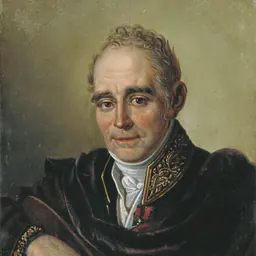
Named in this biography and alive at the same time

Related people
Same field, nearest in time

Contemporaries
People whose lives overlapped Nikolay Alexandrovich Lvov's





Frequently asked questions
Who was Nikolay Alexandrovich Lvov?
Russian artist and architect (1753-1804)
When was Nikolay Alexandrovich Lvov born?
Nikolay Alexandrovich Lvov was born on 4 May 1753 in Nikolskoe.
When did Nikolay Alexandrovich Lvov die?
Nikolay Alexandrovich Lvov died on 22 December 1803 in Moscow.
What was Nikolay Alexandrovich Lvov's occupation?
Nikolay Alexandrovich Lvov was an anthropologist, linguist, poet, architect, composer and actor.
What nationality was Nikolay Alexandrovich Lvov?
Nikolay Alexandrovich Lvov was Russian.
Sources & further reading
· Wikipedia: Nikolay Alexandrovich Lvov
Cite this page
APA: Biography.guide. (2026). Nikolay Alexandrovich Lvov. https://biography.guide/nikolay-alexandrovich-lvov/
MLA: "Nikolay Alexandrovich Lvov." Biography.guide, https://biography.guide/nikolay-alexandrovich-lvov/.
Chicago: "Nikolay Alexandrovich Lvov." Biography.guide. https://biography.guide/nikolay-alexandrovich-lvov/.
Data last updated: 2026-09-20 · Spot an error? Report a correction.
Page generated 2026-09-27 05:23 UTC