
About Niels Høegh Brønnum
Lived 1882 – 1966 (aged 83–84). Niels Høegh Brønnum was a Danish missionary.
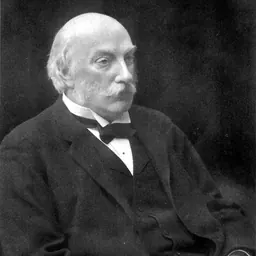
Niels Høegh Brønnum (January 5, 1882 – 1966) was a Danish missionary and physician who served in Northern Nigeria from 1913 to 1950. His achievements include translating the Gospel of Mark into the traditional Bacama language.
Early life
Family life and friendships Niels Høegh Brønnum was born in Nørholm Sogn, Denmark, His father, Ferdinand Brønnum, was a school teacher who with his wife, Kirsten Christensen, raised Niels Brønnum and his siblings in an "old ecclesiastical home not devoted to any particular Church tendency." Brønnum converted to Christianity at a very young age and was confirmed on April 12, 1896.
Brønnum became interested in missionary work through his elder brother of six years, Holger Rheders Fangel Brønnum. Holger Brønnum suffered from tuberculosis, which caused him to forego his life as a farm foreman in Germany. Holger Brønnum was good friends with Pastor Anton Pedersen, the founder and first president of the Danish Branch of the Sudan United Mission.
Pastor Anton Pedersen and Holger Brønnum's influence Pastor Anton Pedersen was a Danish pastor who grew up in the country and was associated with the Holiness movement.
After listening to his consumptive brother's pleas and reading letters by the Syrian Pastor Einar Prip of the New Testament, a Scottish fellow student "who had for many years felt called to be a missionary in Africa." This field was to be in Nigeria and Jens Dixen, an American Danish farmer and school-master, agreed to field half of the charges needed to upstart the mission, Their entrusted mission field was the Yola Province of North Eastern Nigeria and the mission was named Dansk Forenet Sudan Mission (Sudan United Mission, Danish Branch). The mission was rooted in Lutheranism.
Personal life Brønnum met his first wife Margaret when he was in medical school, and she first sailed with him to Nigeria. She died after giving birth to their son, Holger Brønnum, whom Niels Brønnum sent back to Europe while he continued his journey. In 1904, he set out for Tripoli to study Hausa, the common language of West Africa. He continued his journey to East Africa and South Africa and developed a plan to set up Christian missions across the continent. His plans were successful, and the Sudan United Mission eventually spread beyond Africa and into Australia and New Zealand.
Early missionary career
A year before sailing to Numan, Brønnum and his partners studied the Hausa language in London. In 1913, Brønnum set out to travel with Margaret and three other missionaries – a nurse named Dogner Rose and a Mr. and Mrs. Farrant. In September they were to sail to Ibi in the Taraba state where the easternmost station of S.U.M was located. From there, they were to be joined by another missionary named Dr. Maxwell and travel via the Benue River to the Yola province where they were to find a place to build the Danish mission's first station.
In a letter dated May 26, 1913, Brønnum mentioned that his wife suffered from malaria and dysentery while on their journey but that she had recovered. DBrønnum named the child, Holger, and after having him baptized, had Nurse Rose take the child back to Scotland. Brønnum continued to Ibi, the capital of the Muri Province, to observe how the British branch of S.U.M had set up their station. He was frequently told to move locations, given restrictions on his interactions with the nearby Bachama town, and was denied permission to frequent other towns. Seeing as he paid respects to the chief of Numan as soon as he arrived, Brønnum had to rely on forming connections with village chiefs and connecting with the people through his medical skills. Brønnum urged them to pray and hosted a prayer session that night and the following day, and to everyone's surprise, it rained the following night. The news of this event spread throughout the neighboring villages, but also in Numan where the chief invited Brønnum to preach the gospel.
Preaching and introducing Lutheranism to the Adamawa people was facilitated by their pre-existing belief systems, which shared some similarities with Christian teachings, as the Bachama had a similar Lord figure whom they referred to as Homon Pwa. They believed Homon Pwa was the greatest of all demi-lords and his presence was to be everywhere and in everything.
Working during the War (1914 – 1918) World War I began in 1914, around the same time Brønnum began his missionary career. Because the British had colonies in Nigeria, the threat of the Germans was heavily felt in Nigeria. In Numan, there was an instance where Brønnum and other missionaries were forced to evacuate their materials into the nearby colony. One of Brønnum's good friends and employees, Mallam Farato, chose to stay in Numan with his boss instead of going to Shellam to seek cover with the other missionaries. Though the Germans never actually came to Numan, Brønnum requested for his body to never be buried in the Islamic style if he were to die. Thus, in 1915 the first Baptismal class was started in Numan. Several other teachers came to Numan including Miss Erichsen, Miss Tillisch, Miss Hansine Kristiansen, and Brønnum's future second wife, Alberta Tholle. Upon his arrival, he again showed a form of connection with the colonial authorities and natives, as he was able to influence the selection of a new king for the Bachama tribe. He leveraged these relationships to help found a Nigerian church. He also participated in the construction of a boarding school meant to train Nigerian Evangelists. He completed other projects including the founding of a boarding school for training Nigerian evangelists.
By 1930, the Danish Branch had become well-established amongst the other European missions. The mission at that time had forty missionaries on its staff and seven deputation secretaries, which was considered a lot given that their field population at the time was about four million.
Working during the Second War (1939 – 1945) Brønnum was secretary general throughout World War II, which is the second great he would have worked through. It was a time when Brønnum was issuing certificates to grant European missionaries permission to enter Nigeria, and had to find ways to facilitate their journey as they could no longer pass through England. He was also accountable for the missionaries on the field, and in 1945, he secured a plane for nine of his missionaries to be taken from the field.
Life as Secretary General To a large extent, Brønnum abandoned his medical career in Nigeria. In one of the Executive Committee Agendas of the mission, he was listed along with Walter Miller and Andrew Stirrett as missionaries who "deserted medicine for evangelistic, administrative, and language work." After the death of Dr. Uhrenholt in 1919, the church went over 20 years without a permanent physician. As the Lutheran church in Yola expanded, Brønnum was involved in more clerical matters, like the ordination of the first five Numan pastors in 1948. From the period of 1951–1960, three new Bible schools were founded and the Church acquired a share in the Theological College of Northern Nigeria in Bukuru.
"I do not think that the Danish Board has ever promised the other branches of the S.U.M to go in for a Union Church. My understanding is that the various branches have had the liberty to found the kind of church that they considered right, and when the time came, we should see and arrive at a modus vivendi by which these churches found way of co-operation that was agreeable to all and at the same time gave most reciprocal help.” One of the new features of the Union Church was infant baptism and a new protocol that required church leaders to request permission when introducing new doctrines. which was published in 1915. Other writings of Brønnum's include:
Lemefeme da Yesu Kristo. Markus Iguda : en Fortaeling fra Afrika (Iguda: a Tale from Africa) Undervejs i Afrika (On the way to Africa) En nødstedt verdensdel : kaldet fra Adamwa (A distressed part of the world : called from Adamawa) Saeden spirer (The seed sprouts) Skjulte Kraefter : En Roman fra det indre Afrika Evangeliet i Negerland : kort Oversigt over den danske Sudanmissions Arbejde (The Gospel in Negerland : short overview of the work of the Danish Sudan mission) Negerracen; dens Histoire og Fremtidsmuligheder (The Negro race; its History and Future Prospects)
Awards and honors Brønnum's mission found several ways to honor his contributions to their work. During the celebration Golden Jubilee of Sudan's Lutheran Church of Christ in Numan, Brønnum was given the title of "the founder of the mission" and given a special seat of honor with his wife. The festivities lasted three days and began with a re-enactment of Brønnum's arrival at the Numan landing of the Benue River. He received the knighthood of Dannebrog. Additionally, in 1961, the church in Nigeria commissioned two Nigerian pastors and a member of the Federal House of Representatives to bestow on Brønnum the feather cap of honor which stands as one of the highest honors the Bachama tribe give to men "who have greatly distinguished themselves."
Christian curriculum Some of the teaching guides that taught about Brønnum include:
"Let Children open their atlases to the map of Europe and ask them to point to the country of Denmark. Tell them that the people living in this country are called Danish people. Three people, a doctor and his wife who was also a doctor, and a nurse, offered to come to the Benue alley where they had heard there was much sickness."
"...The chief [of the neighboring village] was not well, and he had heard how other people had got treatment and medicine from this doctor and how it had helped them greatly...during the visit the chief and the doctor talked about the bad drought...[after the chief left and it rained] these followers became the first members of the Danish Lutheran Church in Nigeria...Let the children act out this scene."
At the end of the lesson, the students would be asked "How did Dr. Bronnum show the love of Christ to the people of Bachama?"
Don’t just read it —
keep it.
Full-length biographies made to live with: read them, listen on the way to work, watch them tonight.
- E-book
- Audio
- Video
Instant download · yours to keep · every purchase keeps this site free
Important facts
People in Niels Høegh Brønnum's life
Named in this biography and alive at the same time



Related people
Same field, nearest in time


Contemporaries
People whose lives overlapped Niels Høegh Brønnum's





Frequently asked questions
Who was Niels Høegh Brønnum?
1882-1966
When was Niels Høegh Brønnum born?
Niels Høegh Brønnum was born in 1882 in Nørholm.
When did Niels Høegh Brønnum die?
Niels Høegh Brønnum died in 1966 in Roskilde.
What was Niels Høegh Brønnum's occupation?
Niels Høegh Brønnum was a missionary.
What nationality was Niels Høegh Brønnum?
Niels Høegh Brønnum was Danish.
Sources & further reading
· Wikipedia: Niels Høegh Brønnum
· DBpedia: Niels Hoegh Bronnum
Cite this page
APA: Biography.guide. (2026). Niels Høegh Brønnum. https://biography.guide/niels-hoegh-bronnum/
MLA: "Niels Høegh Brønnum." Biography.guide, https://biography.guide/niels-hoegh-bronnum/.
Chicago: "Niels Høegh Brønnum." Biography.guide. https://biography.guide/niels-hoegh-bronnum/.
Data last updated: 2026-09-20 · Spot an error? Report a correction.
Page generated 2026-09-27 05:06 UTC