
About Nie Yuanzi
Lived 1921 – 2019 (aged 98). Nie Yuanzi was a Chinese academic, autobiographer, academic administration and red Guards.
Nie Yuanzi (5 April 1921 – 28 August 2019) was a Chinese academic administrator at Peking University, known for writing a big-character poster criticising the university for being controlled by the bourgeoisie, which is considered to have been the opening shot of the Cultural Revolution. She became a top leader of the Red Guards in Beijing, and was sentenced to 17 years in prison after the end of the Cultural Revolution.
Early life Nie was born in 1921 into a wealthy family in Hua County, Henan, the youngest of four siblings. Her eldest brother, Nie Zhen , was a founder of the Chinese Communist Party (CCP) cell in the county. The poster criticised Song Shuo, deputy director of the Beijing Municipal University Bureau, Lu Ping, the President of Peking University and head of its CCP committee, and Peng Peiyun, an official in the Beijing Municipal University Bureau. Although Nie's main criticism was over the control of Peking University by the bourgeoisie, the aim of the campaign was to legitimise the purge of the Beijing municipal party chief Peng Zhen, by exposing his alleged crime of supporting a bourgeoise reactionary education line. This was pushed by members of the radical left-lean clique surrounding Mao Zedong, including Kang Sheng and his wife Cao Yi'ou.The text of the big character poster was as follows:"To hold meetings and to post big-character posters are mass militant methods of the best kind. But you 'lead' the masses by preventing them from holding meetings and putting up posters. You have manufactured various taboos and regulations. By so doing, have you not suppressed, forbidden, and opposed the mass revolution? We absolutely will not allow you to do so!
You shout about 'strengthening the leadership and standing fast at one's post.' You still want to 'stand fast' at your 'posts' in order to sabotage the Cultural Revolution. We warn you that a mantis cannot stop the wheels of a cart, and mayflies cannot topple a giant tree. You are daydreaming!
Now is the time for all revolutionary intellectuals to go into battle! Let us unite and hold high the great red banner of Mao Zedong's thought [. . .] resolutely, thoroughly, totally, and completely wipe out all monsters and demons and all counterrevolutionary revisionists of the Khrushchev type, and carry the socialist revolution through to the end." A week later, Mao Zedong ordered the poster to be read on the Central People's Broadcasting Station and published in the People's Daily, accompanied by official commentaries. Two months later, Mao declared her poster as the "first Chinese Marxist-Leninist big-character poster". Mao's approval encouraged attacks on authorities and inspired students at other universities to write posters, most of which expressed support for the "revolutionary action" of Nie.
Nie initially supported the persecution of other academics, but later disagreed on the course the Cultural Revolution was taking and tried to quit her position in the Red Guards. She controlled revolutionary activities at Peking University, along with her colleagues, protected by her status as a celebrated rebel. She became widely known as one of the top five leaders of Red Guards in the capital.
In 1971, Nie was subjected to examination and her movements were restricted. In 1973, she was sent to work in the Xinhua Printing House, where she lived, ate and slept in the factory. She moved to a factory that made apparatuses for Peking University in 1975. with apparently Deng Xiaoping insisting on a severe sentence. Nie was paroled in October 1986.
In 1998, Ji Xianlin published his memoir Cowshed: Memories of the Chinese Cultural Revolution, recounting his persecution during the period. Nie had condemned Ji during the Cultural Revolution as a "hidden counterrevolutionary". In the book, Ji strongly condemned Nie Yuanzi for her capriciousness, cruelty and arrogance.
Nie was critical of the post-Mao Chinese government and expressed a desire for greater freedom of opinion. In 2005, her memoirs were published in Hong Kong.
Nie died on 28 August 2019, aged 98.
Don’t just read it —
keep it.
Full-length biographies made to live with: read them, listen on the way to work, watch them tonight.
- E-book
- Audio
- Video
Instant download · yours to keep · every purchase keeps this site free
Important facts
People in Nie Yuanzi's life
Named in this biography and alive at the same time
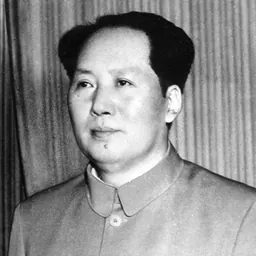
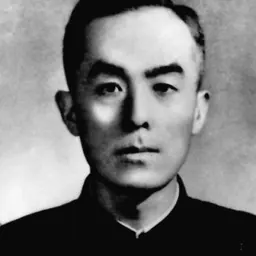

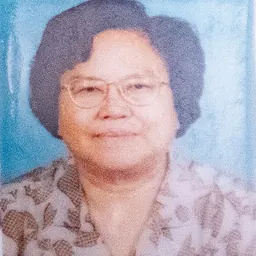

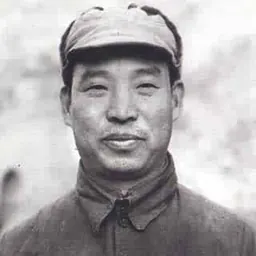

Related people
Same field, nearest in time




Contemporaries
People whose lives overlapped Nie Yuanzi's





Frequently asked questions
Who was Nie Yuanzi?
Chinese Red Guards leader (1921–2019)
When was Nie Yuanzi born?
Nie Yuanzi was born on 5 April 1921 in Hua County.
When did Nie Yuanzi die?
Nie Yuanzi died on 28 August 2019 in Peking University Third Hospital.
What was Nie Yuanzi's occupation?
Nie Yuanzi was an academic, autobiographer, academic administration and red Guards.
What nationality was Nie Yuanzi?
Nie Yuanzi was Chinese.
Sources & further reading
Cite this page
APA: Biography.guide. (2026). Nie Yuanzi. https://biography.guide/nie-yuanzi/
MLA: "Nie Yuanzi." Biography.guide, https://biography.guide/nie-yuanzi/.
Chicago: "Nie Yuanzi." Biography.guide. https://biography.guide/nie-yuanzi/.
Data last updated: 2026-09-22 · Spot an error? Report a correction.
Page generated 2026-09-27 05:05 UTC