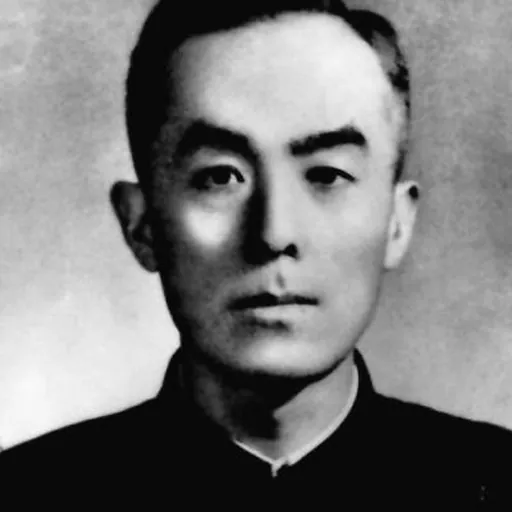
Ji Xianlin
Chinese academic, linguist, historian, translator and university teacher
About Ji Xianlin
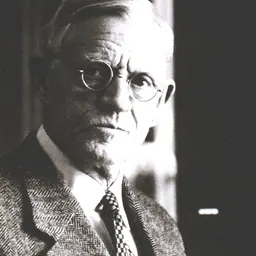
Lived 1911 – 2009 (aged 97). Ji Xianlin was a Chinese linguist, historian, university teacher, translator, buddhologist and palaeographer.
Ji Xianlin (; August 6, 1911 – July 11, 2009) was a Chinese Indologist, linguist, paleographer, historian and writer who has been honored by the governments of both India and China. Ji was proficient in many languages including Chinese, Sanskrit, Arabic, English, German, French, Russian, Pali and Tocharian, and translated many works. He published a memoir, The Cowshed: Memories of the Chinese Cultural Revolution, about his persecution during the Cultural Revolution.
Biography
He was born in Linqing, Shandong in 1911.
Ji received his PhD in 1941, and then studied Tocharian under Emil Sieg. He became dean of the department and pioneered the field of Eastern studies in China, authoring 40 articles and 13 academic papers in the next three years. In 1956, he was elected commissioner of the Chinese Academy of Sciences' Department of Social Science.
In addition to his translation of the Ramayana, Ji wrote seven books, including a short history of India The Ji Xianlin Collection consists of 24 volumes containing articles on ancient Indian languages, Sino-Indian cultural relations, Buddhism, comparative and folk literature, essays, translations of literary works, and more. His son, Ji Cheng, said that Ji died of a heart attack.
Cultural work Ji maintained that "Cultural exchange is the main drive for humankind's progress. Only by learning from each other's strong points to make up for shortcomings can people constantly progress, the ultimate target of which is to achieve a kind of Great Harmony."
During the Cultural Revolution, Ji was denounced by Nie Yuanzi, the militant leader of Peking University's Red Guards, as a "hidden counterrevolutionary".
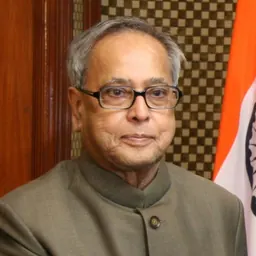
In 2006, Ji received a lifetime achievement award from the government of China for his contributions to the field of translation; accepting the award, he stated: "The reason our Chinese culture has been able to remain consistent and rich throughout its 5,000 years of history is closely linked to translation. Translations from other cultures have helped infuse new blood into our culture". According to Xu Keqiao, an expert on Sino-Indian cultural communication at the Chinese Academy of Social Sciences, "A lot of what Chinese know about India's tradition and culture has come from Ji. He translated from the original Sanskrit and rendered them in poetry in Chinese. It is a tremendous achievement covering most of his life." This has been cited as an example of growing friendship between the two nations. Indian External Affairs Minister Pranab Mukherjee personally presented the Padma Bhushan to Ji on June 6, 2008. Mukherjee paid a visit to the ailing 97-year-old Ji, who is the first Chinese to receive the honour, at a military hospital where he has been staying and presented the medallion and award certificate.
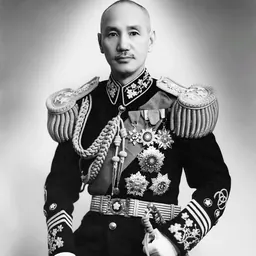
Ji was a patriot, and is quoted saying "Even when I am burned down to ashes, my love for China will not change." As a student at Tsinghua University, he signed a petition to Chiang Kai-shek to oppose the Japanese invaders in Nanjing. As an impoverished but brilliant student, he said, "I haven't disgraced my country; my scores are the only comfort that I can give to my motherland."
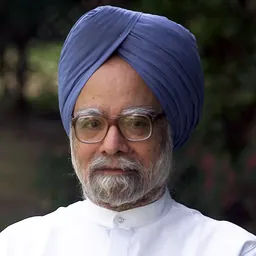
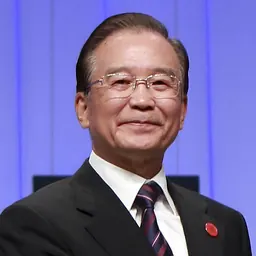
Ji was also highly regarded for his moral values, character, and personality. Chinese premier Wen Jiabao is reported to have told Indian Prime Minister Manmohan Singh that Ji was his mentor.
Don’t just read it —
keep it.
Full-length biographies made to live with: read them, listen on the way to work, watch them tonight.
- E-book
- Audio
- Video
Instant download · yours to keep · every purchase keeps this site free
Important facts
more
Hian-Liu, Hian Liu, Xibu (pseudonym), Ji Xibu (pseudonym), Syen Lin, Syel-linFamily & relationships
People in Ji Xianlin's life
Named in this biography and alive at the same time


Related people
Same field, nearest in time


Contemporaries
People whose lives overlapped Ji Xianlin's





Frequently asked questions
Who was Ji Xianlin?
Chinese academic, linguist, historian, translator and university teacher (1911-2009)
When was Ji Xianlin born?
Ji Xianlin was born on 6 August 1911 in Linqing.
When did Ji Xianlin die?
Ji Xianlin died on 11 July 2009 in Beijing.
What was Ji Xianlin's occupation?
Ji Xianlin was a linguist, historian, university teacher, translator, buddhologist and palaeographer.
What nationality was Ji Xianlin?
Ji Xianlin was Chinese.
Sources & further reading
Cite this page
APA: Biography.guide. (2026). Ji Xianlin. https://biography.guide/ji-xianlin/
MLA: "Ji Xianlin." Biography.guide, https://biography.guide/ji-xianlin/.
Chicago: "Ji Xianlin." Biography.guide. https://biography.guide/ji-xianlin/.
Data last updated: 2026-09-23 · Spot an error? Report a correction.
Portrait: Wikimedia Commons · author & licence
Page generated 2026-09-27 05:06 UTC