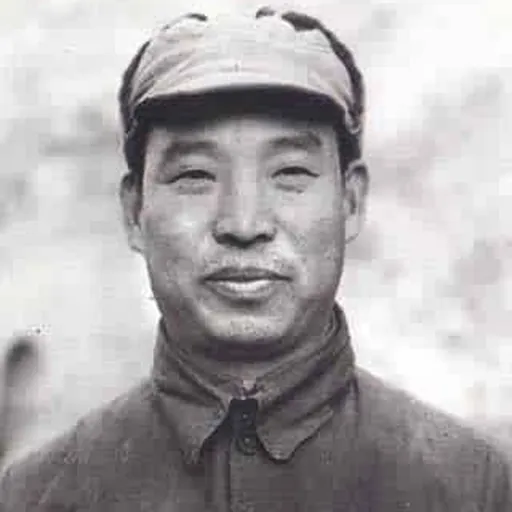
About Peng Zhen
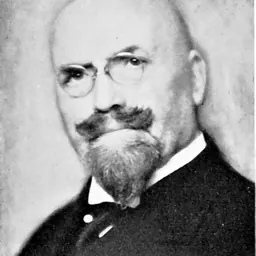
Lived 1902 – 1997 (aged 94). Peng Zhen was a Chinese politician.
Peng Zhen (pronounced ; October 12, 1902 – April 26, 1997) was a Chinese politician and leading member of the Chinese Communist Party. He led the party organization in Beijing following the victory of the Communists in the Chinese Civil War in 1949, but was purged during the Cultural Revolution for opposing Mao's views on the role of literature in relation to the state. He was rehabilitated under Deng Xiaoping in 1982 along with other 'wrongly accused' officials, and became the inaugural head of the Central Political and Legal Affairs Commission.
Biography Early life and revolutionary activities
Born in Houma, Shanxi province, Peng was originally named Fu Maogong . He joined the Chinese Communist Party (CCP) in 1923 as a founding member of the Shanxi Province CCP. Arrested in 1929, he continued underground political activities while imprisoned. He was released from prison in 1935 and began organizing a resistance movement against the invading Japanese forces. Peng was important in developing the Second United Front during the Second Sino-Japanese War. Around the same time, he was appointed the Organization Department Director of the North Bureau of CCP.
Peng also served on a number of positions as vice-president of the Central Party School and director of the CCP Policy Research Office. In 1945 he served in the history research committee and the organizing committee of the CCP's 7th National Congress.
In September 1945 Peng was sent by Mao Zedong to take up overall leadership of the CCP in Northeast China. He was accompanied by Lin Biao who was to assist Peng with directing military operations against the Nationalists. Peng decided that the CCP could hold the 3 big cities of the Northeast: Shenyang, Changchun and Harbin. When the Nationalists under the command of Du Yuming attacked in November 1945, the Communists were forced back. Peng was removed as the CCP leader in the northeast after further failure by Lin Biao's forces in March 1946 led to the Communists retreat back to Harbin.
Political career under Mao Peng was a member of the CCP Central Committee starting from 1944 as well as a member of the Secretariat of the CCP Central Committee. He also held the positions of First Secretary of the Beijing Municipal Committee, and Mayor of Beijing from 1951 to 1966. In addition to being mayor, he was a high-ranking member of the Politburo from 1956 to 1966.
In June 1958, Mao changed the party and government structure by establishing groups in charge of finance, legal matters, foreign affairs, science, and culture and education which bypassed the State Council. Peng was made the head of the legal matters group. In what was termed as a "miracle", the commission drafted and submitted seven bills in three months.
Peng subsequently became Secretary of the Central Political and Legal Affairs Commission, a post he already held from late 1950s in the capacity of leader of a Central Politics and Law Leading Group. Beginning in 1983, as Chairman of the Standing Committee of the 6th National People's Congress, he sought to increase the NPC's power. He used the NPC as a base to oppose reform. In January 1987, Peng Zhen played a pivotal role in Hu Yaobang's resignation as General Secretary by attack and criticizing Hu during a meeting. Peng left Politburo after the 13th Party Congress in November 1987 and retired from politics in March 1988 after Wan Li took over his position as Chairman of NPC Standing Committee. During the 1989 Tiananmen Square protests, Peng Zhen supported the declaration of martial law in Beijing and the removal of Zhao Ziyang.
Peng Zhen died on April 26, 1997, from blood cancer aged 94, two months after the death of former vice premier Deng Xiaoping, and was eulogized with high honours by the highest organs of the party and the state. His official obituary declared him a "great proletarian revolutionary, politician, and outstanding expert in the affairs of the state; unswerving Marxist, instrumental in laying the foundations of legal institution in our country, and excellent leader of the party and state." The obituary also curiously made mention of his support of Deng Xiaoping's 1992 "southern tour" which re-ignited economic reforms after relative stagnation following the 1989 Tiananmen Square protests.
He was considered one of the Eight Elders of the CCP.ref name=":0">
Awards and honors
Don’t just read it —
keep it.
Full-length biographies made to live with: read them, listen on the way to work, watch them tonight.
- E-book
- Audio
- Video
Instant download · yours to keep · every purchase keeps this site free
Important facts
Family & relationships
People in Peng Zhen's life
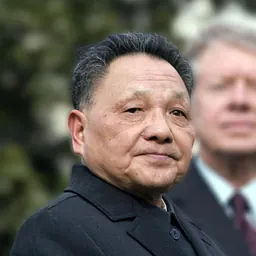
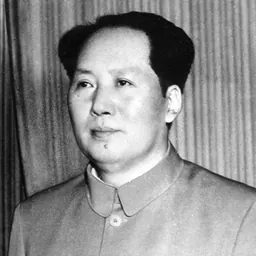
Named in this biography and alive at the same time




Related people
Same field, nearest in time






Contemporaries
People whose lives overlapped Peng Zhen's

Frequently asked questions
Who was Peng Zhen?
Chinese politician (1902-1997)
When was Peng Zhen born?
Peng Zhen was born on 12 October 1902 in Quwo County.
When did Peng Zhen die?
Peng Zhen died on 26 April 1997 in Beijing.
What was Peng Zhen's occupation?
Peng Zhen was a politician.
What nationality was Peng Zhen?
Peng Zhen was Chinese.
Sources & further reading
Cite this page
APA: Biography.guide. (2026). Peng Zhen. https://biography.guide/peng-zhen/
MLA: "Peng Zhen." Biography.guide, https://biography.guide/peng-zhen/.
Chicago: "Peng Zhen." Biography.guide. https://biography.guide/peng-zhen/.
Data last updated: 2026-09-23 · Spot an error? Report a correction.
Portrait: Wikimedia Commons · author & licence
Page generated 2026-09-27 05:05 UTC